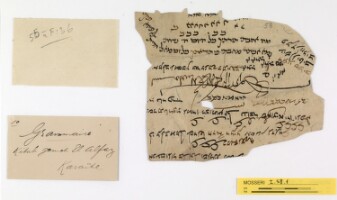
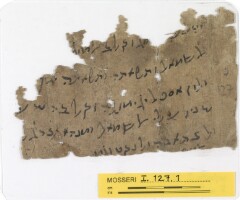
Recto: a compilation of letter formulae or part of a form letter. In the bottom right-hand corner there is a typical sender’s formula with the name Abraham b. Benjamin ‘the pitiable teacher’ (המלמד המרוחם). Verso: an Arabic basmalla and Hebrew jottings.
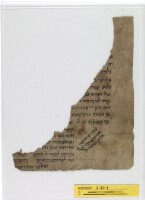
Pages of a medical work, dealing with different kinds of illnesses and their causes, including fever. On f. 2r there is some Arabic written in larger letters: al-ʿAbd al-Mamlūk Aḥmad b. ʿAlī b. Ṣaliḵ.
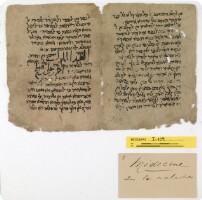
Quasi-medical book, with recipes mentioning white alum, apple preserve, rhubarb preserve, rose, unripe grapes and bamboo ashes. There are magical symbols.
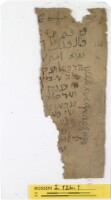
Recto: prescription mentioning medicinal substances and their measures. Verso, written transversely in relation to recto, contains an Arabic document and, inverted in relation to the Arabic, the continuation of the prescription from recto.
Letter from Ḥayy Gaʾon to Sahlān b. Abraham, dated 1349 of the Seleucid era (= 1037 CE). The continuation is inverted on verso, with an address in Hebrew and Arabic script. Edited by Gil (1997: II 123-7).
Letter addressing Abū Sahl, and his family, and Abū Manṣūr, and referring, among others to an elder, Barakāt and his son, Abū Faḍl (in Arabic script), and Abū Ḥajjāj Joseph.
Letter sent to Abū l-ʿAlā Ṣamʿar (?) b. al-Munajjā al-Dimašqī from [...] b. Yiftaḥ ha-Kohen in Tinniīs, mentioning Abū ʿImrān, Abū l-Mufaḍḍal, Abū l-Munā and Abū Maʿālī; address on verso, inverted.
Part of a business letter to Abū Zikrī Judah b. Manasseh b. David Ṣayrafī, concerning the trade in pepper and mentioning Abū Saʿd. Arabic accounts have been added on verso.