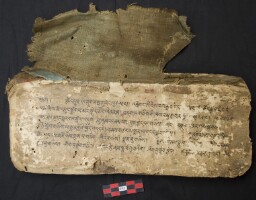
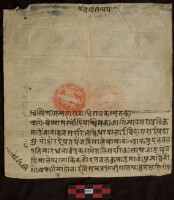
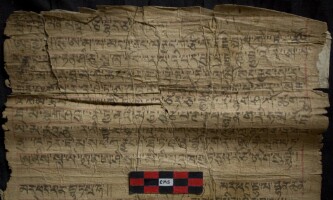
These are Tibetan manuscripts. This section has manuscript folios from two separate texts. The first text or the first part has 23 folios where as the other book has 7 folios.
First 12 documents bearing red seals are the orders issued by the king of Nepal on matters of annexed territory of Kumaon west of Mahakali River. It orders to support Sirdar Bhakti Thapa deputed to Kumaon. These orders mainly deal with war management, and strategic orders to continue occupation. ...
Here are fifteen documents. Some are petitions and some are official orders. There are some documents that specifically deal with matters pertaining to the state of Mustang. Orders from Kathmandu mainly decided on various petitions submitted to the Premier
It has 14 documents of the Rana rulers written to the King of Mustang which was within the domain of Nepal. They took decisions on some petitions of the King. Some papers contain orders to manage administration and systems in Mustang.
These are government papers. Probably, documents written in Tibetan were also issued by the government of Nepal during the Shah or the Rana period. Last two papers written in Nepali deal with due arrears and religious endowments.
Here are thirteen documents written in Nepali using Devanagari script and in Limbu language using Sirijangha script. Nepalese documents are the orders of the King, and letters Courtiers Gambhir Singh Basnyat, Pran Shah and General C in C Bhimsen Thapa. These documents deal with religious endowmen...
First document is a government order to landlord Bhava Nath Chaudhary of Pakariya. Others containing twelve folios are from a manuscript entitled Gajendra Mokashya dated Saka 1788. Its colophon runs as : Iti Sri bhagavat mahapurane astama Skandhe Gajendra Mokashya ratonama Chaturthodhyaya.’
The title of this manuscript is Gita Govinda written in sanskrit. Its script is Devanagari. It has thirty two folios. Its colophon runs as : Iti Sri gita Govinde svadhinabhartrika varnane supritambaronama dvadashah sargah sampurnashchayam.
This text is entitled ‘Bhutadamareshwara Tantra’. It is written in Devanagari script in Sanskrit language. It is a Hindu text. It has eleven folios. It was written in 1897 VS. Its colophon mentions: Iti sri maduddamareshwara tantrekartaviryarjuna kavaca mala mantra samaptah. Dated 1897 VS