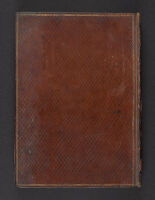
On the names of the Zoroastrian days, months and festivals
Scope & Content:
A work on the Zoroastrian day and month names and on the festivals of Noruz, Mihragan and Tirgan, compiled for Major Malcolm from Pahlavi and Pazand sources by Dastur Edalji Darabji Sanjana. Annotations by Malcolm.
A volume containing two Zoroastrian works: (1) Ardā vīrāf nāmah (اردا ویراف نامه), a prose version in Persian of the book of Ardā Vīrāf, based on a Pahlavi original of the 9th/10th century, which describes his journey through heaven and hell and his return home afterwards (ff. 1v-51r); (2) Ṣad...
Ardā vīrāf nāmah (اردا ویراف نامه), a prose version in Persian of the book of Ardā Vīrāf, based on a Pahlavi original of the 9th/10th century, which describes his journey through heaven and hell and his return home afterwards
Nikāḥ bastan bi-ravish-i mubidān-i Hindūstān ( نکاح بستن بروش مبدان هندوستان), the Parsi marriage ceremony in Persian, copied by the brother of Dastūr Kāʼus (f. 6v) and given by Dastūr Kāʼus to Jonathan Duncan (1756-1811) who was Governor of Bombay from 1795 until his death in 1811. Dastūr Kā’us...
A volume containing two separate Zoroastrian works bound together Contents: (1) Kitāb-i shāyist va nāshāyist (کتاب شایست و ناشایست), a prose work divided into 100 sections here called Ṣad dar nas̱r (صد در نثر) (ff. 1v-46v); (2) Ardā vīrāf nāmah (اردا ویراف نامه), a poetical version in Persian ...
Collection Area:
Oriental Manuscripts
Languages:
Persian
Date Range:
18th century
Extent:
Codex; ff. iv+78+iii+loose binding fragments. There are five blank leaves numbered ff. 46a-e between ff. 45 and 46
Ardā vīrāf nāmah (اردا ویراف نامه), a poetical version in Persian by Zartusht Bahrām Pazhdū of the book of Ardā Vīrāf, based on a Pahlavi original of the 9th/10th century, which describes his journey through heaven and hell and his return home afterwards
The Dasātīr-i āsmānī (دساتیر آسمانی) by the philosopher priest Aẕar Kayvān (آذر کیوان) (1533-1618), a collection of invocations to 16 pre-Islamic prophets, including Zoroaster, beginning with Mahabad and concluding with the fifth Sasan who supposedly lived at the time of the Sasanian ruler Khusr...
A Parsi-Persian version (ie in Persian but including passages in Middle-Persian language in Persian script) described as Kitāb-i Mīnū khirad (کئاب مینوخرد) of the Mēnōy ī khrad (‘Spirit of Wisdom’) originally composed in Pahlavi probably during the sixth century CE (f. 1v-75v)