Hard-coded id of currently selected item: . JSON version of its record is available from Blacklight on e.g. ??
Metadata associated with selected item should appear here...
Egerton MS 821
- Record Id:
- 032-001983883
- Hierarchy Root Ancestor Record Id:
- 032-001983883
- MDARK:
- ark:/81055/vdc_100000000053.0x0003a7
- LARK:
- ark:/81055/vdc_100064384124.0x000001
- SLARK:
- Format:
- ISAD(G)
- Reference (shelfmark):
- Egerton MS 821
- Title:
-
A collection of astrological, brontomantic, onomantic and oneiromantic treatises; astronomic and computistic texts; herbal remedies, charms and magical amulets.
- Scope & Content:
-
This 12th-century scientific manuscript from Southern France contains a large number of prognostic treatises that are based on the principles of astrology, brontomancy (divination by thunder), onomancy (divination by names), and oneiromancy (dream divination), alongside computistical and astronomical texts, herbal remedies, charms and instructions for magical amulets. The manuscript is largely composed of treatises that are associated with the Liber Alchandrei, a 10th-century astrological and onomantic work that was heavily influenced by Arabic sources: these treatises are referred to as the Proportiones Competentes in Astrorum Industria (Agreeing Proportions in the Diligence of the Stars); In principio Fecit Deus Caelum et Terram (In the beginning, God made heaven and earth), and the Benedictum Nomen Domini (Blessed is the Name of the Lord). The manuscript also contains an anonymous onomastic work, addressed to a certain ‘practitioner’ (‘artifex’), that is named after its diagram of the ‘Sphere of Life and Death’, the Spera Donati (Sphere of Donatus) [see Juste, Les Alchandreana primitifs (2007), pp. 325-31].
Contents:
ff. 1r-1v: Revelatio Esdrae (Revelation of Esdras), beginning: ‘Kal. Ianuarii si fuerint in die dominico’.
ff. 1v-2v: Proportiones, 50, beginning: ‘Si autem quis est qui ignoret aut corpam [sic] aut caristiam futuri anni’.
ff. 2v-5r: An anonymous brontomantic treatise [here ‘tonitruales [...] natale domini], beginning: ‘Signum Arietis intonaverit sicut Egiptii scribunt circa imperium’.
ff. 5r-7r: Notes on the Computus and Kalendar, beginning: ‘Solsticia duo sunt in anno’.
ff. 7r-7v: A zodiacal prognosis for determining the duration of an imprisonment, beginning: ‘Si quis fuerit in carcere positus et fuerit Iunus in signo Arietis’.
f. 7v: Proportiones, 26, beginning: ‘Si societatis copulum omnium rerum’.
ff. 7v-8r: A zodiacal lunary, beginning: ‘Luna prima et II, signum Arietis, Abraam pro eo quod olocaustum filium’.
ff. 8v-12r: A lunary (Old-Testament version), beginning: ‘Luna prima, capud de Ariete, factus est Adam, quiquid facias bonum est’.
ff. 12r-14v: Somniale Danielis (Daniel's Dreambook), beginning: ‘Quod vidit et disposuit in Babilonia in diebus Nabugodonor rex’.
f. 14v: A method for calculating the zodiacal sign at birth, beginning: ‘Computa nomen matris et filii’.
f. 15r: Proportiones, 24, beginning: ‘Si deffosse pecunie in terra vis scire’.
ff. 15r-15v: A Sphere of Life and Death, here attributed to St Donatus (‘Hec est spera que fecit sanctus Donatus’), beginning: ‘Quicumque egrotare inciperit’.
f. 15v: Benedictum, 14 [here ‘Numerus de quatuor stellis’], inserted in the diagram on f. 15v.
f. 16r: A full-page table showing the moon’s passage through the zodiacal signs.
f. 16v: An alphanumerical table for the days of the week.
f. 16v: An alphanumerical table and tract (‘Ad planetas’) for determining the planet associated with a childbirth.
ff. 16v-17r: Benedictum, 13: alphanumerical table (‘Conputus de duodecim fatos’) and tract (‘Ad invenienda signa’) for determining the sign of the zodiac.
f. 17r: Benedictum, 1 [here ‘Conputus de VII astribubus’], beginning: ‘Istas literas divide per novenarium numerum’.
f. 17r: A prognostic instruction (‘Conputus de duobus fratribus’) for determining the outcome of a fight based on the numerical values of the names of the two opponents, beginning: ‘Nomina debentur numerari: si litere sunt pares’.
f. 17r: A prognostic instruction (‘De muliere et de marito’) for determining the outcome of a fight based on the numerical values of the names of the two opponents, beginning: ‘Nomina debentur numerari et postea iungi, et si litere sunt pares’.
ff. 17v-24r: Benedictum, 18 [Tractatus de fatis in gallico], beginning: ‘Alnatad, hoc est capud de Ariete, et sunt stelle III, sicut hic aparet’.
ff. 23v-24r: Spera Donati, beginning: ‘Si vis scire de homines vel de feminas in qua potencia sanctorum sunt’.
ff. 24v-25v: Tables related to the Spera Donati.
f. 26r: Spera Donati, beginning: ‘Tu artifex computa nomen hominis et nomen de caval et nomen de cal colorii eius’.
ff. 26r-27v: Tables related to the Spera Donati.
ff. 27v-28v: Proportiones, 17 [here ‘De progenfficis’], beginning: ‘Si quis piam ad te venerit ad adtenandi causa aut dicendi, vero scias quid manu gerat’.
f. 28v: Benedictum, 4, beginning: ‘Nunc vero expeditis huius artis sentenciis aut alia per necessaria’.
ff. 28v-29r: Horologium, beginning: ‘Ianuarius nox horas XVI de VIII’.
ff. 29r-32r: Benedictum, 5-9 [ here ‘Astra de septimana diebus’], beginning: ‘Dies dominicus habet suum astrum’.
ff. 32r-32v: Proportiones, 46, beginning: ‘Hec autem mors ut prenoscatur aperitis’.
ff. 32v-33r: Benedictum, 10 [here ‘Pro latrone’], beginning: ‘Qui te venerit expiare in hora Sole pro latrone’.
ff. 33r-33v: Proportiones, 51 [here ‘De furto sive de fugalapso servo’], beginning: ‘Si autem aliquo investigante de furto aut de fugalapso’.
ff. 33v-34r: Spera Donati, beginning: ‘Tu artifex si homo te interrogaverit de causa que furata est’.
f. 34r: A ritual for identifying a thief, beginning: ‘Ad furtum inveniendum. Scribe in tribus foliis lauri et voca ad manducandum eum quem suspicaris’.
f. 34r: An instruction for making an amulet for protection against evil, beginning: ‘Brevis de malignis passionibus Jotha. alfa’.
f. 34r: Spera Donati, beginning: ‘Si vis scire de fratribus et de sororibus qualis erit melior’.
ff. 34r-35v: Benedictum, 12, [here ‘De horas quales sunt bonas vel malas’], beginning: ‘Sol hora mala est a facie [sic] omnia re’.
ff. 35v-36r: Benedictum, 11 [here ‘De muliere’], beginning: ‘Si te venerit expiare homo pro muliere si fornicaverit an non’.
ff. 36r-36v: Proportiones, 30-31, beginning: ‘Ad hec si quis te interrogaverit sic unusque sto [sic] mechata est’.
f. 36v: Horologium [here ‘orologium’], beginning: ‘In discensione Solis usque’ [see Patrologia Latina, 90, cols 953D-954D].
ff. 36v-40r: Spera Donati [here ‘De factura’], beginning: ‘Ex chatuor rebus factus est mundus, ex celo, ex terra, ex aere et aqua’.
f. 40r: A prognostic instruction for determining the outcome of a fight based on the numerical values of the names of the two opponents, beginning: ‘De duobus prelioribus nomina debentur numerari’.
ff. 40r-40v: Spera Donati [here ‘De duobus pugnatoribus’], beginning: ‘Si vis scire de duobus pugnatoribus qui pugna volveris’.
ff. 40v-42r: Benedictum, 2-4 [here ‘De septem stellis [...]’], beginning: ‘Benedictum sit nomen domini qui posuit Solem in medio rote’.
ff. 42r-42v: A tract on the sun’s entry into zodiac signs, beginning: ‘De introitu Solis quibus omni tempore in quo signo’.
ff. 42v-43v: Benedictum, 15-17, beginning: ‘Qui fuerit natus in fato de Ariete quod est Aprilis ipse est vita sua’.
ff. 43v-44r: Proportiones, 20-22 [here ‘De fugiente’], beginning: ‘His breviter et sufficienter prelibatis si quis desiderat nosse’.
f. 44r: Spera Donati, beginning: ‘Si vis scire de qualicumque causa que habere volveris’.
ff. 44r-52v: In principio, beginning: ‘In ipsum celum quod videmus est Luna et currit infra duos dies’.
ff. 52v-53r: A conjuration or blessing, beginning: ‘Ista coniuracio dicatur tribus vicibus .+. pater noster totum’.
ff. 52v-53r: Herbal remedies for physical ailments.
f. 53r: A protective amulet with Hebrew names for God beginning: ‘In nomine patris et filii et spiritu sancti amen + hoc sunt .x. nomina dei secundum ebreaos qui unusquisque homo vel femina portare debet super se per salvamentum de se ipso’.
ff. 53r-53v: A protective charm for childbirth that has to be recited three times, invoking the name of the French saints St Celina (fl. 5th century) and St Remigius (d. 533) [also found in 14th-century Southern French manuscript Princeton, University Library, Garrett MS 80), beginning: ‘Ista coniuratio dicatur tribus vicibus: ecce crucem domini totum Pater noster totum . Anna peperit Mariam . celina peperit . remuum . elidabeth [sic] peperit ihoannem’]; accompanied by diagrams for three birthing amulets; the first is a cross; the second a Chi-Rho monogram; the third a square with the formula: ‘sator arepo tenet spera rotas’.
f. 53v: A protective charm against stillbirth (with the rubric: ‘Si infans mortuus non potest parere’), with the formula ‘Saisa. Laisa. Relaisa’.
f. 53v: A herbal recipe for a quick and prosperous childbirth, involving Artemisia (known as the ‘Mother’ herb).
ff. 53v-54r: Epistola de Vulture (Letter of the Vulture), beginning: ‘Nescit humanum genus quantam virtutem habeat vultilis in se’.
f. 54v: Herbal remedies for tumors and wounds, including the charm ‘bix b[e]ronix bironixa [sic] bix’;
f. 54v: A prayer invoking God, the Virgin Mary, angels, apostles, patriarchs, confessors and virgins against temptations of the devil, beginning: ‘In nomine domini nostri ihesu Christi Rogamus patrem et filium et spiritum sanctum trinum et unum’.
f. 54v: A prayer invoking God for insight into the cause of things, beginning: ‘deus abraam deus ysaac deus iacob deus moysi deus aaron deus aelie [sic] deus enoch’.
ff. 54v-56r: Sortes sanctorum (Divination of the Saints), beginning: ‘Per intercessionem omnium sanctorum tuarum et per quattuor evangelistas’.
f. 56r: A prayer-charm for a wounded animal, beginning: ‘Nocte sicut audieret exieis numero stellis .VII. dicatque deus qui salvasti latronem in cruce’; followed by an instruction for three men to take three sticks and take a pledge to protect the animal from harm; and recite a prayer to the Virgin Mary and St Silvanus (‘sancte silvane’); possibly a reference to the Roman deity who was commonly associated with animals.
ff. 56r-56v: A charm against fever, including an apocryphal story about Christ healing St Peter from fever; followed by a conjuration invoking the names of the types of fevers personified as seven sisters; and St Raphael, as ‘Medicine of God’ (the meaning of the Archangel’s name in Hebrew).
ff. 56v-57r: A prayer-charm for pregnant women, beginning: ‘In mamillam dextram quasi modicum humorem duricam mulier abens de pureo pregnans est’; followed by a prayer to God, and an instruction to write names on an amulet, placing it underneath a baptismal font for three days and submerging it in baptismal water on the fourth day.
f. 57r: A prayer to Christ for the blessing of bread, beginning: ‘Domine ihesu Christ fili dei vive qui vc panes in deserto benedixisti’.
ff. 57v-58r: Remedies for wounded animals: a prayer to God, beginning: ‘Deus invisibiliter et inestimabiliter qui percunta diffudus est pietatem tuam’; followed by instructions for making amulets for wounded animals (‘pro mortalite [sic] pecori’) involving inscribing protective texts in the crust of bread (‘scribat in crusta panis’) that is given to pigs; a second concerns an amulet that invokes the Virgin Mary; a third contains a narrative about St Michael the Archangel.
ff. 58r-58v: Herbal remedies for various physical ailments.
f. 58v: An instruction to make an amulet to staunch blood, beginning ‘Hos caracteres scribe et super pectus ligabis et occide porcum cum illo vel quolibet animal et sanguis non fluet’.
f. 58v: Instructions for making amulets for women: to make a sterile woman conceive; to make a woman conceive a boy; and to make a young girl marry quickly, beginning: ‘ut mulier sterilis concipiat scribe h. o. [.]. s. d. h. d. s. p. g. illius casto in plumo vel in stagnum’.
f. 58v: Remedies against epilepsy: an instruction to attend Mass each Sunday of the year and a herbal remedy, beginning: ‘Si quis caducos est infra unum annum omnes dies dominicos missa audiat’.
f. 58v: A herbal remedy against infirmities (‘Pocio ad omnes infirmitates’).
f. 59r: Herbal remedies for various physical ailments.
ff. 59r-59v: A herbal remedy for a coarse throat (‘ad raucedinem vocis’), including an instruction for reciting prayers while collecting one of its herbs.
f. 59v: A charm to be used against the power of a king or emperor, beginning: ‘Hec nomina recole ante regem vel ante imperatorem ante vel retroacto per nomen in axbidino . henonia . adonay, sabaot iactriel. sa. adonai. eloym. hagai’.
ff. 59v-60r: A recipe against epilepsy, including two blessings for bread (‘benedictio panis’) and water (‘cum aqua benedicta’).
f. 60r: Remedies against toothache: a herbal remedy against toothache, involving Artemisia; followed by a prayer-charm addressed to ‘Lady Moon’ (‘domina luna’).
ff. 60r-60v: Herbal remedies for various physical ailments.
f. 60v: Instructions for making amulets, including two to make a woman obey, beginning: ‘ut mulier cito pareat scribat caractas [sic] in cera virgine: epausaz esa enguez qui nonsapia . laletra alacarn . gorbon . r. z. r. e. y. y. v.’; imperfect at the ending due to the loss of the next folio(s).
Decoration:
Two full-page diagrams of the Sphere of Life and Death in red ink (ff. 15v, 16r); 1 half-circular astrological diagram (f. 41v); 3 amuletic diagrams in brown and red ink (f. 53v); small diagrams of constellations in brown and red ink (ff. 17v-24); tables in red ink (ff. 16r, 16v, 24r-25v, 26r-27v. Medium and small initials in red; and small (one-line) initials highlighted in red ink throughout the manuscript. Rubrics in red. Underlining in red. Line-fillers in red. Manicules in brown ink added to margins (ff. 34r, 52v).
- Collection Area:
- Western Manuscripts
- Project / Collection:
- Egerton Manuscripts
England and France 700-1200 Project - Hierarchy Tree:
- [{ "id" : "032-001983883", "parent" : "#", "text" : "Egerton MS 821: A collection of astrological, brontomantic, onomantic and oneiromantic treatises; astronomic and computistic texts; herbal remedies,…" , "li_attr" : {"class": "orderable"} }]
- Hierarchy Record Ids:
- 032-001983883
- Is part of:
- not applicable
- Hierarchy:
- 032-001983883
- Container:
- not applicable
- Record Type (Level):
- Fonds
- Extent:
-
A parchment codex
- Digitised Content:
- https://iiif.bl.uk/uv/#?manifest=https://bl.digirati.io/iiif/ark:/81055/vdc_100064384124.0x000001 (opens in a new tab)
- Thumbnail:
-
- Languages:
- Latin
- Scripts:
- Latin
- Start Date:
- 1100
- End Date:
- 1199
- Date Range:
- 12th century
- Era:
- CE
- Access:
-
Please request the physical items you need using the online collection item request form.
Digitised items can be viewed online by clicking the thumbnail image or digitised content link.
Readers who have registered or renewed their pass since 21 March 2024 can request physical items prior to visiting the Library by completing
this request form.
Please enter the Reference (shelfmark) above on the request form.If your Reader Pass was issued before this date, you will need to visit the Library in London or Yorkshire to renew it before you can request items online. All manuscripts and archives must be consulted at the Library in London.
This catalogue record may describe a collection of items which cannot all be requested together. Please use the hierarchy viewer to navigate to individual items. Some items may be in use or restricted for other reasons. If you would like to check the availability, contact our Reference Services team, quoting the Reference (shelfmark) above.
- Physical Characteristics:
-
Materials: Parchment.
Dimensions: 150 x 115 mm (text space: 130 x 850 mm).
Foliation: ff. 60 ( + 10 unfoliated paper flyleaves at the beginning + at the end); 1 unfoliated parchment stub between f. 58 and f. 59; f. [70]verso has a paper pastedown (bibliographical notes).
Script: Protogothic.
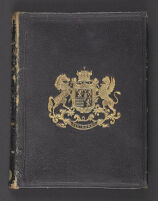
Binding: British Museum/British Library in-house: black leather binding with Egerton’s bookplate gold-stamped on the upper and lower covers; the spine inscribed in gold at the British Museum: ‘MISCELLANEA ASTROLOGICA’; marbled endpapers.
- Custodial History:
-
Origin: ?Bréziers, Southern France.
Bréziers, produced in the 12th century: suggested by the list of places from the environment of Bréziers on f. 26r (see Juste, Les Alchandreana primitifs (2007), p. 326; the unusual reference to the French saints St Celina and St Remigius (d. 533) in the childbirth charm on ff. 53r-53v may provide a further indication for this provenance: the saints are also cited in a copy of this charm that survives in Princeton, University Library, Garrett MS 80, a 14th-century manuscript from Southern France.
Trinity College, Cambridge, established in 1546, owned the manuscript until c. 1838: formerly its ‘MS O.7.26’ until it was stolen, most likely by James Orchard Halliwell-Phillipps (see Winstanley and Hunt, ‘Halliwell Phillipps’ (1948), pp. 250-82; Freeman and Freeman, ‘Phillipps, James Orchard Halliwell- (1820–1889)’ (2004) http://www.oxforddnb.com/view/article/12020 [accessed 24 July 2018].
James Orchard Halliwell [-Phillipps] (b. 1820, d. 1889), antiquary and literary scholar, owned between 1838 and 1840: inscribed 'No. 60. J. O Halliwell' (f. 1r) and stamped 'Bibliotheca Halliwelliana' (ff. 1r, 60v); catalogued for sale, 27 June 1840, lot 29, but withdrawn, along with the other manuscripts, all but one of which were sold en bloc to Thomas Rodd in July 1840 for £50.
Thomas Rodd the Younger (b. 1796, d. 1849), London bookseller: bought from him by the British Museum on 13 August 1840 for £2.10s., along with 32 other manuscripts formerly owned by Halliwell-Phillipps, using the Bridgewater fund (£12,000 bequeathed in 1829 by Francis Henry Egerton, 8th Earl of Bridgewater (b. 1756, d. 1829).
- Information About Copies:
-
Full digital coverage available for this manuscript: see Digitised Manuscripts at http://www.bl.uk.manuscripts/.
- Publications:
-
List of Additions to the Manuscripts in the British Museum in the Years 1836-1840 (London: Woodfall, 1843), 1840, p. 16.
Montague Rhodes James, The Western Manuscripts in the Library of Trinity College, Cambridge: A Descriptive Catalogue, 4 vols (Cambridge: Cambridge University Press, 1900-1904), III (1902): Containing an Account of the Manuscripts Standing in Class O, pp. 372-73 (no. 1364).
Lynn Thorndike, A History of Magic and Experimental Science, 6 vols (London: Macmillan, 1923-41), I (1923), pp. 677-81, 684, 726-29.
Martin Förster, ‘Vom Fortleben antiker Sammellunare’, Anglia, 67/68 (1944), 1-171 (pp. 19-20) [for the Old-Testament lunary].
Denys Arthur Winstanley and Richard William Hunt, 'Halliwell Phillipps and Trinity College Library', The Library, 5th series, 2:4 (1948), pp. 250-82 (pp. 279-81).
Emanuel Svenberg, Lunaria et Zodiologia Latina, Studia graeca et latina gothoburgensia, 16 (Gothenburg: Elanders, 1963), p. 13 (as 'H').
Christoph Weisser, 'Das Krankheitslunar aus medizinhistorischer Sicht: Ein Beitrag zur iatromathematisch-astrologischen Fachliteratur des Mittelalters', Sudhoffs Archiv, 65:4 (1981), 390-400 (p. 394 n. 38).
Christoph Weisser, Studien zum mittelalterlichen Krankheitslunar: ein Beitrag zur Geschichte laienastrologischer Fachprosa, Würzburger medizinhistorische Forschungen, 21 (Würzburg: Wellm, 1982), pp. 244-52 [for the Old-Testament lunary].
Ann E. Matter, ‘The “Revelatio Esdrae” in English and Latin Traditions’, Revue Bénédictine, 92:3-4 (1982), 376-92 (p. 387 [no. 9]).
Laurel Means, 'Electionary, Lunary, Destinary, and Questionary: Toward Defining Categories of Middle English Prognostic Material', Studies in Philology, 89:4 (1992), 367-403 (p. 394 n. 80).
Virginie Derrien, ‘Prédictions zodiacales anglo-normandes’, Romania, 128 (2010), 170-92 [for the Anglo-Norman source of the Tractatus de fatis in gallico, without this manuscript].
László Sándor Chardonnens, Anglo-Saxon Prognostics, 900-1100: Study and Texts, Brill’s Studies in Intellectual History, 153; Brill’s Texts and Sources in Intellectual History, 3 (Leiden: Brill, 2007), pp. 55-56, 87 n. 210, 95 n. 275, 143, 166, 210 n. 32, 235.
Tony Hunt, ‘L’anglo-normand novateur: de nouveaux mots pour de nouvelles choses’, Comptes rendus des séances de l'Académie des Inscriptions et Belles-Lettres, 154:2 (2010), pp. 785-94 (p. 791) [for the Tractatus de fatis in gallico].
Roy Michael Liuzza, ‘Anglo-Saxon Prognostics in Context: A Survey and Handlist of Manuscripts’, Anglo-Saxon England, 30 (2001), pp. 181-230 (p. 190 n. 54).
Roy Michael Liuzza, 'What the Thunder Said: Anglo-Saxon Brontologies and the Problem of Sources', The Review of English Studies, New Series, 55:218 (2004), 1-23 (p. 13 n. 44).
Arthur Freeman and Janet Ing Freeman, ‘Phillipps, James Orchard Halliwell- (1820–1889)’, Oxford Dictionary of National Biography (Oxford: Oxford University Press, 2004) http://www.oxforddnb.com/view/article/12020 [accessed 24 July 2018].
Roy Michael Liuzza, 'The Sphere of Life and Death: Time, Medicine, and the Visual Imagination', in Latin Learning and English Lore: Studies in Anglo-Saxon Literature for Michael Lapidge, ed. by Katherine O'Brien O'Keeffe and Andy Orchard, 2 vols (Toronto: University of Toronto Press, 2005), II, pp. 28-52 (p. 34).
David Juste, Les Alchandreana Primitifs: Étude sur les plus Anciens Traités Astrologiques Latins d'Origine Arabe (Xe siècle), Brill's Studies in Intellectual History, 152; Brill's Tests and Sources in Intellectual History, 2 (Leiden: Brill, 2007), pp. 72 n. 109, 73, 76 n. 120, 77, 79 n. 122, 80 n. 126, 81 n. 129, 86 n. 137, 106 n. 23, 142 n. 105, 146 n. 116, 149, 150 n. 124, 155 n. 136, 191 n. 169, 205 n. 184, 209, 210 n. 197, 212, 220 n. 6, 246 n. 147, 265, 297, 325-31, 344, 347, 357, 367, 387, 411, 421, 424.
María Teresa Santamaría Hernández, 'El capítulo De vulture del Liber medicinae ex animalibus de Sexto Plácido: Relación con la zooterapia hermética y propuestas de enmienda al texto', Traditio, 66 (2011), pp. 1-26 [for the manuscript tradition of the Epistola de Vulture; without this manuscript].
Roy Michael Liuzza, Anglo-Saxon Prognostics: An Edition and Translation of Texts from London, British Library, MS Cotton Tiberius A.iii, Anglo-Saxon Texts, 8 (Woodbridge: Brewer, 2011), pp. 30 n. 105, 31 n. 115 [for the Old-Testament lunary], 42 [for the Somniale Danielis].
Joan Edge, 'Licit Medicine or ‘Pythagorean Necromancy’? The ‘Sphere of Life and Death’ in Late Medieval England', Historical Research, 87: 238 (2014), 611-32 (p. 630).
Alexandra Reider, 'A Previously Unidentified Somniale Danielis Text in Takamiya MS 33 with an Updated Handlist of Latin Somniale Texts from England', The Journal of the Early Book Society for the Study of Manuscripts and Printing History, 18 (2015), 213-27 (p. 219).
David Juste, 'A Medieval Treatise of Onomancy: the Spera Sancti Donati', in Geomancy and Other Forms of Divination, ed. by Alessandro Palazzo and Irene Zavattero, Micrologus Library, 87 (Florence: SISMEL, 2017), pp. 291-329.
László Sándor Chardonnens, Handlist of Dream Divination and Lunar Prognostication in Western Manuscripts and Early Printed Books up to 1550 (2018), pp. 1-56 (p. 17 [nos 209a-d]):
https://www.academia.edu/29720263/Handlist_of_Dream_Divination_and_Lunar_Prognostication_in_Western_Manuscripts_and_Early_Printed_Books_up_to_1550 [accessed 24 July 2018].
- Material Type:
- Archives and Manuscripts
- Legal Status:
- Not Public Record(s)
- Notes:
- This manuscript is part of The Polonsky Foundation England and France Project: Manuscripts from the British Library and the Bibliothèque nationale de France, 700-1200.