Hard-coded id of currently selected item: . JSON version of its record is available from Blacklight on e.g. ??
Metadata associated with selected item should appear here...
Egerton MS 3314
- Record Id:
- 032-001985516
- Hierarchy Root Ancestor Record Id:
- 032-001985516
- MDARK:
- ark:/81055/vdc_100000000057.0x0003e2
- LARK:
- ark:/81055/vdc_100055127714.0x000001
- SLARK:
- Format:
- ISAD(G)
- Reference (shelfmark):
- Egerton MS 3314
- Title:
- Computational and astronomical notes; prognostics
- Scope & Content:
-
This 12th-century scientific manuscript originally formed a single volume with Cotton MS Caligula A XV, ff. 120-53 (see Willetts, 'A Reconstructed Astronomical Manuscript from Christ Church Library, Canterbury' (1965), 22-30). It contains a large collection of computistical, astronomical, and prognostic works that was written a the . This includes extracts from the Compotus Constabularii (1175): a work about the dating of Easter that was written by an English author who had access to Arabic scientific materials. A monk from the cathedral priory of Christ Church, Canterbury, refers to him as ‘Magister Cunestabulus’. The cathedral priory’s surviving library catalogue indicates that Christ Church once owned three copies of this text (Moreton, ‘The Compotus’ (1999), 61-82; Nothaft, Dating the Passion (2012), pp. 146-54).
Contents:
ff. 1v-8v: A gathering of 8 leaves probably compiled entirely by Salomon, (fl. 1185), a monk of Christ Church cathedral priory of Canterbury: his autograph and introductory note on f. 1v. Miscellaneous mnemonic rules for the computus, mostly in verse form (ff. 2r-6v); directions for calculating the Septuagesima moon (ff. 6r-6v); extracts from the computational treatise of 'magister Cunestabulus' (ff. 6v-8r) marked by marginal guide letters by Salomon; Salomon's table (f. 8v).
ff. 9r-13v: Instructions and mnemonic verses for determining Easter, and other moveable feasts (Septuagesima, Quadragesima, Easter, Rogation, Pentecost). Tables added for the years 1406-1433 and 1420-1447 to show the date of Easter (f. 13r-v).
ff. 14r-17r: Hermann of Reichenau (b. 1013, d. 1054), Computus (extract).
ff. 17r-v: A treatise on the Calendar: 'Ratio Gaii Caesaris de ordine anni', followed by notes on the discovery of the age of the Moon and a computational table of moveable feasts. At the end, a short interrogatio on the cycle of the Sun (f. 17v).
f. 18r: A prognostic in verse referring to Egyptian days.
ff. 18v-30r: An astronomical calendar linked to the Egyptian and Dogs days, with tables of moon and moveable feasts. The names of the saints are entered only until the end of February. Some notes added below the calendar are related to De natura rerum (On the Nature of Things) of Bede the Venerable (b. c 673, d. 735), and the Computus of Garland (fl. 1080); some of those concerning the dating of Easter are copied by Salomon (ff. 20r-21r).
ff. 30v-32r: Tables of Easter and other moveable feasts including a table of lunar cycle (f. 31v).
f. 34r: An extract from an anonymous computational treatise often attributed to Bede, rubric: 'De locis septem embolismorum' and notes on the computus based on Bede. Below this extract is a 12th-century list of the Archbishops of Canterbury from Augustine to Richard of Dover (consecrated 1174).
ff. 34v-37r: Computational notes mostly extracted from the anonymous treatise De ratione computi (On the Reckoning of the Computus)based on Bede's De temporum ratione (On the Reckoning of Time)(imperfect).
ff. 41r-44v: Astronomical and computational extracts from Bede and similar sources.
ff. 45r-72v: Several notes on the computus, stars, winds and meteorology based on Bede, Isidore of Seville (d. 636), and Hrabanus Maurus (d. 856) (imperfect). An extract from the beginning of the anonymous astronomical treatise, Liber Nimrod (Book of Nimrod) (f. 48v). A series of astronomical verses (ff. 57v-61v).
ff. 73r-75v: Anonymous, De computus manualis (On the Manual Computus), beginning: 'Quomodo inveniri possint concurrentes et data cuiuslibet anni per manum' copied by Salomon.
f. 78v: Verses on the three Maries followed by an added astronomical table copied by Salomon.
The manuscript contains a number of later additions:
f. 1r: A title in a 13th-century hand probably written by the librarian of Christ Church: 'Aedthelardus de compoto' preceded by an early modern press-mark 'Gr' and '51'.
f. 1r: Various later additions including a note on a flood in Thanet and Sheppey in 1394.
ff. 32v-33v: An added table of the dates of Easter 1269-1408 written in a 15th-century hand. At the end is the note 'Quere residuum istius operis in tabula Johannis Trendle'. John Trendle (d. 1433) was a monk of Christ Church Canterbury; his tables are mentioned in Oxford, Bodleian Library, MS Digby 92, f. 15r.
ff. 37r-38v: A general lunarium (prognostics according to the cycle of the Moon), written in several late 14th- and early 15th-century hands.
ff. 39r-40v: Ralph of Diceto (d. 1199/1200), description of Britain (entitled 'Commendacio Britannie') from the Ymagines historiarum (Images of History), beginning: 'Britannia sicut legitur in insulas omne est vel prima vel maxima Quam natura benignior a deo reddidit ad inhabitandum acceptam ut quicquid usus desiderat vel appetit luxus ex ea proveniat aut aliunde transuehatur ad eam' (f. 39r), written in a 15th-century hand.
f. 78v: A (?) charm, '+ Karo. karunce. Redibat. Insanum. Sabaoth. Emmanuel. Paraclitum. +', added in a 12th-century script.
f. 78v: Notes on the lunar calendar, added in a (?) 14th-century script.
[ff. 76r-78r are blank, with the exception of a partially erased note on f. 76v].
Decoration:
Diagram of a hand in brown and red (f. 6r). Diagrams of hands in brown ink with numbers in red or green (ff. 73r, 73v, 74v, 75r). Pencil sketch of a hand (f. 75v). Tables in red, brown, green, or blue (ff. 5, 8v).
Large KL letters in red or green with penwork decoration. Large and medium initials in blue, purple or red, some with simple penwork decoration. Small initials in red, green, blue, or brown, some with simple penwork decoration. Highlighting of letters in green or red. Rubrics in red.
- Collection Area:
- Western Manuscripts
- Project / Collection:
- Egerton Manuscripts
England and France 700-1200 Project - Hierarchy Tree:
- [{ "id" : "032-001985516", "parent" : "#", "text" : "Egerton MS 3314: Computational and astronomical notes; prognostics" , "li_attr" : {"class": "orderable"} }]
- Hierarchy Record Ids:
- 032-001985516
- Is part of:
- not applicable
- Hierarchy:
- 032-001985516
- Container:
- not applicable
- Record Type (Level):
- Fonds
- Extent:
-
A parchment codex
- Digitised Content:
- https://iiif.bl.uk/uv/#?manifest=https://bl.digirati.io/iiif/ark:/81055/vdc_100055127714.0x000001 (opens in a new tab)
- Thumbnail:
-
- Languages:
- Latin
- Scripts:
- Latin
- Start Date:
- 1000
- End Date:
- 1199
- Date Range:
- 11th century-12th century
- Era:
- CE
- Access:
- User Conditions:
- Letter of introduction required to view this manuscript
Please request the physical items you need using the online collection item request form.
Digitised items can be viewed online by clicking the thumbnail image or digitised content link.
Readers who have registered or renewed their pass since 21 March 2024 can request physical items prior to visiting the Library by completing
this request form.
Please enter the Reference (shelfmark) above on the request form.If your Reader Pass was issued before this date, you will need to visit the Library in London or Yorkshire to renew it before you can request items online. All manuscripts and archives must be consulted at the Library in London.
This catalogue record may describe a collection of items which cannot all be requested together. Please use the hierarchy viewer to navigate to individual items. Some items may be in use or restricted for other reasons. If you would like to check the availability, contact our Reference Services team, quoting the Reference (shelfmark) above.
- Physical Characteristics:
-
Materials: Parchment.
Dimensions: 235 x 185 mm (text space: 180 x 120 mm).
Foliation: ff. 78 ( + 3 unfoliated paper flyleaves at the beginning and at the end + 1 unfoliated leaf after f. 12r); f. [i] is a bookplate.
Script: Protogothic.
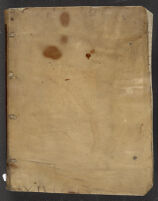
Binding: Pre-1600. Limp vellum binding.
- Custodial History:
-
Origin: Canterbury, Southeastern England.
Provenance:
The cathedral priory of the Holy Trinity or Christ Church, Canterbury, founded in 597: Compiled by Salomon (fl. 1185), monk and afterwards sub-prior of Christ Church, Canterbury: his notes (ff. 1v, 78v), extracts copied by him (ff. 73r-75v). The directions for calculating the moon of Septuagesima (ff. 6r-6v) indicate 1184 as the date of compilation; formerly bound with Cotton Caligula A XV, ff. 120r-153r; the volume (entitled 'Compotus Adelardi') in Prior Eastry's early 14th-century catalogue of books in the library of Christ Church, Canterbury (now Cotton Galba E. IV, f. 133v, printed by James, Ancient Libraries of Canterbury and Dover (1903), p. 49, no. 287); its catalogue title 'Adthelardus de compoto' in the upper margin of f. 1r; a 12th-century list of the Archbishops of Canterbury from Augustine to Richard of Dover (consecrated 1174) (f. 34r); (?) its pressmark 'Gr.' and '51' (f. 1r); also added 12th-century verses (f. 18r); 14th-15th century texts (ff. 37r-40v); a note on the flood in Thanet and Sheppey, 21 January 1394, with miscellaneous memoranda and prognostications, written in the 14th and 15th century (f. 1r); tables to show the dates of Easter from 1406-1433 (f. 13r); and from 1420-1447 (f. 13v).
? John Trendle, a monk of Christ Church, Canterbury (d. 1433): inscribed 'Quere residuum istius operis in tabula Johannis Trendle' (f. 33v) in an added table of the dates of Easter 1269-1408 (ff. 32v-33v), written as a continuation of the table in Cotton Caligula A. XV, ff. 132v-139.
John Dee (b. 1527, d. 1609), mathematician, astrologer, and antiquary: his 'Jupiter' sign (top righthand corner of f. 1); his annotations (ff. 60v-61r).
William Cecil (b. 1520/21, d. 1598), 1st Baron Burghley, royal minister: his sale, 21 November 1687, lot 83; bought by Grey.
Thomas Grey (b. 1653/4, d. 1720), 2nd Earl of Stamford, conspirator and politician: see Willetts, 'A reconstructed astronomical manuscript' (1965-1966), pp. 28-29.
Robert Butts (b. 1684, d. 1748), bishop of Ely: his armorial book-plate (numbered as f. i, pasted onto f. iii).
Bought by the British Museum in 1945, using the Bridgewater fund (£12,000 bequeathed in 1829 by Francis Henry Egerton, 8th Earl of Bridgewater (b. 1756, d. 1829)).
- Information About Copies:
-
Full digital coverage available for this manuscript: see Digitised Manuscripts at http://www.bl.uk.manuscripts/.
Select digital coverage available for this manuscript: see Catalogue of Illuminated Manuscripts at http://www.bl.uk/catalogues/illuminatedmanuscripts/welcome.htm.
- Publications:
-
Montague R. James, Ancient Libraries of Canterbury and Dover (Cambridge: Cambridge University Press, 1903), p. 49, no. 287.
Neil R. Ker, Catalogue of Manuscripts containing Anglo-Saxon (Oxford: Clarendon Press, 1957), pp. 173-76, no. 139.
Medieval Libraries of Great Britain: A List of Surviving Books, ed. by N. R. Ker, 2nd edn, Royal Historical Society Guides and Handbooks, 3 (London: Royal Historical Society, 1964), p. 36.
P. J. Willetts, 'A Reconstructed Astronomical Manuscript from Christ Church Library, Canterbury', British Museum Quarterly, 30 (1965), 22-30, pl. iv.
The British Museum Catalogue of Additions to the Manuscripts 1936-1945, 2 vols (London: British Museum, 1970), I, no. Eg. 3314.
Andrew G. Watson, Catalogue of Dated and Datable Manuscripts c. 700-1600 in The Department of Manuscripts: The British Library, 2 vols (London: British Library, 1979), I, no. 517.
Anne Lawrence, ‘Manuscripts of Early Anglo-Norman Canterbury’, in Medieval Art and Architecture at Canterbury before 1220, ed. by Nicola Coldstream and Peter Draper, British Archaeological Association Conference Transactions, 5, 1979 (Leeds: Maney, 1982), pp. 101-11 (p. 108).
Richard Gameson, The Manuscripts of Early Norman England (c. 1066-1130) (Oxford: University Press, 1999), p. 97 no. 370, p. 105.
Jennifer Moreton, 'The Compotus of 'Constabularius' (1175): A Preliminary Study', in Language, Sciences, Philosophie au XIIe siècle, ed. by Joël Biard (Paris: Vrin, 1999), pp. 61-82 (p. 62, 79-82) [edition of ff. 94v-95v].
Michael Gullick, ‘Manuscrits et copistes normands en Angleterre (XIe-XIIe siècles), in Manuscrits et enluminures dans le monde normand (Xe-XVe siècles), ed. by Pierre Bouet and Monique Dosdat (Caen: Presses Universitaires, 1999), pp. 83-93 (p. 87 n. 15).
Helmut Gneuss, Handlist of Anglo-Saxon Manuscripts: A List of Manuscripts and Manuscript Fragments Written or Owned in England up to 1100, Medieval and Renaissance Texts and Studies, 241 (Tempe: Arizona Center for Medieval and Renaissance Studies, 2001), no. 411 [on ff. 9-72].
László Sandór Chardonnens, Anglo-Saxon Prognostics, 900-1100. Study and Texts (Boston: Brill, 2007), pp. 510-12, 550-52.
Roy M. Liuzza, Anglo-Saxon prognostics: An edition and translation of texts from London, British Library, MS Cotton Tiberius A. III (Cambridge: D. S. Brewer, 2010), pp. 9-13.
Philipp E. Nothaft, Dating the Passion: The Life of Jesus and the Emergence of Scientific Chronology (200-1600) (Leiden: Brill, 2012), pp. 146-54.
Richard Sharpe and James Willoughby, Medieval Libraries of Great Britain (Oxford: The Bodleian Libraries, 2015) «http://mlgb3.bodleian.ox.ac.uk/mlgb/book/1261/?search_term=egerton%203314&page_size=500» [accessed 2 August 2016].
Opera de computo saeculi duodecimi: Reinheri Paderbornensis computus emendatus, Magistri Cunestabuli computus, Rogeri Herefordensis computes, Corpus Christianorum, Continuatio Mediaevalis 272, ed. by Alfred Lohr (Turnhout: Brepols, 2015), pp. xxxvii-xxxviii.
- Material Type:
- Archives and Manuscripts
- Legal Status:
- Not Public Record(s)
- Notes:
-
This manuscript is part of The Polonsky Foundation England and France Project: Manuscripts from the British Library and the Bibliothèque nationale de France, 700-1200.