Hard-coded id of currently selected item: . JSON version of its record is available from Blacklight on e.g. ??
Metadata associated with selected item should appear here...
Add MS 37517
- Record Id:
- 032-002053887
- Hierarchy Root Ancestor Record Id:
- 032-002053887
- MDARK:
- ark:/81055/vdc_100000000046.0x000371
- LARK:
- ark:/81055/vdc_100055998963.0x000001
- SLARK:
- Format:
- ISAD(G)
- Reference (shelfmark):
- Add MS 37517
- Title:
-
Psalter ('The Bosworth Psalter') with gloss in Latin
- Scope & Content:
-
This manuscript, known as the 'Bosworth Psalter', contains the Roman version of Psalms, monastic canticles and hymns with some Latin glosses. The main body of the text was probably copied in the 3rd quarter of the 10th century. This Psalter was designed for use of a community following the Rule of St Benedict and is the earliest surviving manuscript containing the 'New Hymnal' that was made in England (Gretsch, Intellectual Foundations, p. 282). Its production has traditionally been associated with one of the houses governed by St Dunstan (r. 959-988). Around the turn of the 11th century a calendar and litany was added, and sometime in the early 11th century some Old English interlinear glosses were added to all or part of 29 Psalms and 6 canticles (ff. 32r, 34r, 38v, 40r, 43, 54v-55r, 64v-65v, 77v-87r, 90r-92r, 101r-103r). Probably in the 12th century, a drawing of Christ was added (f. 128v), and further text was added later in the margins as well, such as the list of prayers and liturgy in two columns on f. 64r.
Contents:
ff. 1v-3r: Kalendar, perhaps added shortly after the Psalter was copied.
ff. 4r-95r: A Psalter.
ff. 95v-104r: Canticles.
f. 104r-v: A litany, with other prayers and liturgy.
ff. 105r-128v: A hymnal.
ff. 129r-134r: Monastic canticles.
ff. 135v-138v: Prayers and other liturgical material, including a brief litany on f. 136r, added in the late 10th or early 11th century.
Decoration:
Large initials with zoomorphic and/or interlace decoration at the beginning of Psalms 1, 51, 101, and 109 (ff. 4r, 33r, 64v, 74r). Display capitals in red, blue and grey-purple (ff. 4r, 16r, 20r, 25r, 37r, 41v, 45v, 54v, 61v, 64v, 74r, 77v, 80v, 83v, 87r, 94v, 105r, 112r, 118r, 129r, 138r). Outline of two large initials (f. 135v). Initials and text in red, green and blue in the calendar (ff. 2r-3r). Initials in green, blue and red at the beginning of each Psalm, some with human or animal heads as terminals (ff. 19r-29v) and/or foliate decoration. Smaller initials in red at the beginning of each verse. Diagram comprised of circles, with information about the months and the calendar (f. 1v). Musical notation (ff. 61r, 137v, 138r-v). Foliate red line filler (f. 64v). Unfinished drawing in outline of Christ, probably added in the 12th century (f. 128v).
- Collection Area:
- Western Manuscripts
- Project / Collection:
- Additional Manuscripts
England and France 700-1200 Project - Hierarchy Tree:
- [{ "id" : "032-002053887", "parent" : "#", "text" : "Add MS 37517: Psalter ('The Bosworth Psalter') with gloss in Latin" , "li_attr" : {"class": "orderable"} }]
- Hierarchy Record Ids:
- 032-002053887
- Is part of:
- not applicable
- Hierarchy:
- 032-002053887
- Container:
- not applicable
- Record Type (Level):
- Fonds
- Extent:
-
A parchment codex
- Digitised Content:
- https://iiif.bl.uk/uv/#?manifest=https://bl.digirati.io/iiif/ark:/81055/vdc_100055998963.0x000001
- Thumbnail:
-
- Languages:
- English, Old
Latin - Scripts:
- Latin
- Start Date:
- 0960
- End Date:
- 1030
- Date Range:
- Late 10th century-early 11th century
- Era:
- CE
- Access:
-
Please request the physical items you need using the online collection item request form.
Digitised items can be viewed online by clicking the thumbnail image or digitised content link.
Readers who have registered or renewed their pass since 21 March 2024 can request physical items prior to visiting the Library by completing
this request form.
Please enter the Reference (shelfmark) above on the request form.If your Reader Pass was issued before this date, you will need to visit the Library in London or Yorkshire to renew it before you can request items online. All manuscripts and archives must be consulted at the Library in London.
This catalogue record may describe a collection of items which cannot all be requested together. Please use the hierarchy viewer to navigate to individual items. Some items may be in use or restricted for other reasons. If you would like to check the availability, contact our Reference Services team, quoting the Reference (shelfmark) above.
- User Conditions:
- Letter of introduction required to view this manuscript
- Physical Characteristics:
-
Materials: Parchment.
Dimensions: 380 x 260 mm [ff. 2 and 3 are 350 x 250 mm] (text space: 330-300 x 210-190 mm).
Foliation: ff. 139 (+ f. I, which is a parchment flyleaf + 2 unfoliated paper flyleaves at the beginning and at the end).
Script: Anglo-Saxon square minuscule; Anglo-Saxon vernacular minuscule; Anglo-Caroline minuscule.
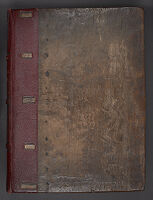
Binding: Pre-1600. Both boards may be contemporary. These were reversed and reused when the manuscript was rebound in the 14th or 15th century.
- Custodial History:
-
Origin: Westminster or Canterbury, Southern England.
Provenance:
? Westminster or Canterbury: The square minuscule script is related to other works created at houses governed by Dunstan, abbot of Glastonbury, bishop of London, and later archbishop of Canterbury, such as the Sherborne Pontifical (Paris, Bibliothèque Nationale MS lat. 943). The Psalter may be the work of a scribe for a charter of 962 for Westminster (London, Westminster Abbey, MS WAM VIII; see Ganz, 'Square Minuscule' (2012), p. 194). Christ Church, Canterbury, St Augustine's Abbey, Canterbury, and Winchester have also been proposed as places of origin (see Stokes, English Vernacular (2014), p. 129).
? Dunstan (d. 988), archbishop of Canterbury and saint: this manuscript has traditionally been described as Dunstan's personal possession, although this attribution is now debated (see Noel, Harley Psalter (1995), p. 3).
? The cathedral priory of the Holy Trinity or Christ Church, Canterbury, founded in 597: the Kalendar is associated with Canterbury and Glastonbury and was added between 988 and c. 1000 (see Temple, Anglo-Saxon Manuscripts (1976)); perhaps wrote the Old English gloss (between ff. 32r and 103r); Anglo-Saxon neumes (ff. 106v, 126v-127r, and 135r); litany (f. 104r); and prayers (ff. 135v-139r) that were added at the beginning of the 11th century; the Anglo-Norman neumes (f. 61r) that were added in the 2nd half of the 11th century; and the Latin gloss (ff. 4r-32v, 44r-53v) that was added in the 12th century.
Thomas Cranmer (b. 1489, d. 1556), archbishop of Canterbury: inscribed 'Thomas Cantuarien[sis]' (f. 2r).
Henry Fitz Alan, 12th earl of Arundel (b. 1512, d. 1580), magnate: inscribed 'Arundel' (f. 2r); the Arundel collection bequeathed to Lord Lumley, his son-in-law.
John Lumley, 1st baron Lumley (b. c.1533, d. 1609), collector and conspirator: inscribed with his name (f. 2r).
? Perhaps part of the library at Bosworth Hall, Leicestershire from the family of Fortescue of Salden. In 1762 Elizabeth Fortescue owned the manor of Husbands-Bosworth; in 1763 she devised her estate to Francis Fortescue Turville.
Francis Fortescue Torville of Bosworth Hall (d. 1830): his book-plate (inside front cover).
Oswald Turville-Petre (b. 1862, d. 1941) of Bosworth Hall: acquired from him by the British Museum in 1907.
- Information About Copies:
-
Full digital coverage available for this manuscript: see Digitised Manuscripts at http://www.bl.uk.manuscripts/.
Select digital coverage available for this manuscript; see the Catalogue of Illuminated Manuscripts, https://bl.uk/catalogues/illuminatedmanuscripts/.
- Publications:
-
New Palaeographical Society: Facsimiles of Ancient Manuscripts, etc., ed. by Edward Maunde Thompson and others, First series, 2 vols, (London: [n. pub.], 1903-1912), 1 [-2], pls 163-64.
Catalogue of Additions to the Manuscripts in the British Museum in the Years 1906-1910 (London: British Museum, 1912), pp. 65-67.
Abbot Gasquet and Edmund Bishop, The Bosworth Psalter (London: Bell and Sons, 1908).
Die altenglischen Glossen im Bosworth-Psalter, ed. by Uno L. Lindelof, Memoires de la Societe Neo-Philologique de Helsingfors, 5 (Helsinfors: Société Neophilologique, 1909) [edition of the text].
British Museum Bible Exhibition 1911: Guide to the Manuscripts and Printed Books exhibited in Celebration of the Tercentenary of the Authorized Version (London: British Museum, 1911), no. 19.
[J.A. Herbert], British Museum: Reproductions from Illuminated Manuscripts, Series 3, 3rd edn (London: British Museum, 1925), pl. 5.
Eric G. Millar, English Illuminated Manuscripts from the Xth to the XIIIth Century (Paris: Van Oest, 1926), p. 106.
The Monastic Breviary of Hyde Abbey, Winchester: MSS. Rawlinson Liturg. e. 1*, and Gough Liturg. 8, in the Bodleian Library, Oxford, ed. by J.B.L. Tolhurst, Henry Bradshaw Society, 69-71, 76, 78, 80, 6 vols (London: Henry Bradshaw Society, 1932-42), VI, p. 238.
D. Talbot Rice, English Art 871-1100 (Oxford: The Clarendon Press, 1952), p. 196, pl. 57b.
T. S. R. Boase, English Art 1100-1216, Oxford History of English Art, 2 (Oxford: Clarendon Press, 1957), p. 47 n. 2.
N. R. Ker, Catalogue of Manuscripts Containing Anglo-Saxon (Oxford: Clarendon Press, 1957), no. 129.
Cecilia Sisam and Kenneth Sisam, The Salisbury Psalter, edited from Salisbury Cathedral MS. 150, Early English Text Society, 242 (London: Oxford University Press, 1959), p. ix.
Medieval Libraries of Great Britain: A List of Surviving Books, ed. by N. R. Ker, Royal Historical Society Guides and Handbooks, 3, 2nd edn (London: Royal Historical Society, 1964), p. 42.
Michael Korhammer, 'The Origin of the Bosworth Psalter', Anglo-Saxon England, 2 (1973), 173-87.
Graham Pollard, 'Some Anglo-Saxon Bookbindings', The Book Collector, 24 (1975), 130-59 (pp. 149-50).
Die monastischen Cantica im Mittelalter und ihre altenglische Interlinearversion: Studien und Textausgabe, ed. by Michael Korhammer (Munich: Wilhelm Fink, 1976).
Elżbieta Temple, Anglo-Saxon Manuscripts 900-1066, A Survey of Manuscripts Illuminated in the British Isles, 2 (London: Harvey Miller, 1976), no. 22; pp. 12, 57, 62, 63, 72, 75, 77.
J. J. G. Alexander, 'Scribes as Artists: The Arabesque Initial in Twelfth-Century English Manuscripts', in Medieval Scribes, Manuscripts & Libraries: Essays Presented to N. R. Ker, ed. by M. B. Parkes and Andrew G. Watson (London: Scolar Press, 1978), pp. 87-116 (p. 97).
The Stowe Psalter, ed. by Andrew C. Kimmens (Toronto: University of Toronto Press, 1979), p. x.
Andrew G. Watson, Catalogue of Dated and Datable Manuscripts c. 700-1600 in The Department of Manuscripts, The British Library, 2 vols (London: British Library, 1979), no. 381.
Nigel Morgan, 'Notes on the Post-Conquest Calendar, Litany and Martyrology of the Cathedral Priory of Winchester with a Consideration of Winchester Diocese Calendars of the Pre-Sarum period', in The Vanishing Past: Medieval Studies Presented to Chrisopher Hohler, ed. by Alan Borg and Andrew Martindale (Oxford: B.A.R., 1981), pp. 133-74 (p. 165).
Anne Lawrence, ‘Manuscripts of Early Anglo-Norman Canterbury’, in Medieval Art and Architecture at Canterbury before 1220, ed. by Nicola Coldstream and Peter Draper, British Archaeological Association Conference Transactions, 5, 1979 (Leeds: Maney and Son, 1982), pp. 101-11 (p. 102).
Gernot R. Wieland, The Canterbury Hymnal, edited from British Library Ms. Additional 37517 (Toronto: Pontifical Institute of Medieval Studies, 1982) [ff. 105-128].
The Golden Age of Anglo-Saxon Art 966-1066, ed. by Janet Backhouse, D.H. Turner, and Leslie Webster (London: British Museum, 1984), no. 36, pl. V [exhibition catalogue].
Michelle Brown, A Guide to Western Historical Scripts from Antiquity to 1600 (London: British Library, 1990), no. 21.
Michael Gullick, Calligraphy (London: Studio Editions, 1990), pl. 11.
Michelle Brown, Anglo-Saxon Manuscripts (London: British Library, 1991), pl. 35.
David N. Dumville, 'On the Dating of some Late Anglo-Saxon Liturgical Manuscripts', Transactions of the Cambridge Bibliographical Society, 10 (1991-95), 40-57 (p. 45).
Anglo-Saxon Litanies of the Saints, ed. by Michael Lapidge, Henry Bradshaw Society, 106 (London: Henry Bradshaw Society, 1991), p. 67.
Biblical Commentaries from the Canterbury School of Theodore and Hadrian, ed. by Bernhard Bischoff and Michael Lapidge, Cambridge Studies in Anglo-Saxon England, 10 (Cambridge: Cambridge University Press, 1994), p. 83 n. 4.
Phillip Pulsiano, Anglo-Saxon Manuscripts in Microfiche Facsimile, Volume 2: Psalters I, Medieval & Renaissance Texts & Studies, 137 (Binghamton, NY: Medieval & Renaissance Texts & Studies, 1994), pp. 1-12.
Richard Gameson, ‘Book Production and Decoration at Worcester in the Tenth and Eleventh Centuries’, in St Oswald of Worcester: Life and Influence, ed. by Nicholas Brooks and Catherine Cubitt, Studies in the Early History of Britain, The Makers of England, 2 (London: Leicester University Press, 1996), pp. 194-243 (p. 201).
David G. Selwyn, The Library of Thomas Cranmer (Oxford: The Oxford Bibliographical Society, 1996), pp. xix n., xl n., lix n., 168-69.
George Brown, 'The Psalms as the Foundation of Anglo-Saxon Learning', in The Place of the Psalms in the Intellectual Culture of the Middle Ages, ed. by Nancy Van Deusen (Albany: State University of New York, 1999), pp. 1-24 (p. 7).
Michelle P. Brown and Patricia Lovett, The Historical Source Book for Scribes (London: British Library, 1999), pl. on p. 24.
Mechthild Gretsch, The Intellectual Foundations of the English Benedictine Reform (Cambridge: Cambridge University Press, 1999), pp. 19, 26, 27, 40, 282, 283, 328.
Richard Gameson, 'Books, Culture and the Church in Canterbury around the Millennium', in Vikings, Monks and the Millennium: Canterbury in about 1000 A.D., Lectures delivered to the Canterbury Archaeological Society, 30 March 2000 (Tenterden: Canterbury Archaeological Society, 2000), pp. 15-41 (p. 31, pl. 4).
Helmut Gneuss, Handlist of Anglo-Saxon Manuscripts: A List of Manuscripts and Manuscript Fragments Written or Owned in England up to 1100, Medieval and Renaissance Texts and Studies, 241 (Tempe: Arizona Center for Medieval and Renaissance Studies, 2001), no. 291.
The Leofric Missal I, ed. by Nicholas Orchard, Henry Bradshaw Society, 113 (London: Henry Bradshaw Society, 2002), pp. 8, 54, 158-84.
Diane Reilly, ‘French Romanesque Giant Bibles’, Scriptorium: Revue internationale des études relative aux manuscrits, 56 (2002), 294-311 (p. 294 n. 1).
Rebecca Rushforth, An Atlas of Saints in Anglo-Saxon Calendars, ASNC Guides Texts and Studies, 6 (Cambridge: University of Cambridge, Department of Anglo-Saxon, Norse and Celtic, 2002), no. 9.
Treasures of the British Library, ed. by Nicolas Barker and others (London: British Library, 2005), p. 221.
K.D. Hartzell, Catalogue of Manuscripts Written or Owned in England up to 1200 containing Music (Woodbridge: Boydell Press, 2006), p. 218, no. 122.
Michelle P. Brown, Manuscripts from the Anglo-Saxon Age (London: British Library, 2007), p. 89, pl. on p. 113.
Scot McKendrick and Kathleen Doyle, Bible Manuscripts (London: British Library, 2007), p. 47, fig. 34.
Richard Gameson, The Earliest Books of Canterbury Cathedral: Manuscripts and Fragments to c. 1200 (London: Bibliographical Society, 2008), p. 123.
Richard Gameson, 'The material fabric of early British books', in The Cambridge History of the Book in Britain, 6 vols (Cambridge: Cambridge University Press, 1999-2012), I: c. 400-1100, ed. by Richard Gameson (2012), pp. 13-93, (pp. 39, n. 100, 67, n. 233, 80, n. 283).
Richard Gameson, 'Anglo-Saxon scribes and scriptoria', in The Cambridge History of the Book in Britain, 6 vols (Cambridge: Cambridge University Press, 1999-2012), I: c. 400-1100, ed. by Richard Gameson (2012), pp. 94-120 (p. 114, n. 81).
David Ganz, 'Square Minuscule', in The Cambridge History of the Book in Britain, 6 vols (Cambridge: Cambridge University Press, 1999-2012), I: c. 400-1100, ed. by Richard Gameson (2012), pp. 188-96 (p. 194).
Richard Gameson, 'Book decoration in England, c. 871-1100', in The Cambridge History of the Book in Britain, 6 vols (Cambridge: Cambridge University Press, 1999-2012), I: c. 400-1100, ed. by Richard Gameson (2012), pp. 249-93 (p. 262).
Michael Gullick, 'Bookbindings' in The Cambridge History of the Book in Britain, 6 vols (Cambridge: Cambridge University Press, 1999-2012), I: c. 400-1100, ed. by Richard Gameson (2012), pp. 294-309 (p. 299).
Peter A. Stokes, English Vernacular Minuscule from Æthelred to Cnut circa 990-1035 (D.S. Brewer: Cambridge, 2014), pp. 49, 120, 129, 167-68, 173.
Kathleen Doyle and Charlotte Denoël, Medieval Illumination: Manuscript Art in England and France 700-1200 (London: British Library, 2018), also published as Enluminures Médiévales: Chefs-d'oeuvre de la Bibliothèque nationale de France et de la British Library, 700-1200 (Paris : BnF Éditions, 2018), pp. 8, 164.
Anglo-Saxon Kingdoms: Art, Word, War, ed. by Claire Breay and Joanna Story (London: The British Library, 2018), no. 92 [exhibition catalogue].
- Exhibitions:
- Anglo-Saxon Kingdoms: Art, Word, War, British Library, London, 19 October 2018 - 19 February 2019
- Material Type:
- Archives and Manuscripts
- Legal Status:
- Not Public Record(s)
- Notes:
- This manuscript is part of The Polonsky Foundation England and France Project: Manuscripts from the British Library and the Bibliothèque nationale de France, 700-1200.