Hard-coded id of currently selected item: . JSON version of its record is available from Blacklight on e.g. ??
Metadata associated with selected item should appear here...
Cotton MS Titus D XXVI
- Record Id:
- 040-001103599
- Hierarchy Root Ancestor Record Id:
- 032-001101582
- MDARK:
- ark:/81055/vdc_100000001273.0x0003a4
- LARK:
- ark:/81055/vdc_100056027194.0x000001
- SLARK:
- Format:
- ISAD(G)
- Reference (shelfmark):
- Cotton MS Titus D XXVI
- Title:
- Liturgical and computistical collection (‘Ælfwine’s Prayerbook’), including rules of confraternity
- Scope & Content:
-
Cotton MS Titus D XXVII and Cotton MS Titus D XXVI originally formed one manuscript which began with Cotton MS D XXVII and was followed by Cotton MS D XXVI (see Henel, De temporibus anni (1942)).
Contents:
f. 1r-v: An early modern table of contents.
f. 2r-v: Directions for devotions added in the first half of the 11th century, beginning: 'Ælce sunnan dæg bebeod þe ðære þrynesse naman'.
f. 3r: A list of dates quite similar to the computistical genre of the 'Six ages of the world', beginning: 'A principio usque ad diluvium anni mille sexcenti .lvi. . A diluvio usque ad Abraham anni .ccxcv. et fiant simul anni trium aetatum mille .dccccxlviii'.
ff. 3r-v: Early version of an amulet measured according to the length of Christ's body and the wood of the Cross: Rubric 'De mensium (sic) salvatoris', beginning: 'Haec figura sedecies multiplicata perficit mensuram Domini Nostri Ihesu Christi corporis et est assumpta aligno preciosa dominice', ending (f. 3v) : '[...] in qua conscriptum Iudei illud titulum habuerunt: 'Hic est rex Iudeorum''.
ff. 3v-4v: A prognostic, including the three critical Mondays with Egyptian days, Rubric: 'Hic noctantur dies egyptiaci qui observandi sunt per omnia nequis sanguinem audiat in eis minuere'. beginning: 'Dies enim aegyptiaci in quibus nullius modi nec per ulla necessitate non licet hominem'.
ff. 4r-v: Temporal prognostics for the three miraculous days, beginning: 'Tres dies sunt in anno cum totidem noctibus'.
f. 4v: Texts on Dog days and other lunar days, mainly to caution people against these days. Rubric: 'Quali tempora aperienda sit vena', beginning: 'Incipiente artucanis vel arcturi adque siria stella'.
f. 5r: Egyptian days without the last four days, a list of unlucky days in the agricultural year, beginning: 'Incipiunt dies aegiptiaci qui in anno observandi sunt'.
ff. 5r-6r: Distances between the Earth, moon, sun and stars, predictions of the weather based on the colour of the moon and an account on the rainbow mainly based on Bede's De natura rerum, beginning: 'Pythagoras vero vir animi sagax scribit a terra ad lunam cxxvi milia stadiorum esse collegit a solem autem ab ea duplum inde ad .xii. signa triplicatum'.
f. 6r-v: A bloodletting lunarium, rubric: 'De flebotomatione vel de minuendo sanguine', beginning: 'Luna prima. Tota die bonum est'.
ff. 6v-7v: Birth prognostics or nativitates, rubric: 'De nativitate infantium', beginning: 'Die dominico hora diuturna. Sive nocturna uti li (sic) erit qui nascetur magnusque et splendidus'.
ff. 7v-8r: A birth lunary, rubric: 'Incipit lunares Sancti Danielis de nativitate', beginning: 'Luna .I. qui natus fuerit'.
ff. 8r-9r: A medical lunary to predict illness, rubric: 'Incipit lunares de aegris', beginning: 'Luna .i. qui inciderit difficile evadet'.
f. 9r-v: A dreams lunary, rubric: 'Incipit lunaris de somnis', beginning: 'Luna .i. quicquid videri'.
ff. 9v-10v: Thunder prognostics (brontology), rubric: 'De tonitruis dierum vel trium', beginning: 'Si notaverit hora vespertina'.
ff. 10v-11v: Revelatio Esdrae, rubric: 'Incipiunt signa de temporibus', beginning: 'Si die .i. feria fuerint kl. ianuarii'.
ff. 11v-16r: Somniale Danielis, beginning: 'Aves in somnis videre et cum illis pugnare'. An early modern hand has added above the incipit: 'Alphabetum Somniale exemplum ex Danielis libro'.
f. 16v: A rubric for a Latin formula (for the use of the priest before any celebration of divine service) added in the first half of the 11th century in a blank space: 'Þis ðu scealt singan þonne ðu wylt ðwean þine handa 7 þine eagan', with the Latin formula (f. 16v): 'Lutum fecit ex puto (sic) dominus. Ad te levavi oculos meos, usque in finem. Kýrrieł Christeł Kýrrieł'.
ff. 16v-17r: A recipe against ulcers added in the first half of the 11th century in a blank space, beginning: 'Wið þa blegene genim'.
ff. 17v-18r: Rules of confraternity between the abbot of New Minster and unspecified abbots and bishops. This formula is a slightly later addition of the first half of the 11th century, beginning: 'Þis is þæra gerædnyssarium (sic) þe biscopas 7 abbodas geræd habbaþ'.
ff. 20r-50v: A series of devotions based on the penitential Psalms and three special offices, rubric 'Capitula vigilia unius apostolic', beginning: 'Iustum deduxit Dominus per vias rectas et ostendit illi regnum Dei'.
ff. 51r-56v: A Litany of saints for New Minster, beginning: 'Kyrrie leison. Christe leison. Christe audi nos'.
ff. 56v-79v: Prayers with the rubric: "Collecta oremus', beginning: 'Omnipotens sempiterne Deus, qui dedisti nobis, fidelibus tuis'.
f. 79v: A charm for finding a thief, rubric: 'Pro furto', beginning: 'Si habes aliquam rem perditam, scribe has litteras in carta virgine'.
f. 80r-v: The beginning of the Gospel of St John, rubric: 'Initium Sancti Evangelii secundum Iohannem', beginning: 'In principio erat verbum, et verbum erat apud Deum'.
Decoration:
Titles in red in rustic capitals. Numerous plain initials in red, blue, green and purple.
A miniature as in Cotton MS Titus D XXVII, which precedes a major devotional section, St Peter seated on a throne between two columns supporting a trefoiled canopy, holding a double key in his right hand and a book in his left hand. Below him is a supplicating monk who may represent Ælfwine, holding a book in his left hand. The folds of the clothes, curtains and arches are shaded with green and red (f. 19v).
- Collection Area:
- Western Manuscripts
- Project / Collection:
- Cotton Collection
England and France 700-1200 Project - Hierarchy Record Ids:
- 032-001101582
040-001103599 - Is part of:
- Cotton MS : Cotton Manuscripts
Cotton MS Titus D XXVI : Liturgical and computistical collection (‘Ælfwine’s Prayerbook’), including rules of confraternity - Hierarchy:
- 032-001101582[1116]/040-001103599
- Container:
- View / search within Archive / Collection: Cotton MS
- Record Type (Level):
- File
- Extent:
-
A parchment codex
- Digitised Content:
- https://iiif.bl.uk/uv/#?manifest=https://bl.digirati.io/iiif/ark:/81055/vdc_100056027194.0x000001
- Thumbnail:
-
- Languages:
- English, Old
Latin - Scripts:
- Latin
- Start Date:
- 1020
- End Date:
- 1029
- Date Range:
- 3rd decade of the 11th century
- Era:
- CE
- Access:
-
Please request the physical items you need using the online collection item request form.
Digitised items can be viewed online by clicking the thumbnail image or digitised content link.
Readers who have registered or renewed their pass since 21 March 2024 can request physical items prior to visiting the Library by completing
this request form.
Please enter the Reference (shelfmark) above on the request form.If your Reader Pass was issued before this date, you will need to visit the Library in London or Yorkshire to renew it before you can request items online. All manuscripts and archives must be consulted at the Library in London.
This catalogue record may describe a collection of items which cannot all be requested together. Please use the hierarchy viewer to navigate to individual items. Some items may be in use or restricted for other reasons. If you would like to check the availability, contact our Reference Services team, quoting the Reference (shelfmark) above.
- User Conditions:
- Letter of introduction required to view this manuscript
- Physical Characteristics:
-
Materials: Parchment.
Dimensions: 130 × 95 mm (text space: 95 x 60 mm).
Foliation: ff. 80 (+ 3 unfoliated paper flyleaves and 2 unfoliated parchment flyleaves and 1 unfoliated paper flyleaf mounted on a tab at the beginning, + 5 unfoliated parchment flyleaves and 3 unfoliated paper flyleaves at the end).
Script: Anglo-Caroline minuscule and English vernacular minuscule.
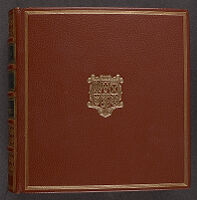
Binding: British Museum/British Library. Rebound in 1965.
- Custodial History:
-
Origin: Winchester, Southeastern England.
Provenance:
Ælfwine (d. 1057): his ownership is acknowledged in an encoded inscription, where some vowels were replaced by the consonant which follows it (f. 13v). 'Ælfƿknp mpnbchp aeqxf dfcbnp cpmpptxm kstxm ppsskdfp t mf ppsskdst Bmfn' = 'Ælfwino/us monacho/us aeque decano/us compotum istum possideo/ me possidet. Amen' (see Gameson, 'Aelsinus' (2004)). Cotton MS Titus D XXVI and Cotton MS Titus D XXVII may have constituted Ælfwine's personal prayerbook and show a number of internal references to Ælfwine: a prayer with his name (Cotton MS Titus D XXVI, f. 61v), the obits of his mother (named Wulfynn who died in 1029), his father, his brother and sisters in the calendar (Cotton MS Titus D XXVII, ff. 4r, 7v, 8r) and a blessing in his name within the full-page miniature showing Christ's crucifixion: 'Hec crux consignet Aelfwinum corpore mente' (Cotton MS Titus D XXVII, f. 65v). The manuscript was probably compiled for Ælfwine, before he became abbot of the New Minster in 1031 or 1032. The bulk of this manuscript has traditionally been attributed to two scribes, one of whom identified himself as Aelsinus (Ælfsige), monk of New Minster in an encrypted colophon (f. 13v; see Ælfwine’s Prayerbook (1993)). Aelsinus's code of replacing vowels by the consonant which follows, when decoded, reads 'Frater humillimus et monachus Aelsinus me scripsit, sit illi longa salus. Amen. Aelfwino/us monacho/us aeque decano/us compotum istum possideo/ me possidet. Amen' (Cotton MS Titus D XXVII, f. 13v). Up to seven hands have been identified in the manuscript by Peter Stokes in the 11th-century text and additions (Stokes, English Vernacular (2014), p. 86). Aelsinus is also the scribe of the Liber vitae (Stowe MS 944) and computistical and calendar works (Cambridge, Trinity College, ms. R.15.32, 13-36).
The Benedictine abbey of New Minster, Winchester: the text includes rules of confraternity between the abbot of New Minster and other abbots and bishops (ff. 17v-18r); the names of six saints especially venerated in Winchester in the Litany of the saints (ff. 51r-53v); added, 11th-century directions for devotion, Latin formula and rules of Confraternity, written by different scribes (ff. 2r-v, 16v, 17r-v).
?The Benedictine abbey of St Mary, Winchester (the Nunnaminster): added, 12th-century feminine prayer in brown ink (Cotton MS Titus D XXVII f. 74r); in both manuscript a 12th-century hand has added feminine endings to numerous prayers (e. g., Cotton MS Titus D XXVI, ff. 61v; 67v). These additions could suggest a female owner, perhaps in the Nunnaminster community during the first half of the twelfth century (see Wilmart, Auteurs spirituels (1932), p. 543, N. Ker, Catalogue of manuscripts containing Anglo-Saxon (1957), no 202, and Robinson, 'A Twelfth-Century Scriptrix' (1997), p. 90).
Sir Robert Bruce Cotton (b. 1571, d. 1631), 1st baronet, antiquary and politician: cited in catalogues (see Tite, The Early Records (2003), p. 201.
Cotton’s collection was augmented by his son, Sir Thomas Cotton (b. 1594, d. 1662), 2nd baronet, and his grandson, Sir John Cotton.Sir John Cotton (b. 1621, d. 1702), 3rd baronet: bequeathed the entire Cotton collection of books and manuscripts to trustees ‘for Publick Use and Advantage’, 12 and 13 William III, c. 7. Formed one of the foundation collections of the British Museum in 1753.
- Information About Copies:
- Full digital coverage available for this manuscript: see Digitised Manuscripts at http://www.bl.uk.manuscripts.
- Publications:
-
Ælfwine’s Prayerbook (London, British Library, Cotton Titus D. xxvi + xxvii), ed. by Beate Günzel, Henry Bradshaw Society, 108 (London: Henry Bradshaw Society, 1993).
Anglo-Saxon Litanies of the Saints, ed. by Michael Lapidge, Henry Bradshaw Society, 106 (London: Henry Bradshaw Society, 1991), no. 21.
Birch, Walter De Gray and Jenner Henry, Early Drawings and Illuminations: An Introduction to the Study of Illustrated Manuscripts (London: Bagster and Sons, 1879), p. 4.
Birch, Walter de Gray, Liber Vitae: Register and Martyrology of New Minster Abbey, Winchester (London: Simpkin and Co, 1892), pp. 269-83.
British Museum Reproductions from Illuminated Manuscripts, ed. by Eric G. Millar, 4th ser. (London: British Museum, 1928), pl. 6.
Brown, Michelle, 'Female Book-Ownership and Production in Anglo-Saxon England: The Evidence of the Ninth-Century Prayerbooks', in Lexis and Texts in Early English: Studies Presented to Jane Roberts, ed. by Christian J. Kay and Louise M. Sylvester, Costerus New Series, 133 (Amsterdam: Rodopi, 2001), pp. 45-68 (p. 59).
Chardonnens, Làszlò S., Anglo-Saxon prognostics: 900-110. Study and texts, Brill's Studies in Intellectual History, 153 (Leiden: Brill, 2007), pp. 179-80, 255-56, 519-23 passim.
Dodwell, Charles R., Anglo-Saxon Art: A New Perspective (Manchester: Manchester University Press, 1982), p. 58, pl. 9.
Doyle, Kathleen and Charlotte Denoël, Medieval Illumination: Manuscript Art in England and France 700-1200 (London: British Library, 2018), also published as Enluminures Médiévales: Chefs-d'oeuvre de la Bibliothèque nationale de France et de la British Library, 700-1200 (Paris : BnF Éditions, 2018), p. 162.
Gameson, Richard, 'Aelsinus', Oxford Dictionary of National Biography (Oxford: Oxford University Press, 2004) [http://www.oxforddnb.com/view/article/202 accessed 26 April 2017].
Gameson, Richard, Manuscript Treasures of Durham Cathedral (London: Third Millennium, 2010), pp. 42-43.
Gneuss, Helmut, Handlist of Anglo-Saxon Manuscripts: A List of Manuscripts and Manuscript Fragments Written or Owned in England up to 1100 (Tempe, AZ: Arizona Center for Medieval and Renaissance Studies, 2001), no. 380.
Hamburger, Jeffrey F., and Nigel Palmer, The Prayer Book of Ursula Begerin, 2 vols (Zurich: Urs Graf Verlag, 2015), I, p. 412.
Henel, H., Ælfric, De Temporibus Annis, EETS vol. 213 (London: Early English Text Society, 1942), pp. xx-xxi.
Heslop, T. A., 'The Production of De Luxe Manuscripts and the Patronage of King Cnut and Queen Emma', in Anglo-Saxon England, 19, ed. by Michael Lapidge and others (Cambridge: Cambridge University Press, 1990), 151-98 (p. 153).
Ker, Neil R., Catalogue of Manuscripts containing Anglo-Saxon (Oxford: Clarendon Press, 1957; repr. 1990), no. 202.
Liuzza, Roy M., Anglo-Saxon prognostics: An edition and translation of texts from London, British Library, MS. Cotton Tiberius A.iii. (Cambridge: D. S Brewer, 2010), pp. 13-14.
Liuzza, Roy M., 'Anglo-Saxon prognostics in context: A survey and handlist of manuscripts', Anglo-Saxon England, 30 (2001), 219–21.
Matter, E. A., ‘The “Revelatio Esdrae” in English and Latin Traditions’, Revue Bénédictine, 92:3-4 (1982), 376-92 (p. 387 [no. 3]).
Medieval Libraries of Great Britain: A List of Surviving Books, ed. by Neil R. Ker, Royal Historical Society Guides and Handbooks, 3, 2nd edn (London: Royal Historical Society, 1964), p. 103.
The Monastic Breviary of Hyde Abbey, Winchester: MSS. Rawlinson Liturg. e. 1*, and Gough Liturg. 8, in the Bodleian Library, Oxford, ed. by J.B.L. Tolhurst, Henry Bradshaw Society, 69-71, 76, 78, 80, 6 vols (London: Henry Bradshaw Society, 1932-42), 6, p. 240.
Priebsch, Robert, The Heliand Manuscript, Cotton Caligula A. VII in the British Museum: A Study (Oxford: Clarendon Press, 1925), p. 27.
Rice, David T., English Art, 871-1100, Oxford History of English Art, 2 (Oxford: The Clarendon Press, 1952), pp. 165, 213n., 213, pl. 82.
Rickert, Margaret, Painting in Britain: the Middle Ages, 2nd edn (London: Penguin Books, 1965), pp. 42-43, 227n, pl. 37b.
Rushforth, Rebecca, An Atlas of Saints in Anglo-Saxon Calendars (Cambridge: University of Cambridge, Department of Anglo-Saxon, Norse and Celtic, 2002), no. 14.
Sharpe, Richard and Willoughby, James, Medieval Libraries of Great Britain (Oxford: The Bodleian Libraries, 2015) [accessed 19 January 2017].
Stafford, Pauline, 'Emma: The Powers of the Queen in the Eleventh Century', in Queens and Queenship in Medieval Europe, ed. by Anne J. Duggan (Woodbridge: Boydell Press, 1997), pp. 3-26 (pl. 3).
Stokes, Peter, English Vernacular Minuscule from Æthelred to Cnut circa 990-1035 (D.S. Brewer: Cambridge, 2014), 13, 35, 37, 42-43, 48, 49, 51-52, 60, 73, 83-84, 86-87, 91, 192.
Temple, Elzbieta, Anglo-Saxon Manuscripts 900-1066, Survey of Manuscripts Illuminated in the British Isles, 2 (London: Harvey Miller, 1976), no. 77.
Thomas, Kate, Late Anglo-Saxon Prayer in Practice: Before the Books of Hours (Berlin: De Gruyter and Medieval Institute Publications, 2020).
Tite, C., The Early Records of Sir Robert Cotton's Library (London: The British Library, 2003), p. 201.
Watson, Andrew G., Catalogue of Dated and Datable Manuscripts c. 700-1600 in The Department of Manuscripts, The British Library, 2 vols (London: British Museum, 1979), no. 561.
Wilmart, A., Auteurs spirituels et textes dévots du Moyen Age latin: Etudes d'Histoire Littéraire (Turnhout: Brepols, 1971), p. 135.
Wormald, Francis, English Kalendars before A.D. 1100, Henry Bradshaw Society, 72 (London: Harrison and Sons Ltd, 1934), pp. 113-25.
- Material Type:
- Archives and Manuscripts
- Legal Status:
- Not Public Record(s)
- Notes:
- This manuscript is part of The Polonsky Foundation England and France Project: Manuscripts from the British Library and the Bibliothèque nationale de France, 700-1200