Hard-coded id of currently selected item: . JSON version of its record is available from Blacklight on e.g. ??
Metadata associated with selected item should appear here...
R.M.20.g.3
- Record Id:
- 040-001948687
- Hierarchy Root Ancestor Record Id:
- 032-001948397
- MDARK:
- ark:/81055/vdc_100000000293.0x0003b1
- LARK:
- ark:/81055/vdc_100156353332.0x000001
- SLARK:
- Format:
- ISAD(G)
- Reference (shelfmark):
- R.M.20.g.3
- Title:
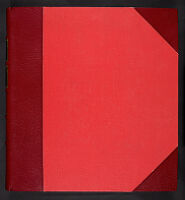
- G.F. Handel: Saul (oratorio by Charles Jennens) (HWV 53); 1738. Autograph.
- Scope & Content:
-
ROYAL MUSIC COLLECTION. (Händel-Gesellschaft XIII; Hallische Händel-AusgabeI/13, 1962). The MS. has so many alterations and cut that it is difficult to understand. The following is its arrangement. Between ff. 130 and 131 is a single leaf, ruled with staves but otherwise blank, not foliated; ff. 23v, 104 and 130v are ruled with staves but otherwise blank. See also R.M.30.g.14. (f. 51); for copies see R.M.18.d.9., R.M.18.c.11. (ff. 131-136), Eg. 2935, Add. MS. 5319. See also Donald Burrows and Martha J. Ronish, A Catalogue of Handel’s Musical Autographs (Oxford: Clarendon, 1994), pp. 171-175.
ff. iii + 133. 11.75 x 9.25in.
Points of note:
1. f. 1. ‘Organo tasto solo, e l’ottava, forte’ (H-G., p. 1) is not in the MS.
2. f. 4. Larghetto (H-G., p. 8). No ‘Teorba’ in the MS.
3. f. 5. At the end of the Larghetto: ‘Organo ad libitum’.
4. ff. 5v-6v. Allegro. The passages marked in H-G. (pp. 10, 12, etc.) ‘Organo solo’ are marked in the MS. ‘Hautb. solo’.
5. f. 8. ‘Ad libitum’ is pencilled against the passage in H-G., p. 17, top line, last bar. At the end of the Allegro: ‘NB. The Adagio for the Organ. And the allegro for the Organ, poi segue’ (crossed out in ink).
6. f. 9. ‘How excellent Thy name’. ‘July 23. 1738’. (Date at the top of the page). ‘Organo tasto solo’ etc. (H-G., p. 20) is not in the MS. The Trombone parts are written separately (cf. infra, f. 129, etc.).
7. f. 10v. Several bars have been cancelled in pencil from the end of H-G., p. 23, bar 6.
8. f. 11v, etc. The directions as to the organ (H-G., p. 24, etc.), are not in the MS.
9. f. 13v. A long cut has been made (in pencil) after the 3rd beat of the last bar of (H-G., p. 29).
10. f. 16v. A cut has been made (in pencil) after the end of bar 5 of H-G., p. 33.
11. f. 17. ‘The youth inspir’d’ (H-G. p. 38), marked: ‘un poco più Larghetto’. The words under the music are: ‘Vers. 2. an Infant rais’d’, etc. ‘Vers 4. the Youth inspir’d by Thee O Lord’, is written below the first phrase of the Soprano part.
12. f. 18. ‘Our fainting courage’ (original words: ‘Could fierce Goliah’s dreadfull hand’) (H-G., p. 39); marked in pencil ‘alla breve’.
13. f. 20v. At bottom of page (end of H-G., p. 43): ‘after vers. 4. the youth inspir’d replicatr sub litera B [i.e., H-G., p. 24, end of bar 4] vers. 5 with the same words how excellent’.
14. f. 21. ‘Along the monster atheist strode’. ‘Vers: 3’. A setting in G (hot in H-G.).
15. f. 22. ‘An infant rais’d’. ‘Mrs. Arne’. (H-G., p. 34). Followed by ‘Along the monster atheist’ (H-G., p. 35). At the end (f. 23): ‘Segue v. 4. the Youth inspird come stà. poi How excellent scortato poi l’Halleluja’.
16. f. 24. The end of the setting of ‘Along the monster atheist’ on f. 21. At the end: ‘replicatr sub litera A (an Infant rais) With other words as here follow: v. 4 ‘The Youth inspir’d by Thee, O Lord / with ease the Boaster slew / Our fainting Courage soon restor’d / and headlong drove that Impious Crew. after vers 4 the Youth inspir’d replicatur sub litera B vers. 5. with the same words How excellent’. [In another handwriting]: ‘Then the Halleluja, at the end of the Oratorio’.
17. f. 24v. ‘He comes, he comes’. (H-G., p. 57).
18. f. 28. The ‘Hallelujah’ Chorus, from the beginning of H-G., p. 50, bar 3.
19. f. 30. A long cut is marked in pencil after the end of H-G., p. 55, bar 2.
20. f. 31v. The end of the chorus (from the end of H-G., p. 55, bar 3) is wanting.
21. f. 32. ‘O early piety’. Recit. (H-G., p. 63). At the end: ‘Segue l’Aria di Merab. What abject thoughts’. Followed by ‘Wise, valiant, good’, air (H-G., p. 276) with altered words (‘Wise, great and good’) written (in a copyist’s hand?) above the voice part. The air is marked in pencil ‘for Mr Beard’, but all the first page of it is crossed out in ink.
22. f. 33v. A sign for repeat at the end of H-G., p. 278, line 3, bar 1, is crossed out in pencil.
23. f. 34v. The end of ‘Wise, valiant, good’ (from H-G., p. 280, line 1, end of bar2) is crossed out in ink: ‘Stat’ (in pencil) written above. The Da capo’s at the end are crossed out in pencil. A recitative for Merab (‘Yet think, with whom you stoop to link yourself How poor in fortune, and in birth how low!’) follows, but is crossed out in pencil. ‘Merab Aria ex E# or ex E m[?]’ (indistinct pencil note at the end).
24. f. 35. ‘Birth and fortune I dispise’ [sic] (H-G., p. 67).
25. f. 36. The end of ‘Birth and fortune’ is followed by a recitative (‘Go on, illustrious pair’) for the High Priest (H-G., p. 269).
26. f. 36v. 1. The Voice and Continuo parts of ‘While yet the tide of blood’ (H-G., p. 269); with a different ritornello (crossed out in ink). 2. ‘Thou, Merab, first in birth’. (H-G., p. 70); with some indistinct pencil notes at the end.
27. f. 37. ‘While yet the tide of blood’ (H-G., p. 269), without words, Headed: ‘to be transposed a 4 lower in Fis. The sing part a 5 higher in Contralt’.
28. f. 38. ‘My soul rejects’, in G. Marked (in pencil) ‘Ex A#’.
29. f. 39. ‘See with what a scornful air’ (H-G., p. 72); ending at the double bar.
30. f. 40v. ‘Sinfonie pour les Carillons’ (H-G., p. 76). At the end: ‘Segue Recit: Michal already see the Daughters’.
31. f. 41. The end of ‘See with what a scornful air’, with a reference for the inclusion of the ‘Sinfonie’, followed by ‘Already see’ as printed in H-G., p. 77.
32. f. 41v. ‘Welcome, mighty King’ (H-G., p. 78). Headed in pencil: ‘Les carillons vous trouveres cy joint N.B.’. The top line of the score is marked ‘V. unis e Carillons’ (in ink): ‘Carillons’ has been crossed out in pencil throughout.
33. f. 42v. ‘What do I hear’. (H-G., p. 81); ending at the end of bar 1.
34. f. 43. Blank, marked: ‘volti’.
35. f. 43v. ‘David his ten thousands’ (without the Trombone parts). At the end: ‘poi segue Recit Saul to him ten thousands’.
36. f. 44. End of ‘What do I hear’ (H-G., p. 81) with reference back for ‘David his ten thousands’, followed by ‘To him, ten thousands’, (p. 84).
37. f. 44v. ‘With rage shall I burst’ (H-G., p. 84).
38. f. 45v. ‘Impudent women’ (H-G., p. 87).
39. f. 46. ‘Fell rage’ (H-G., p. 88).
40. f. 47v. At the end of ‘Fell rage’: ‘This but the smallest part’(H-G., p. 271) and ‘By this universal frame’ (id.) follow, crossed out in pencil.
41. f. 49v. ‘Rack’d with infernal pains’ (H-G., p. 90), followed by ‘O Lord, whose mercies’ in B flat, crossed out in pencil, marked ‘ex Fi. a 4. lower’. Directed to be sung by David (crossed out in ink), High Priest (do.) in Contralto, Michal, ‘a note high’; ‘4 notes lower’; in a copyist’s handwriting. The whole crossed out in pencil.
42. f. 50. ‘Fly, malicious spirit’ (H-G., p. 281). A first version (down to the third bar of the voice part, with notes of half the value, and intended for ‘Abner in the Bass Cliff’), is crossed out in ink. Several passages are much altered and crossed out in ink.
43. f. 52v. ‘Tis all in vain’ (H-G., p. 92) and ‘A serpent in my bosom’ (p. 93).
44. f. 54v. Recitative (H-G., p. 97).
45. f. 55. ‘Scena 6. Chorus’. ‘What words can tell how happy they’. The Continuo, Bass voice and Drum parts written out, with the three opening notes of bar 1 of the other parts (crossed out in ink).
46. f. 58. ‘O filial piety’ (H-G., p. 105) down to the end of H-G., p. 106, line 1, bar 1.
47. f. 59. The end of an air (S.) (‘Love from such a parent sprung In spite of adverse fate is strong, In spite of time is ever young. But how weak and brittle prove The ties of mercenary love’). Pencil note (not in Handel’s handwriting): ‘The first 20 bars wanting’.
48. f. 60. ‘Oh fairest of ten thousand fair’ (H-G., p. 143).
49. f. 62v. ‘Is there a man’ (H-G., p. 147). At the end: ‘Segue la Sinfonia sub litera D. per l’organo’.
50. f. 63v. Recitative (H-G., p. 157).
51. f. 64v. ‘At persecution I can laugh’ (H-G., p. 158) – down to the end of p. 160, line 1: the last bars altered in pencil.
52. f. 66. A blank leaf headed: ‘Sinfonia per l’organo sub litera D nella Scena 5. dell atto 2do dell Oratorio Saul’.
53. f. 66v. ‘Sinfonia sub litera D nella Scena 5. dell Atto 2do’. At the end: ‘Segue Scena 6 dellAtto 2. David Michal Dav. Thy father is as cruel. Recit.’ (in ink). Above (in pencil); ‘Segue Recit. et Air of Merab poi’.
54. f. 70. ‘What abject thoughts a Prince can have’. Air: ‘Merab (aside)’. At the end is part of a recitative: ‘Merab aside to Jonathan’ ‘Yet think of whom this honour you bestow’, etc. Crossed out in ink.
55. f. 72. ‘Capricious man’ (H-G., p. 98).
56. f. 74. ‘2 Act after the Sinfonie Scena 6 Saul David Merab’. Recit (David): ‘Let all the Ennemies of my Lord the King be as these Philistines’. (Saul): ‘be thou too like’em thou Foe to my repose (throws his Javelin). Exit David and Saul’. ‘Capricious man’, air for Merab follows: a different setting from that on f. 72, headed (in pencil) ‘A 3d lower A# for Miss Young’.
57. f. 77. ‘Author of peace’ (H-G., p. 116), in C minor and slightly different from H-G.
58. f. 77v. (Reversing the volume). ‘Mean as he was’. Differing from the version on H-G., p. 165. At the end: ‘Segue l’aria Author of peace ex G. for Merab’.
59. f. 78. ‘No, let the guilty tremble’ (H-G., p. 162) down to the end of H-G., p. 164, line 1, bar 4.
60. f. 78v. End of ‘At persecution I can laugh’ (H-G., p. 160, line 2, bar 1) partly crossed out in pencil. Followed by Scene 7. Recitatives (H-G., p. 161). Doeg was originally called ‘Messenger’; the alteration is not in Handel’s handwriting.
61. f. 79. End of ‘No, let the guilty tremble’.
62. f. 80. ‘Scen. 9. Saul at the Feast of the new moon’. (H-G., p. 168).
63. f. 82. The time at length is come’. Recit. (H-G. p. 176). At the end: ‘Segue litera E’, crossed out in ink and pencil.
64. f. 83. ‘litera E’. ‘The time at length is come’. A long air for Saul (not in H-G.): not crossed out. At the top of the page: ‘Merab’ (in pencil).
65. f. 86v. ‘Segue Scena 10. Saul, Jonathan. ‘Saul. Where is the Son of Jesse?’.
66. f. 87. Recitatives, Saul and Jonathan (H-G., p. 177).
67. f. 87v. ‘O fatal consequence’. (H-G., p. 178).
68. f. 92. ‘Fine dell’Atto 2do. Agost. 8. 1738. Dienstag den 28 dieses’.
69. f. 92v. ‘Act 3 Scena 1. Saul disguised at Endor’ (H-G., p. 191).
70. f. 93v. Only the upper notes in the Witch’s part (H-G., p. 194) are in the MS.
71. f. 96. Sinfonia (H-G., p. 200). No tempo is marked, nor is ‘Organo pieno’ in the MS.
72. f. 97. ‘Recitatives, David, Amalekite. From the top of H-G., p. 205, the original words and music have been altered in ink. H-G. follows the altered version, excepting in the last two bars, where the cancelled reading is adopted.
73. f. 97v. ‘Impious Wretch’ (H-G., p. 284).
74. f. 98v. ‘Elegy on the Death of Saul and Jonathan. (is the last funeral Anthem the Sinfonie.) The ways of Zion do mourn’… ‘She tat [sic] was great among the nations, and Princess of the Provinces’. Poi segue qui David. ‘O Jonathan…my brother Jonathan’. [With music]. ‘Segue when the Ear heard him then it blessed him’… ‘if there was any Praise he thought on those things’ ‘poi segue Saul and Jonathan were lovely….not divided’ [with music]. ‘Poi segue Their Bodies were buried…his righteousness on children’s childern [sic]. Poi segue High Priest. ‘Ye men of Judah’ (H-G., p. 236). At the end: ‘Coro. Gird thy sword’. All crossed out in pencil, but ‘stat’ written in pencil above the High Priest’s recitative.
75. f. 99. ‘What words can tell’. Air (S.) crossed out in pencil.
76. f. 99v. ‘Impious wretch’ (H-G., p. 205).. Three notes (D, A, F#) to the words ‘Impious wretch’ begin bar 1. These are in a copyist’s handwriting.
77. f. 100v. ‘La Marche’ (H-G., p. 208).
78. f. 101. ‘Elegy on the Death on Saul and Jonathan’. The instrumental passage (‘Largo e staccato) in H-G., p. 210, is crossed out in ink, and ‘La Marche’ written above. ‘Mourn, Israel’ (H-G., p. 211) follows. f. 104v. ‘Brave Jonathan his bow ne’er drew’ (H-G., p. 220). At the end: ‘Attacca il Coro Eagles’.
79. f. 105. ‘O let it not in Gath be geard’. ‘Mr. Beard’. (H-g., p. 215). At the end (crossed out in ink): ‘la stanza 3za vide nell atto 2do’; a reference to f. 104v follows, and beneath a different setting of ‘Brave Jonathan his bow ne’er drew’ – crossed out in ink
80. f. 106v. ‘Eagles were not so swift’ (H-G., p. 222).
81. f. 107v. ‘In sweetest harmony’ (H-G., p. 223). The words ‘divide’ and ‘son’ are in a copyist’s handwriting. Handel wrote ‘dissolve’ and ‘youth’.
82. f. 110. ‘O fatal day’ (H-G., p. 227). The words ‘And more than women’s love thy wondrous love to me’ were originally ‘Great as thy wondrous love to me, Let the fondest women own Their love by thyne was far outdone’. The alteration is in Handel’s handwriting, repeated by the copyist.
83. f. 115. At the end of ‘O fatal day’: ‘den 27 Septr 1738’. ‘Segue High Priest. Recit.’ (crossed out in ink; ‘Abner’ written above). ‘Ye men of Judah poi il Coro: Gird on thy sword thou man of might’.
84. f. 115v. ‘Ye men of Judah’ ‘Abner’ (H-G., p. 232).
85. f. 117. ‘Gird on thy sword’ (H-G., p. 237).
86. ff. 129-133. ‘Trombone per l’Oratorio Saul’ with several directions in various languages.
87. f. 133v. ‘Fine dell’Oratorio’.
Charles Jennens, author and librettist: Handel's 'Saul' (HWV53) to a libretto by Charles Jennens: 18th cent.
George Frideric Handel, composer: Music manuscripts: 18th cent: Autogr.
- Collection Area:
- Music Collections
- Project / Collection:
- Royal Music Library Manuscripts
- Hierarchy Record Ids:
- 032-001948397
040-001948687 - Is part of:
- R.M. : Royal Music Library Manuscripts
R.M.20.g.3 : G.F. Handel: Saul (oratorio by Charles Jennens) (HWV 53); 1738. Autograph. - Hierarchy:
- 032-001948397[0253]/040-001948687
- Container:
- View / search within Archive / Collection: R.M.
- Record Type (Level):
- File
- Extent:
- 1 item
- Digitised Content:
- https://iiif.bl.uk/uv/#?manifest=https://bl.digirati.io/iiif/ark:/81055/vdc_100156353332.0x000001 (opens in a new tab)
- Thumbnail:
-
- Languages:
- English
- Scripts:
- Latin
- Start Date:
- 1738
- End Date:
- 1738
- Date Range:
- 1738
- Era:
- CE
- Access:
-
Please request the physical items you need using the online collection item request form.
Digitised items can be viewed online by clicking the thumbnail image or digitised content link.
Readers who have registered or renewed their pass since 21 March 2024 can request physical items prior to visiting the Library by completing
this request form.
Please enter the Reference (shelfmark) above on the request form.If your Reader Pass was issued before this date, you will need to visit the Library in London or Yorkshire to renew it before you can request items online. All manuscripts and archives must be consulted at the Library in London.
This catalogue record may describe a collection of items which cannot all be requested together. Please use the hierarchy viewer to navigate to individual items. Some items may be in use or restricted for other reasons. If you would like to check the availability, contact our Reference Services team, quoting the Reference (shelfmark) above.
- Information About Copies:
- Digitised copy available on British Library Digitised Manuscripts: http://www.bl.uk/manuscripts/FullDisplay.aspx?ref=R.M.20.g.3
- Material Type:
- Archives and Manuscripts
- Legal Status:
- Not Public Record(s)