Hard-coded id of currently selected item: . JSON version of its record is available from Blacklight on e.g. ??
Metadata associated with selected item should appear here...
Stowe MS 1067
- Record Id:
- 040-001953927
- Hierarchy Root Ancestor Record Id:
- 032-001952775
- MDARK:
- ark:/81055/vdc_100000000534.0x00025d
- LARK:
- ark:/81055/vdc_100056068493.0x000001
- SLARK:
- Format:
- ISAD(G)
- Reference (shelfmark):
- Stowe MS 1067
- Title:
- Bestiary
- Scope & Content:
-
This manuscript consists of the 'First Family' of bestiaries, with a text derived from the Physiologus with additions from Isidore of Seville (b. c. 560, d. 636)'s Etymologies (Etymologies) (see McCulloch, Medieval Latin and French Bestiaries (1962) p. 31; Payne, Medieval Beasts (1990) p. 12).
Contents:
ff. 1r-16v: Bestiary, beginning: 'Leo ex Greco vocabulo inflexum est'.
Decoration:
Twenty-eight drawings in brown ink, some partially painted in red, green or blue.
Small initials in blue or red (the red oxidised), some of the blue with dots of green or red. Highlighting of letters in red.
From f. 9r, initials in red, and spaces for initials or drawings, and highlighting of letters in red.
- Collection Area:
- Western Manuscripts
- Project / Collection:
- England and France 700-1200 Project
Stowe Collection - Hierarchy Record Ids:
- 032-001952775
036-001953923
040-001953927 - Is part of:
- Stowe Ms 1-1085 : Stowe Manuscripts
Stowe MS 1064-1080 : CLASS XXIV.SCIENCE, INCLUDING MEDICAL AND COOKERY RECIPES.
Stowe MS 1067 : Bestiary - Hierarchy:
- 032-001952775[0024]/036-001953923[0004]/040-001953927
- Container:
- View / search within Archive / Collection: Stowe Ms 1-1085
- Record Type (Level):
- File
- Extent:
-
1 volume
- Digitised Content:
- https://iiif.bl.uk/uv/#?manifest=https://bl.digirati.io/iiif/ark:/81055/vdc_100056068493.0x000001 (opens in a new tab)
- Thumbnail:
-
- Languages:
- Latin
- Scripts:
- Latin
- Start Date:
- 1100
- End Date:
- 1149
- Date Range:
- 1st half of the 12th century
- Era:
- CE
- Access:
- User Conditions:
- Letter of introduction required to view this manuscript
Please request the physical items you need using the online collection item request form.
Digitised items can be viewed online by clicking the thumbnail image or digitised content link.
Readers who have registered or renewed their pass since 21 March 2024 can request physical items prior to visiting the Library by completing
this request form.
Please enter the Reference (shelfmark) above on the request form.If your Reader Pass was issued before this date, you will need to visit the Library in London or Yorkshire to renew it before you can request items online. All manuscripts and archives must be consulted at the Library in London.
This catalogue record may describe a collection of items which cannot all be requested together. Please use the hierarchy viewer to navigate to individual items. Some items may be in use or restricted for other reasons. If you would like to check the availability, contact our Reference Services team, quoting the Reference (shelfmark) above.
- Physical Characteristics:
-
Material: Parchment.
Dimensions: 245 x 150 mm (text space 190 x 115 mm).
Foliation: ff. 16 (+ 1 unfoliated paper flyleaf at the beginning + at the end).
Script: Protogothic.
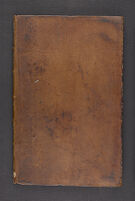
Binding: Post-1600. Brown leather.
- Custodial History:
-
Origin: England.
Provenance:
An unknown early modern owner: added an early modern price code or press-mark '1-10-0' (f. 1r).
An unknown 18th-century owner: inscribed 'Wil' Conq'' in an 18th-century script (f. 1r).
Richard Temple-Nugent-Brydges-Chandos-Grenville (b. 1776, d. 1839), 1st duke of Buckingham and Chandos, of Stowe House, near Buckingham.
Richard Temple-Nugent-Brydges-Chandos-Grenville (b. 1797, d. 1861), 2nd duke of Buckingham and Chandos: sold in 1849 to Lord Ashburnham.
Bertram Ashburnham (b. 1797, d. 1878), 4th earl of Ashburnham, of Ashburnham Place, Sussex.
Bertram Ashburnham (b. 1840, d. 1913), 5th earl of Ashburnham: purchased by the British Museum from him together with 1084 other Stowe manuscripts in 1883.
- Information About Copies:
-
Full digital coverage available for this manuscript: see Digitised Manuscripts at http://www.bl.uk.manuscripts/.
Select digital coverage available for this manuscript: see Catalogue of Illuminated Manuscripts at http://www.bl.uk/catalogues/illuminatedmanuscripts/welcome.htm.
- Publications:
-
Catalogue of the Stowe Manuscripts in the British Museum, 2 vols (London: British Museum, 1895-1896), I, no. 1067.
M. R. James, The Bestiary: Being a Reproduction in full of the Manuscript Ii.4.26 in the University Library, Cambridge (Oxford: Roxburghe Club, 1928), p. 10, pl. 3.
Fritz Saxl and Hans Meier, Verzeichnis astrologischer und mythologischer illustrierter Handschriften des lateinischen Mittelalters, ed. by Harry Bober, 4 vols (London: Warburg Institute, 1916-66), III: Handschriften in englischen Bibliotheken (1953), p. 273.
T. S. R. Boase, English Art 1100-1216, Oxford History of English Art, 2 (Oxford: Clarendon Press, 1957), p. 294 n. 2.
Florence McCulloch, Medieval Latin and French Bestiaries, University of North Carolina Studies in the Romance Languages and Literatures, 33 (Chapel Hill: University of North Carolina Press, 1962), pp. 30, 189.
C. M. Kauffmann, Romanesque Manuscripts 1066-1190, Survey of Manuscripts Illuminated in the British Isles, 3 (London: Miller, 1975), pp. 76, 125.
Dora Faraci, Il bestiario medio inglese (Ms Arundel 292 della British Library) (Rome: Japadre, 1990), p. 258.
Xénia Muratova, ‘Les manuscrits-frères: un aspect particulier de la production des Bestiares enluminés en Angleterre à la fin du XIIe siècle’, in Artistes, Artisans et Production artistique au Moyen Age, ed. by Xavier Barral i Altet, 3 vols (Paris: Picard, 1990), III, Fabrication et consummation de l’Oeuvre, pp. 69-92 (p. 71 n. 12).
Ann Payne, Medieval Beasts (London: British Library, 1990), pp. 12, 25.
Ron Baxter, Bestiaries and Their Users in the Middle Ages (Stroud, Gloucestershire: Sutton, 1998), pp. 12, 90-100, 145, 147, 172, 174, 193, 207-08.
The Medieval Bestiary: Animals in the Middle Ages, ed. by David Badke «http://bestiary.ca/manuscripts/manulocshelf.htm» [accessed 14 August 2009].
Willene B. Clark, A Medieval Book of Beasts: The Second-Family Bestiary: Commentary, Art, Text and Translation (Woodbridge: Boydell, 2006), pp. 10-11, 25, 35, 48, 49, 110.
Jonathan Morton, 'The Book of the World at an Anglo-Norman Court: The Bestiaire de Philippe de Thaon as a Theological Performance', in New Medieval Litterature, 16, ed. by Laura Ashe and others (Cambridge: Brewer, 2016), 1-39 (p. 27).
- Material Type:
- Archives and Manuscripts
- Legal Status:
- Not Public Record(s)
- Notes:
- This manuscript is part of The Polonsky Foundation England and France Project: Manuscripts from the British Library and the Bibliothèque nationale de France, 700-1200.