Hard-coded id of currently selected item: . JSON version of its record is available from Blacklight on e.g. ??
Metadata associated with selected item should appear here...
Arundel MS 213
- Record Id:
- 040-002039496
- Hierarchy Root Ancestor Record Id:
- 032-002039280
- MDARK:
- ark:/81055/vdc_100000000395.0x000305
- LARK:
- ark:/81055/vdc_100063636500.0x000001
- SLARK:
- Format:
- ISAD(G)
- Reference (shelfmark):
- Arundel MS 213
- Title:
- A homiletic and theological miscellany, including excerpts from the works of St Gregory the Great, St Augustine, St Jerome, Caesarius of Arles, Fortunatianus of Aquileia and others.
- Scope & Content:
-
This early 9th-century manuscript is a theological florilegium (or collection of extracts and citations) of moral, exegetical and catechetical material taken from various books of the Bible and the writings of several Church Fathers. The separate entries tend to consist of excerpts from various sources on a particular theme, making it likely that the manuscript was used to prepare sermons and homilies. This is also supported by the fact that the sources of several of the extracts are themselves from sermons and homiletic materials. The collection closely resembles the late 8th- or early 9th-century manuscript now Zürich, Zentralbibliothek, MS C 64. The texts of Arundel MS 213 are also found in Zürich, Zentralbibliothek, MS C 64, and to a large extent are also in the same sequence (see Dorfbauer, ‘Der Codex Zürich, Zentralbibliothek C 64’ (2017), p. 126).
In addition to its Insular minuscule script, the frequent citations from the Pseudo-Isidoran Liber de numeris (The Book of Numbers) supports an Irish connection, since this work is thought to have been originally written in Ireland in the latter half of the 8th century.
Contents:
ff. 1r-4r: A catechetical sermon, imperfect at the beginning. The first words are: ‘sancti pre[dic]atores. Ut Paulus dicit.’ A complete version of this text can be found in the late 8th- or early 9th-century manuscript Zürich, Zentralbibliothek, MS C 64, ff. 8r-19r (see Dorfbauer, ‘Der Codex Zürich, Zentralbibliothek C 64’ (2017), p. 128).
ff. 4r-6r: A collection of excerpts from the Bible and early Christian authors on greed and how to avoid temptation, titled De avaritia (On Greed), beginning: ‘Avarus non implebitur pecunia’.
f. 6r: A collection of excerpts, possibly originally from a sermon, on penitence, beginning: ‘Dominus in evangelio dicit paenitentiam agite’.
ff. 6r-9v: A collection of excerpts titled De igne purgatorio (On the Fire of Purgatory), partly from Caesarius of Arles (b. c. 470, d. 542), Sermon 179. It begins: ‘Quod ait apostolus, fundamentum aliud nemo’.
ff. 9v-10r: A collection of excerpts from the Bible titled De judicia (On Judgement), beginning: ‘Dominus dixit in evangelio: Nolite judicare’.
ff. 10r-12r: Excerpts from St Gregory the Great (b. c. 540, d. 604), Dialogues (Book 4, chs. 30, 36 and 13), beginning: ‘Sanctus Gregorius dixit in dialogorum dum naute’.
ff. 12r-12v: A collection of excerpts regarding dressing in costly clothing; excerpted from numerous early Christian authors such as St Gregory the Great, Forty Homilies on the Gospels, homily 40; St Augustine (b. 354, d. 430); and St Basil of Caesarea (b. c. 330, d. 379). The text begins: ‘Sanctus Gregorius dicit: Nemo vestimenta precipua’.
ff. 13r-14v: An excerpt from St Gregory the Great, Forty Homilies on the Gospels, homily 17, beginning: ‘In illo tempore designificavit Dominus et alios’.
ff. 14v-16r: An excerpt from St Gregory the Great, Forty Homilies on the Gospels, homily 31, beginning: ‘Dominus dixit in evangelio: ecce anni tres sunt’.
f. 16r: A short excerpt from Pseudo-Isidore, Liber de numeris (The Book of Numbers), here given the rubric De sancta anima vel eius virtute (On the Holy Soul or its Virtue), beginning: ‘Per auditum credit. Per desiderium quaerit. Per sapientiam invenit’.
ff. 16r-18v: A collection of excerpts regarding penitence, mainly from St Gregory the Great, Forty Homilies on the Gospels, homily 34, 12, 36, 1, and 12. It begins: ‘Unde superius dictum est: Facite fructus dignos’.
ff. 18v-19r: Excerpts from St John Chrysostom (b. c. 347, d. 407), Sermo de poenitentia (Sermon on Penitence), beginning: ‘Quid sit malum nisi peccatum committere’.
f. 19v: A short excerpt from St Gregory the Great, Forty Homilies on the Gospels, homily 13, beginning: ‘Pensate fratres karissimi quia conclusit dei’.
ff. 19v-20v: A collection of excerpts regarding penitence, mainly from St Gregory the Great, Forty Homilies on the Gospels, homily 13, beginning: ‘Jacobus apostolus dicit: Confitemini alter utrum peccata’.
ff. 20v-21v: Excerpts, incorporated into a coherent text, from: St Gregory the Great, Forty Homilies on the Gospels, homily 32, and Moralia in Job (Commentary on Job), books 5, 11 and 33; Fortunatianus (d. 361), bishop of Aquileia, Commentaria in Evangelia (Commentary on the Gospels); St Augustine, Enarrationes in Psalmos (Expositions on the Psalms), Psalm 95; Caesarius of Arles, Sermon 121; and an unidentified excerpt. It begins: ‘In illo tempore dixit Jesus discipulis suis’.
ff. 21v-23v: A collection of excerpts mainly from St Gregory the Great, Forty Homilies on the Gospels, homily 17; and St Augustine, In evangelium Joannis (On the Gospel of St John). It begins: ‘Pensemus quod lucrum Deo fecimus’.
ff. 23v-24r: A short collection of excerpts on the conduct of clerics, mainly from St Gregory the Great, Forty Homilies on the Gospels, homily 8, and Moralia in Job, book 21, beginning: ‘Sancti autem viri \cum/ conp[resbyteri] sunt, non in se potestates’.
f. 24r: An abridged version of Pseudo-Jerome, De septem ordinibus ecclesiae (On the Seven Ecclesiastical Orders), beginning: ‘Primus in clericis fossanorum ordo est in similitudinem’.
ff. 24r-31r: Several short collections of excerpts on the topic of wisdom, taken from: Proverbs, Ecclesiastes, Wisdom and Ecclesiasticus (ff. 24r-26v); St Gregory the Great, Moralia in Job (f. 26v); St Jerome (b. c. 347, d. 420), Epistle 125 (ff. 26v-29r); and various biblical books (ff. 29r-31r). It begins: ‘Thesaurus desiderabis requiescit in ore sapientis’.
ff. 31r-33r: Version of Caesarius of Arles, Sermon 8, on the need for constant study and repetition of Scripture, titled De adsiduitatem (On Constant Practice), beginning: ‘Rogo vos, fratres dilectissimi, quibus cumque horis potestis’.
ff. 33r-34r: A selection of New Testament citations on false prophets and the Apocalypse, beginning ‘Dominus dicit in evangelio: Adtendite a falsis profetas qui veniunt ad vos’ (Matthew 7:15).
f. 34r: A short citation from Jude 1:12-13, beginning: ‘Hii sunt in aepulis suis maculate conquinantes’.
ff. 34r-35v: A short collection of excerpts on pride and humility from the Bible and Caesarius of Arles, Sermon 121, beginning: ‘Et humilitate Esaias dixit de diabulo qui de ursum’.
ff. 35v-36r: A short excerpt from St Gregory the Great, Homiliae in Evangelia, homily 28, beginning: ‘Quid vero apud deum vilius quid esse dispectius’.
f. 36r: Excerpts on humility from St Gregory the Great, Moralia in Job, book 25, beginning: ‘Lumen scientiae humilitas aperit superbia claudet’.
ff. 36r-39v: Excerpts on the sins of greed and lust, mainly from the Bible, St Augustine, Sermon 58; an unidentified text; St Gregory the Great, Homiliae in Evangelia, homily 15, and 29. It begins: ‘Radix omnium malorum est cupiditates’.
ff. 39v-40v: Excerpts on marriage and divorce, mainly from the Bible, St Augustine and others, beginning: ‘Venit ad nos homo de saeculo potens offendit’.
ff. 40v-42r: Sermon on almsgiving by Pseudo-Augustine, beginning: ‘Remedia peccatorum, fratres, medicina est’. Printed as no. 310 in the appendix to the works of St Augustine, marked ‘spurious’, in Patrologia Latina 39, ed. by Jacques-Paul Migne (1846), p. 2340.
ff. 42r-42v: Excerpts from various biblical books on compassion, beginning: ‘Quid ispicit proximum suum peccat’.
ff. 42v-43v: Excerpts from various biblical books on forbearance and peace, titled De patientia vel pace (On Forbearance or Peace), beginning: ‘Dominus dixit: in patientia vestra possidebitis anima’.
ff. 44r-47r: Excerpts from various biblical books and theological authors (mainly St Gregory the Great, St Augustine, and Caesarius of Arles) on suffering and persecution, beginning: ‘Dominus in evangelio dicit: Beati qui persecutionem patiuntur’.
ff. 47v-50r: A collection of excerpts on the structure and relationship of the Old and New Testament, from Isidore of Seville (b. c 560, d. 636), De ecclesiasticis officiis (On the Ecclesiastical Offices), St Gregory the Great’s Homiliae in Evangelia, the Bible, St Augustine’s Enarrationes in Psalmos, and Pseudo-Isidore’s Quaestiones de veteri et novo testament (Investigations of the Old and New Testament), beginning: ‘Primi libri Moysen V, principium latine generis‘.
ff. 50r-50v: An unidentified short text with the rubric Sanctus Augustinus dicit de iugum Christi (Saint Augustine Says about the Yoke of Christ), beginning: ‘Quia si ave tollatur pinnas suas videtur’.
ff. 50v-51v: A short collection of excerpts on wickedness, from St Gregory the Great, Homiliae in Evangelia, homily 31, the Bible, and Fortunatianus, Commentaria in Evangelia, beginning: ‘Usitata et enim culpa oblegat mente’.
ff. 51v-52r: A short text on Deuteronomy 27:11-28:8, beginning: ‘Legimus in deuteronomium precepit Moyses dictus’.
ff. 52r-v: A short collection of excerpts on the sin of wrath, mainly from: John Cassian (b. c. 360, d. 435), De institutis coenobiorum (Institutes of the Coenobia), book 8; the Bible; and St Augustine. It begins: ‘Remedia quibus ira de cordibus nostris’.
ff. 52v-56v: Probably a draft of a sermon, incorporating excerpts mainly from St Gregory the Great, Homiliae in Evangelia, book 18, 35, 13, and St Augustine, Enarrationes in Psalmos, Psalm 149, 94. It begins: ‘Nemo se autem contra acceptas contumelias erigat’.
ff. 56v-57r: Three short collections of excerpts, all on the topic of priests and their conduct, from: the Bible (ff. 56v-57r); St Gregory the Great, Moralia in Job (f. 57r); various works of Sts Jerome and Gregory the Great, and the Bible (ff. 57r-v). It begins: ‘Paulus apostolus dicit: Rogamus autem vos, fratres, ut noveritis’.
ff. 57v-61v: Probably a sermon, incorporating excerpts mainly from the Bible, St Augustine, Gregory the Great, Fortunatianus of Aquileia, and St Jerome, beginning: ‘Et Spiritus Sanctus per Salomon dicit verba sapientium sicut’.
ff. 61v-63r: A short collection of excerpts on carnal desire, mainly from St Jerome, Epistle 125, the Bible, and St Gregory the Great, Homilae in Hiezechielem (Homilies on Ezekiel), beginning: ‘Quae nobis quotiens concupiscemus totiens’.
ff. 63r-64r: A short collection of excerpts on vices, titled De vitia principalia quod habet homines (On the Principal Vices that Men Have), mainly from: John Cassian, Collationes patrum in scetica eremo (Conferences of the Desert Fathers), Conference 5; the Bible; St Jerome, Epistle 125; St Gregory the Great, Moralia in Job, book 25, 26. It begins: ‘Octo sunt principalia vitia quae humanum’.
ff. 64r-66v: A collection of excerpts on punishment for improper priests, mainly from: Paterius (d. 606), notary of St Gregory the Great, Liber testimoniorum veteris testamenti ex opusculis Sancti Gregorii (The Book of Testimonies to the Old Testament From the Works of Saint Gregory), book 8; Gregory the Great, Moralia in Job; St Augustine, Enarrationes in Psalmos; St Jerome, Commentarius in Ecclesiasten (Commentary on Ecclesiastes). It begins: ‘[De vaccis calcitrantibus] Inclinata arca quam cum Oza Levita’.
f. 66v: A short text discussing singers in the Old Testament, beginning: ‘Et Spiritus Sanctus per Salamon dicit: Cantatores et cantatrices’.
ff. 66v-67v: A short collection of excerpts on the tripartite view of body, soul and spirit, mainly from St Gregory the Great, Dialogues, and Homiliae in Evangelia, as well as the Bible, beginning: ‘Tres spiritus creavit omnipotens Deus’.
ff. 67v-77r: A collection of excerpts from Eucherius (d. 449), bishop of Lyon, Instructiones ad Salonium (Instructions to Salonius), Book 2, and an unidentified commentary on Genesis (ff. 71v-77r), beginning: ‘Adonai, in latinum significat deum, Sabaoth exercituum’. Instructiones ad Salonium by Eucherius is printed in Patrologia Latina 50, ed. by Jacques-Paul Migne (1846), pp. 811-14, 818-22.
ff. 77r-78r: A collection of excerpts on eating in moderation, from various biblical books and St Gregory the Great, Homiliae in Evangelia, homily 36, beginning: ‘Corporis necessaria quod debemus si non domamus’.
ff. 78r-78v: A sermon, possibly based on St John Chrysostom, Sermo de jejunio (Sermon on Fasting), beginning: ‘Adest nobis splendidus dies et desideratum tempus’.
f. 78v: A short excerpt from Pseudo-Augustine, Sermon 209, beginning: ‘Quid vita aeternae beatus ubi non est’.
ff. 78v-80r: An excerpt from Caesarius of Arles, Sermon 102, beginning: ‘Quia ipsa varitas sic ait, ego sum’.
ff. 80r-81r: An excerpt from Caesarius of Arles, Sermon 46, beginning: ‘Licet propitio Christo, fratres karissmi, credimus aebrietatis’.
ff. 81r-81v: An excerpt from Caesarius of Arles, Sermon 102, beginning: ‘Et ideo, fratres karissimi, quantum possumus’.
ff. 81v-82v: An excerpt from Caesarius of Arles, Sermon 46 and 47, beginning: ‘Rogo vos, fratres karissimi, diligenter adtendite et videte’.
f. 83r: A short collection of excerpts on silence and controlling one’s tongue from the Bible, beginning: ‘Cohibe lingua tua a malo et labia tua’.
ff. 83r-84r: A short collection of excerpts on silence and controlling one’s tongue, from the Bible, and the Regula Benedicti (Rule of Saint Benedict), chapter 7, beginning: ‘Vidisti homine veloce ad loquendum stultitia magis’.
ff. 84r-84v: Excerpts on the soul from Pseudo-Isidore, Liber de numeris, beginning: ‘Anima tantum et corpore sed in his duobus’.
ff. 84v-85r: A list of different kinds of damnation, beginning: ‘Prima dampnatio est a sanctis reparatio’.
f. 85r: A list of different kinds of humility, beginning: ‘Primus gradus humilitatis interrogationis’.
ff. 85r-85v: A summary of the life and deeds of Christ, beginning: ‘Iter faciet aeclesiae suae Dominus Jesus Christus discendit’.
ff. 85v-86r: A colloquy (question and answer-dialogue) text, probably meant for teaching, on the beginning of the Gospel of St John, beginning: ‘Qui caelestis exorsis ad terram dicendit illic’. Compare to ‘Textus 1’, printed in Explanationes symboli aevi Carolini, ed. by S. Keefe, Corpus Christianorum Continuatio Mediaevalis, 254 (2012), pp. 2-4.
f. 86r: A list of the ten sightings of Christ after the Resurrection, beginning: ‘Decies commemorate Dominum visum esse ab omnibus’.
ff. 86r-91r: A collection of texts and excerpts from various sources on numerological topics, such as lists of the Seven Seals, the Seven Gifts of the Holy Spirit, excerpts from Pseudo-Isidore’s Liber de numeris, exegetical passages on the Pater Noster and the Harrowing of Hell based on number symbolism. It begins: ‘Primum sigillum nativitas, secundum baptismum’.
ff. 91r-92v: An unidentified commentary on Psalm 150 with a numerological theme, beginning: ‘Alleluia, laudate Domino in sanctis eius est’.
ff. 92v-99r: A collection of excerpts on sound and allegorical exegesis, mainly from works of St Augustine, Eucherius, John Cassian, and St Gregory the Great, beginning: ‘Trea esse genera sonorum voce flatu pulsai’.
ff. 99r-100v: A collection of excerpts from Cyprian of Carthage (b. c. 200, d. 258), De mortalitate (On Mortality), beginning: ‘Apud plurimus, vestrum fratres dilectissime, mens solida est’.
ff. 100v-102r: A sermon on fasting, incorporating excerpts from: the translation of Origen (b. c 185, d. c 254), Homilies on Leviticus, by Rufinus of Aquileia (b. c. 345, d. 411); St Ambrose (b. c. 339, d. 397), De Helia et ieiunio (On Elijah and Fasting); and St Jerome, Adversus Jovinianum (Against Jovinianus). It begins: ‘Audistis quanta sint in lege sacrificii pro peccatis’.
[f. 102v is blank].
Decoration:
Minor initials that range from two to four lines, with simple foliate, geometric and (occasionally) interlace decoration, filled with yellow, blue and red ink, mark the start of a new text throughout. Some initials are followed by diminuendo of the letters of the first few words in a more elaborate display script than the rest of the text and filled with yellow and blue ink (for example, f. 14v). Rubrics in oxidised red ink throughout.
- Collection Area:
- Western Manuscripts
- Project / Collection:
- Arundel Manuscripts
England and France 700-1200 Project - Hierarchy Record Ids:
- 032-002039280
040-002039496 - Is part of:
- Arundel MS 1-550 : Arundel Manuscripts
Arundel MS 213 : A homiletic and theological miscellany, including excerpts from the works of St Gregory the Great, St Augustine, St Jerome,… - Hierarchy:
- 032-002039280[0214]/040-002039496
- Container:
- View / search within Archive / Collection: Arundel MS 1-550
- Record Type (Level):
- File
- Extent:
- A parchment codex
- Digitised Content:
- https://iiif.bl.uk/uv/#?manifest=https://bl.digirati.io/iiif/ark:/81055/vdc_100063636500.0x000001 (opens in a new tab)
- Thumbnail:
-
- Languages:
- Latin
- Scripts:
- Latin
- Start Date:
- 0800
- End Date:
- 0849
- Date Range:
- 1st half of the 9th century
- Era:
- CE
- Access:
- User Conditions:
- Letter of introduction required to view this manuscript
Please request the physical items you need using the online collection item request form.
Digitised items can be viewed online by clicking the thumbnail image or digitised content link.
Readers who have registered or renewed their pass since 21 March 2024 can request physical items prior to visiting the Library by completing
this request form.
Please enter the Reference (shelfmark) above on the request form.If your Reader Pass was issued before this date, you will need to visit the Library in London or Yorkshire to renew it before you can request items online. All manuscripts and archives must be consulted at the Library in London.
This catalogue record may describe a collection of items which cannot all be requested together. Please use the hierarchy viewer to navigate to individual items. Some items may be in use or restricted for other reasons. If you would like to check the availability, contact our Reference Services team, quoting the Reference (shelfmark) above.
- Physical Characteristics:
-
Materials: Parchment.
Dimensions: 295 x 220 mm (text space: 220 x 180 mm).
Foliation: ff. 102 (+ 2 unfoliated modern paper flyleaves at beginning and end); 1 modern paper pastedown with bibliographical notes (f. [i]recto); 1 bookplate (f. [ii]recto); note of examination, ‘102 ff RM. Sept 1884 – examined – GIT’ (f. [103]recto).
Collation: Quires i-ii uncertain (ff. 1-15), iii-xii8 (ff. 16-95), xiiiseven (ff. 96-102).
Script: Insular minuscule.
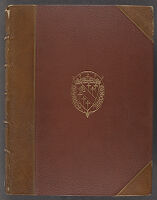
Binding: British Museum in-house: brown and red leather; gold-tooled and gold-stamped with the Arundel library arms; marbled endpapers and matching pastedowns; spine inscription in gold: ‘THEOLOGICAL TREATISES. BRIT. MUS. ARUNDEL. 213.’.
- Custodial History:
-
Origin: ? Würzburg, Southern Germany.
Provenance:
? The Benedictine abbey of St Kilian, an Irish missionary bishop (b. c. 640, d. 689) in Würzburg, founded c. 745 by Burchard (b. c. 683, d. c. 755), the first Bishop of Würzburg: the abbey had sustained Irish connections due to its patron saint and there is evidence of such Irish interests influencing connections between St Kilian's Abbey and the markedly later foundation of St James's Abbey, which was also an Irish foundation in the same city, making it probable that the manuscript was originally made in the earlier Irish centre and only later passed to St James's Abbey (see Gwynn, ‘The Continuity of the Irish Tradition’ (1952), pp. 62-4; Bischoff and Hofmann, Libri Sancti Kyliani (1952), p. 115).
The Benedictine abbey of St James (German: St Jacob zu den Schotten) in Würzburg, founded in the late 1130s by Embrico (d. 1146), Bishop of Wurzburg: marginal notes added by the monk David in the early 14th century on ff. 4r, 30r, 99v, 101r (see Gwynn, ‘The Continuity of the Irish Tradition’ (1952), p. 75; Levison, England and the Continent (1946), p. 305). In the note on f. 99v David gives his name and the date that he joined the abbey: ‘Notum facio quod ego frater David anno Domini mcccxxiiii iiii idus juni a primo veni ad Herbipolim in habitus seculari’ (I let it be noted that I, brother David, first came to Würzburg in secular dress in the year of the Lord 1324 on the fourth Ides of June). The note on f. 30r gives more precise provenance information regarding St James’s Abbey: ‘Anno domini milessimo cccxxviii iii idus Decembris commisit mihi abbas Co[n]dimmus ecleciam Sancti Jacobi extra muros Herbi/po\lenses usque ad terminum xiii septimanarum’ (In the year of the Lord 1328 on the third Ides of December, abbot Condimmus joined me at the church of St Jacob outside the walls [St James's] of Würzburg until the end on the 13th of September). More notes and short prayers added in the margins, possibly by David, in the 14th century (ff. 53v, 59r, 65v, 73v, 74r-v, 83v, 90r, 93v, 94r-v, 102v).
An unknown owner added shelfmarks, possibly in the 16th century, on f. 1r: ‘Z 147’, ‘14’.
? Thomas Howard (b. 1585, d. 1646), 2nd earl of Arundel, 4th earl of Surrey, and 1st earl of Norfolk, art collector and politician.
Henry Howard (b. 1628, d. 1684), 6th duke of Norfolk, presented to the Royal Society in 1667.
The Royal Society, London: its ink stamp 'Soc. Reg. Lond / ex dono HENR. HOWARD / Norfolciensis.' (f. 1r); its book-plate, with the pencil inscription 'XIV: 7.17 (f. [ii]recto).
Purchased by the British Museum from the Royal Society together with 549 other Arundel manuscripts in 1831.
- Information About Copies:
-
Full digital coverage available for this manuscript: see Digitised Manuscripts at http://www.bl.uk.manuscripts/.
Select digital coverage: see Catalogue of Illuminated Manuscripts, https://bl.uk/catalogues/illuminatedmanuscripts/.
- Publications:
-
Catalogue of Manuscripts in The British Museum, New Series, 1 vol. in 2 parts (London: British Museum, 1834-1840), I, part I: The Arundel Manuscripts, pp. 58-59.
[E. Maunde Thompson and G. F. Warner], Catalogue of Ancient Manuscripts in the British Museum, 2 vols (London: British Museum, 1881-1884), Part II: Latin, pp. 56-57, pl. 27.
Wilhelm Koehler, 'Die Karolingischen Miniaturen', in Zweiten Bericht über die Denkmäler Deutscher Kunst (Berlin: Reimer, 1912), pp. 51-77 (p. 62).
Wilhelm Levison, England and the Continent in the Eight Century, The Ford Lectures delivered in The University of Oxford in the Hilary Term, 1943 (Oxford: Clarendon Press, 1946), pp. 305-6.
Bernhard Bischoff and Josef Hofmann, Libri Sancti Kyliani: Die Würzburger Schreibschule und die Dombibliothek im VIII. und IX Jahrhundert, ed. by Theodor Kramer, Quellen und forschungen zur Geschichte des Bistums und Hochstifts Würzburg, 6 (Würzburg: Schoningh, 1952), pp. 50, n. 61, 79-80, 115, 151.
Aubrey Gwynn, 'The Continuity of the Irish Tradition at Wurzburg', in Herbipolis Jubilans: 1200 Jahre Bistum Würzburg: Festschrift zur Säkularfeier der erhebung der Kiliansreliquien (Würzburg: Bischofliches Ordinariat, 1952), pp. 57-81 (pp. 63-64, 75).
Manfred Oberleitner and others, Die handschriftliche Überlieferung der Werke des heiligen Augustinus, 11 vols (Vienna: Österreichische Akademie der Wissenschaften, 1969-2010), II/1 (1972): Grossbritannien und Irland, Werkverzeichnis, ed. by Franz Römer, Österreichische akademie der wissenschaften: Sitzungsberichte der philosophisch-historische klasse, 281, Veröffentlichungen der Kommission zur Herausgabe des Corpus der Lateinischen Kirchenväter, 3, pp. 164-65.
Sigrid Krämer, Handschriftenerbe des deutschen Mittelalters, Mittelalterliche Bibliothekskataloge Deutschlands und der Schweiz: Ergänzungsband 1, 4 vols (Munich: Beck, 1989-2009), II: Köln-Zyfflich, p. 848.
Charles D. Wright, The Irish Tradition in Old English Literature, Cambridge Studies in Anglo-Saxon England, 6 (Cambridge: Cambridge University Press, 1993), p. 62, n. 73; p. 70, n. 111.
Bernhard Bischoff, Katalog der festlandischen Handschriften des neunten Jahrhunderts (mit Ausnahme der wisigotischen), 3 vols. (Wiesbaden: Harrassowitz, 1998-2014), II (2004): Laon-Paderborn, ed. by Birgit Ebersperger, p. 105 (no. 2413).
H. A. G. Houghton, ‘The Text of John in Fortunatianus of Aquileia’s Commentary on the Gospels’, in Papers from the Fifth British Patristics Conference, ed. by Markus Vincent and Allen Brent, Studia Patristica. 74 (Leuven: Peeters, 2016), pp. 263-79 (p. 268, n. 14, p. 276).
Lukas J. Dorfbauer, ‘Der Codex Zürich, Zentralbibliothek C 64 und seine Bedeutung für die Überlieferung von Fortunatians Evangelienkommentar’, in Fortunatianus redivivus: Bischof Fortunatian von Aquileia und sein Evangelienkommentar, ed. by Lukas J. Dorfbauer, Corpus Scriptorum Ecclesiasticorum Latinorum: Extra Seriem (Berlin: De Gruyter, 2017) pp. 113-160 (esp. pp. 115-17, 126-48, sigla A).
- Material Type:
- Archives and Manuscripts
- Legal Status:
- Not Public Record(s)
- Notes:
- This manuscript is part of The Polonsky Foundation England and France Project: Manuscripts from the British Library and the Bibliothèque nationale de France, 700-1200.