Hard-coded id of currently selected item: . JSON version of its record is available from Blacklight on e.g. ??
Metadata associated with selected item should appear here...
Harley MS 1772
- Record Id:
- 040-002047603
- Hierarchy Root Ancestor Record Id:
- 040-002047603
- MDARK:
- ark:/81055/vdc_100000000709.0x000118
- LARK:
- ark:/81055/vdc_100056033924.0x000001
- SLARK:
- Format:
- ISAD(G)
- Reference (shelfmark):
- Harley MS 1772
- Title:
- The Pauline Epistles including the Epistle of James; the Epistles of Peter; the Epistles of John and the Apocalypse; including medical charms
- Scope & Content:
-
Contents:
This manuscript consists of the Pauline Epistles and the Epistle of James, the Epistles of Peter, the Epistles of John and the Book of Revelation or the Apocalypse. It includes also several 11th-century additions (mainly charms) related to medicine (see Provenance).
ff. 1r-118r: Epistule Sancti Pauli (the Pauline epistles), preceded by a prologue (ff. 1r-2v), beginning of the prologue: 'Primum quaeritur quemadmodum post evangelia' followed by the Epistle to the Romans (ff. 2v), preceded by the argumentum, beginning (f. 2v): 'Romani ex Iudaeis gentilibus que crediderunt'; the Versus Damasi, an epigram attributed to Damasus has been interpolated between the end of the argumentum and the beginning of the Prologue of the Epistle to the Romans (ff. 3v-4v); the capitula of the Epistle to the Romans (ff. 4v-6r) followed by the Prologue of the Epistle to the Romans (f. 6v); the first Epistle to Corinthians (ff. 24v-44r), preceded by capitula (ff. 24v-26v) and the prologue (f. 26v); the second Epistle to Corinthians (ff. 44r-55v), preceded by capitula (ff. 44r-46r) and the prologue (f. 46r); the Epistle to the Galatians (ff. 55v-62v), preceded by capitula (ff. 55v-57r) and the prologue (f. 57r); the Epistle to the Ephesians (ff. 63r-68v) preceded by capitula (ff. 63r-v) and the prologue (f. 63v); the Epistle to the Philippians (ff. 68v-73v), preceded by capitula (ff. 68v-69r) and the prologue (f. 69r); the Epistle to Thessalonians (ff. 74r-82r) preceded by capitula (ff. 74r-v) and the prologue (f. 75r); the Epistle to the Colossians (ff. 82r-88r), preceded by capitula (ff. 82r-83r) and the prologue (f. 83r); the first Epistle to Timothy (ff. 88r-93v), preceded by capitula (ff. 88r-89r) and the prologue (f. 89r); the second Epistle to Timothy (ff. 93v-98r), preceded by capitula (ff. 93v-94v) and the prologue (f. 94v); the Epistle to Titus (ff. 98v-101v), preceded by capitula (ff. 98v-99r) and the prologue (f. 99r); the Epistle to Philemon (ff. 101r-103r), preceded by capitula (f. 101v) and the prologue (f. 101v); the Epistle of the Hebrews (ff. 103r-118r), preceded by capitula (ff. 103r-104r) and the prologue (f. 104r).
ff. 118r-122v: Epistula Iacobi, the Epistle of James.
ff. 123r-131r: Epistule Petri, the two Epistles of Peter, the first epistle (ff. 123r-128r); the second epistle (ff. 128r-131r).
ff. 131v-135r: Epistule Iohannis, the first Epistle of John, followed by the second Epistle of John (f. 135r).
ff. 135v-146r: Apocalypsis Iohannis, the Book of Revelation or the Apocalypse, ending imperfectly in the middle of chapter 14.
Decoration:
This manuscript was produced in Rheims (France) probably before the consecration of Ebbo as archbishop of Rheims in 815. Its decoration was still influenced by Merovingian manuscripts combining Insular and Continental patterns including interlace and zoomorphic decoration, according to Denoël, Trésors Carolingiens (2007).
One full-page miniature in ink and colours (f. 71v).
Large initial in brown and colours, with interlace and geometric patterns and often animal head decoration or animals at the beginning of each epistle.
Initials in brown with penwork decoration, some also with green and red. Large letters in brown, on red or yellow backgrounds.
Text in red, sometimes with a yellow wash.
- Collection Area:
- Western Manuscripts
- Project / Collection:
- England and France 700-1200 Project
Harley Collection - Hierarchy Tree:
- [{ "id" : "040-002047603", "parent" : "#", "text" : "Harley MS 1772: The Pauline Epistles including the Epistle of James; the Epistles of Peter; the Epistles of John and the Apocalypse; including medical…" , "li_attr" : {"class": "orderable"} }]
- Hierarchy Record Ids:
- 032-002045828
040-002047603 - Is part of:
- Harley MS 1-7661 : Harley Manuscripts
Harley MS 1772 : The Pauline Epistles including the Epistle of James; the Epistles of Peter; the Epistles of John and the Apocalypse; including… - Hierarchy:
- 032-002045828[1774]/040-002047603
- Container:
- View / search within Archive / Collection: Harley MS 1-7661
- Record Type (Level):
- File
- Extent:
-
A parchment codex
- Digitised Content:
- https://iiif.bl.uk/uv/#?manifest=https://bl.digirati.io/iiif/ark:/81055/vdc_100056033924.0x000001 (opens in a new tab)
- Thumbnail:
-
- Languages:
- Latin
- Scripts:
- Latin
- Start Date:
- 0800
- End Date:
- 1099
- Date Range:
- 9th century-11th century
- Era:
- CE
- Access:
- User Conditions:
- Letter of introduction required to view this manuscript
Please request the physical items you need using the online collection item request form.
Digitised items can be viewed online by clicking the thumbnail image or digitised content link.
Readers who have registered or renewed their pass since 21 March 2024 can request physical items prior to visiting the Library by completing
this request form.
Please enter the Reference (shelfmark) above on the request form.If your Reader Pass was issued before this date, you will need to visit the Library in London or Yorkshire to renew it before you can request items online. All manuscripts and archives must be consulted at the Library in London.
This catalogue record may describe a collection of items which cannot all be requested together. Please use the hierarchy viewer to navigate to individual items. Some items may be in use or restricted for other reasons. If you would like to check the availability, contact our Reference Services team, quoting the Reference (shelfmark) above.
- Physical Characteristics:
-
Material: Parchment.
Dimensions: 290 x 180 mm (text space 235 x 140 mm)
Foliation: ff. 146 ( + 4 unfoliated modern paper flyleaves at the beginning and 3 at the end).
Script: Caroline minuscule.
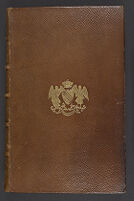
Binding: Post-1600. Brown diced leather.
- Custodial History:
-
Origin: Reims, Northeastern France.
Provenance:
Inscribed in runes 'Ego Iusueus Hac/si indignus diacon[us]/ [h]anc librum quem / ad opus peculiare/ uolo off[erre] s[an]c[t]o' (f. 6v), according to a transcription by Derolez, Runica manuscripta (1954), p. 405.
Corrections, glosses and notes added in the 10th and early 11th centuries (ff. 64r, 71r, 112v).
Additions and neumes, a passage from the Disticha Catonis and Eclogues I, 1 (f. 38v), and glosses (f. 88v); see Bischoff, Katalog der festländischen Handschriften des neunten Jahrhunderts (2004), p. 112, mo. 2442.
Added, charms in the margin written by 11th-century hands including the Latin palindrome pagan charm 'Sator arepo' used to protect women in labour (f. 88v); three charms beginning: 'Ad pedanam/ Domine Christe qui [...]/ mafri Adam ad ima/ginem tuam'; 'Aporeos capit [..]/pit adque parav[it ?]'; 'Contra mal[em?] / malanum' (f. 64r) followed by the names of the Evangelists written within a cruciform diagram together with other four words; charms in circular diagrams with the five vowels, beginning: 'Ad sorbis et ita consorbis ... maglia'; 'Macula. in nomine patris' (ff. 88v, 125v); 'Sator arepo tenet opera rotas' in circular diagrams, with the five vowels and the letter 'b' written in an inner circle (f. 88v); charms written in the upper margin 'Ne glorie ne glorie ne glorie ? [..] a in ripa mare sedebat macula de ocu/lo famula dei sit est alba cristus' (ff. 122v-123r); 'obmu[s..] / facere [...]/atis / malicie [in different ink and hand', repeated in the lower border by a third hand 'obmustis cere faciatis / malicie' (f. 125). The Latin seems to turn into Frankish.
Added, 11th-century memorandum of days unpropitious for bleeding; beginning: 'Cave multum ne in is tribus diebus sanguinem minuas aut pocionem sumas' (f. 112v).
The French Royal Library, Paris: former MS 3938, probably taken by Aymon in 1707, see Léopold Delisle, Le Cabinet des Manuscrits de la Bibliothèque Impériale [Nationale]: Étude sur la formation de ce dépôt 3 vols. (Paris: Imprimerie Nationale, 1868-1881), I, p. 331.
Jean Aymon (b. 1661, d. 1734), of the Hague, French theologian and legal adviser: bought by Harley through an intermediary, Philip Stubbs (b. 1665, d. 1738), clergyman, archdeacon of St Albans and educationist according to C. E. Wright and R. C. Wright, The Diary of Humfrey Wanley (London: The Bibliographical Society, 1966), i, p. xxiii; C. E. Wright, Fontes Harleiani (1972), pp. 56-57, 266, 401.
The Harley Collection, formed by Robert Harley (b. 1661, d. 1724), 1st earl of Oxford and Mortimer, politician, and Edward Harley (b. 1689, d. 1741), 2nd earl of Oxford and Mortimer, book collector and patron of the arts.
Edward Harley bequeathed the library to his widow, Henrietta Cavendish, née Holles (b. 1694, d. 1755) during her lifetime and thereafter to their daughter, Margaret Cavendish Bentinck (b. 1715, d.1785), duchess of Portland; the manuscripts were sold by the Countess and the Duchess in 1753 to the nation for £10,000 (a fraction of their contemporary value) under the Act of Parliament that also established the British Museum; the Harley manuscripts form one of the foundation collections of the British Library.
- Information About Copies:
-
Full digital coverage available for this manuscript: see Digitised Manuscripts at http://www.bl.uk.manuscripts/.
Select digital coverage available for this manuscript: see Catalogue of Illuminated Manuscripts at http://www.bl.uk/catalogues/illuminatedmanuscripts/welcome.htm.
- Publications:
-
A Catalogue of the Harleian Manuscripts in the British Museum, 4 vols (London: Eyre and Strahan, 1808-12), II (1808), no. 1772.
Walter de Gray Birch and Henry Jenner, Early Drawings and Illuminations: An Introduction to the Study of Illustrated Manuscripts (London: Bagster and Sons, 1879), p. 3.
[E. Maunde Thompson and G. F. Warner], Catalogue of Ancient Manuscripts in the British Museum, 2 vols (London: British Museum, 1881-1884), Part II, Latin, p. 38.
E. S. Buchanan, The Epistles and Apocalypse from the Codex Harleianus, Sacred Latin Texts, 1 (London: David Nutt, 1912).
Wilhelm Köhler, 'Die Karolingishen Miniaturen', in Zweiter Bericht über die Denkmäler Deutscher Kunst (Berlin: Reimer, 1912), pp. 52-77 (p. 56).
E. Darmstaedter, 'Die Sator-Arepo-Formel und ihre Erklärung', Isis, 18 (1932), 322-29 [on the charms].
G. L. Micheli, L’enluminure du haut Moyen Âge et les influences irlandaises (Brussels: Editions de la connaissance, 1939), p. 191.
R. Derolez, Runica Manuscripta: The English Tradition, Rijksuniversiteit te Gent Werken Uitgegeven door de Faculteit van de Wijsbegeerte en Letteren, 118 (Bruges: De Tempel, 1954), pp. 266, 271, 403-06, figs. 51-52.
H. Walther, Initia carminum ac versuum medii aevi posterioris latinorum, Carmina medii aevi posterioris latina 1 (Gottingen: Vandenhoeck and Ruprecht, 1959), no. 17297 [on the charms].
The Diary of Humfrey Wanley, 1715-1726, edited by ed. Cyril E. and Ruth C. Wright (London: The Bibliographical Society, 1966), I, p. xxiii.
Cyril Ernest Wright, Fontes Harleiani: A Study of the Sources of the Harleian Collection of Manuscripts in the British Museum (London: British Museum, 1972), pp. 56-57, 266. 401.
Katharina and Volker Bierbrauer, ‘Reims vor Ebo - Zu einer Handschrift in London, British Library Harly 1772’, in Studien zur mittelalterlichen Kunst 800-1250: Festschrift für Florentine Mütherich zum 70. Geburtstag, ed. by Katharina Bierbrauer, Peter K. Klein, and Willibald Sauerländer (Munich: Prestel, 1985), 29-48.
Bonifatius Fischer, Lateinische Bibelhandschriften im frühen Mittelalter, Vetus Latina, 11 (Freiburg: Herder, 1985), pp. 92, 158-60.
R. Bader, 'Sater Arepo: Magik in der Volksmedizin', Medizinhistorisches Journal, 22 (1987), 115-34 [on the charms].
Bernhard Bischoff, Manuscripts and Libraries in the Age of Charlemagne, trans. and ed. by Michael Gorman, Cambridge Studies in Palaeography and Codicology, 1 (Cambridge: Cambridge University Press, 1994; most originally pub. in Mittelalterliche Studien: Ausgewählte Aufsätze zur Schriftkunde und Literaturgeschichte I-III (Stuttgart: Hieresmann, 1966-1981)), p. 28.
Die Karolingischen Miniaturen, ed. by Wilhelm Koehler and Florentine Mütherich, 6 vols (Berlin: Deutscher Verlag für Kunstwissenschaft, 1930-99), 6: Die Schule von Reims, 2 vols (1994-99), I: Von den anfängen bis zur mitte des 9. Jahrhunderts, esp. pp. 58-61. [with additional bibligraphy].
Florentine Mütherich, 'Carolingian Manuscript Illumination at Rheims', in The Utrecht Psalter in Medieval Art: Picturing the Psalms of David, ed. by Koert van der Horst, William Noel, and Wilhelmina C. M. Wüstefeld (Utrecht: HES Publishers, 1996), pp. 105-19 (p. 108, fig. 4).
The 'Trotula'. A Medieval Compendium of Women's Medicine, ed. and trans. by Monica H. Green (Philadelphia: University of Pennsylvania Press, 2001), p. 35 and n. 134 [on the charms].
Bernhard Bischoff, Katalog der festlandischen Handschriften des neunten Jahrhunderts (mit Ausnahme der wisigotischen) (Stuttgart: Harrassowitz, 2004), II, Laon-Paderborn, p. 112 no. 2442.
Scot McKendrick and Kathleen Doyle, Bible Manuscripts: 1400 Years of Scribes and Scripture (London: British Library, 2007), p. 45, fig. 32.
Marie-Pierre Laffitte and Charlotte Denoël, Trésors carolingiens: Livres manuscrits de Charlemagne à Charles le Chauve (Paris: Bibliothèque nationale de France, 2007), p. 167.
- Material Type:
- Archives and Manuscripts
- Legal Status:
- Not Public Record(s)
- Notes:
-
The cataloguing of this manuscript was funded in part by the Wellcome Trust.
This manuscript is part of The Polonsky Foundation England and France Project: Manuscripts from the British Library and the Bibliothèque nationale de France, 700-1200.