Hard-coded id of currently selected item: . JSON version of its record is available from Blacklight on e.g. ??
Metadata associated with selected item should appear here...
Harley MS 2407
- Record Id:
- 040-002048238
- Hierarchy Root Ancestor Record Id:
- 040-002048238
- MDARK:
- ark:/81055/vdc_100000000709.0x000393
- LARK:
- ark:/81055/vdc_100057740056.0x000001
- SLARK:
- Format:
- ISAD(G)
- Reference (shelfmark):
- Harley MS 2407
- Title:
-
Alchemical treatises, recipes and poems, including Arnaldus de Villa Nova, Account of the Philosopher’s Stone; Geber, On the Virtue of the Planets and of the Philosopher’s Stone; and John Lydgate, The Chorle and the Bird
- Scope & Content:
-
Contents:
f. 1v: Names of herbs related to individual planets, beginning: 'Herba Saturni / Anglice Affodill'.
f. 2r: Verses on lunar cycles following the days of the week.
f. 2r: Recipe, beginning: ‘To make Mustard to bere […]'.
f. 2v: Middle English poem on Mercury, beginning: 'And thou wedde Mercury to Mercury wyth hyr wife' (see NIMEV 3253 and DIMEV 5102-3).
f. 2v: Description of a herb, beginning: 'ysuard he ys for a bon breth / to drenke the jese of hem'.
f. 2v: A note: 'Macrocosimus - maior mundis / Microcosimus - minor mundis'.
f. 2v: Marginal notation of a sequence of numbers '110111000001100111101000100110;' this sequence is also recorded on p. 31 of the notebook of Thomas Shakshaft (b. 1731, d. 1821) as 'An Experement betwects the English and french by 10,' which is held by the Birmingham Central Library (accession number 5564711R41). The sequence refers to the 10-man variant of the Josephus Problem.
f. 3r: Middle English medical recipe, entitled ‘For a Flyxe’, beginning: 'Take hony a pynt and set on þe fyre to boyles'.
f. 3r: Untitled recipe, beginning: 'Memorandum þat yf ye take þe Juse of þe wylde v[y]ne'.
ff. 3v-5r: Letter describing the Philosopher’s Stone: ‘To my frend I sende gretynge wyth alle my hert’.
f. 5v: Tract on Moonwort: ‘I schal yow tel, of an erbe þat men cal lunarie, he ys clepet asterion; wych ys an erbe þat men callith lunarie.’
f. 6r: Alchemical recipe ‘To make fyne gold of satorne’.
f. 6v: An alchemical tract, entitled: ‘A furnes to drawe aquafort[es] in’; later crossed out.
ff. 7r-7v: Middle English alchemical poem on the herb ‘Lunary’ (Moonwort), beginning: ‘Her ys an erbe. men calle lunayrie / I blesset mowte. hys maker bee / astorion he ys. I callet alle so / and other namys. many and mo’; followed by two circles (see NIMEV 1203 and DIMEV 1980-2).
ff. 8r-16r: Treatise on the art of alchemy, beginning: ‘In nomine patris et filij et spiritus sancti Amen. Broþerys ȝe schall understond, þat allmyti gode haþe mad in þys worlde’.
f. 16v: Full-page alchemical drawing of a spirit, sun, man, woman and toad.
ff. 17r-17v: Middle English poem on the Three Kings of Cullen applied to the art of Alchemy, beginning: 'I schal yow tel wyth hert mode / Of þre kynggys’; written with red ink (see NIMEV 1364 and DIMEV 2277-1).
ff. 18r-29v: Arnaldus de Villa Nova, Account of the Philosopher’s Stone: ‘Now to be holde and so transparently as in sight thorow persyng and parseyning clerely the inwardly menyng and the vere entent of the philosophers writyng'.
ff. 29v-31v: Arnaldus de Villa Nova, alchemical poem, beginning: ‘Now I shall here begynne’ (see NIMEV 2330 and DIMEV 3759-1).
f. 32r: Alchemical recipe ‘For to make sol water’.
f. 32r: Alchemical recipe ‘For to make water of mercuri’ (cf. f. 65v).
ff. 32r-33v Alchemical recipe ‘For to make sol water werkis'.
ff. 34r-34v: Alchemical recipe 'For to worche the whyte worke', with a drawing of a alchemistic writer at the end.
ff. 35r-35v: Alchemical recipe ‘To make the whyt elexure.’
f. 36r-48v: Verse description of the Philosopher’s Stone in Latin (written in red) and Middle English (written in black). ‘Gemma salutaris qui nascitur orbicularis’ / ‘A precius stone helyful and wyche ys borne’.
ff. 49v-50v: Description of the Philosopher’s Stone, ‘Desiderabile desiderium’; written in red.
f. 50v: A short tract entitled: ‘Speculum alkamie’.
f. 51r: Alchemical notes concerning the planets, sun, and moon: ‘Saturnus ex sulphure et mercurio fit.’
ff. 51v-52r: Description of the Philosopher’s Stone, beginning: ‘Omnis alteracio ad perfectionem’.
ff. 52v-53r: Alchemical recipe ‘To make a medycyn for mannys body do thys take 1 unc of resolys and xxiiij unc of azoke and put hem to gedyr and grynde ham to geder wyth alyt venegry and salt’.
f. 53v: Alchemical recipe ‘For to kone in how many days thy medicyn wol ben’.
f. 53v: Alchemical recipe ‘To make a red medycen for satorn’.
ff. 54r–54v: Astrological tract, beginning: ‘Aries. Leo. Sagittarius. sunt calida et sicca’.
ff. 54v-57r: Middle English alchemical poem, beginning: 'Her ys the rote of philosophi'; 8 verses, followed by pages of circles with names, labelled ‘Lapis philosophorum est trinus et unus’; written in red ink (see NIMEV 1205 and DIMEV 1985-1).
f. 57v: Sketch for an alchemical drawing, of a glass receiver with a man and woman embracing, a toad, snake and eagle inside. Written below: 'Sapo et bufo gradiens super terram et aquila volans est est [sic] magistrium'
ff. 58r-64v: Description of the Philosopher’s Stone, beginning: ‘In the name of the fader and sun and the holy gost I shal declare more of the ston a for sayde the wiche ys seyde in latyn in this maner of wyse Gemma salutaris qui nassitur orbicularis that ys to sey: There ys a pressyus stone and a heelful and growth rownde the wich ys borne and a hyd ston he ys in a fayr secret welle'.
ff. 64v-65v: Alchemical recipe ‘To rebifi quicke silvere’.
ff. 65v-66r: Alchemical recipe ‘To make water of mercuri to thy medicyne’ (cf. f. 32r).
ff. 66r-67r: Alchemical recipe 'Now for to make the grete elexer of alcami'.
f. 67r: Alchemical diagram with two toads.
f. 67v: Latin alchemical poem, beginning: ‘Pondera mercurij bis sex ad corpora centri’.
f. 67v: ‘Ther ys a bodi and a bodi’, opening verses of what is known in Oxford, Bodleian Library Ashmole 1445 (SC 7630), f. 36r as ‘The Whole Science’ (see NIMEV 3528 and DIMEV 5567-3).
f. 68r: Drawing of an eagle, a snake, the sun and moon, and a toad, with a legend: 'Sapo et bufo gradiens super terram et aquila volans' (cf. f. 57v).
ff. 68v-69r: Two dialogues between a student and a master, beginning ‘Mayster I praye ȝow of pacience that I myȝt a pose yow’.
ff. 69v-74v: Two preparations of the Philosopher’s Stone, beginning: ‘In the name of alle myti god / do thou thys take the rote of the olive tre / and stamp hym in to smale poudyr / in a brase morter / and than put that poudyr / in to a body of glas / and drawe there of water / the wych water ys I callyd asetune philosofre and aqua vite and lake virginum and many other namys’.
f. 75r: Middle English alchemical poem on the order of God’s universe as a justification for the Philosopher’s Stone, beginning: ‘In the name of the holi trinite / now send we grase so hyt be / fyrst god made boþe angel & heven / na alle so the world wyth planets seven’; written in red ink (see NIMEV 1558 and DIMEV 2615-1).
f. 75v: Geber, On the Virtue of the Planets and of the Philosopher’s Stone, beginning: ‘Iyfe þow wolt . thys werke begynne / þan schreuy the clene . of alle thy seyne’, in verse; with a drawing of two intertwined dragons standing, the sun, moon, and world (see NIMEV 1438 and DIMEV 2418).
ff. 76r-90v: John Lydgate, The Chorle and the Bird; with five drawings illustrating the narrative, and empty spaces left for further planned drawings;imperfect at the beginning (see NIMEV 2784 and DIMEV 4420-8).
f. 90v: Middle English alchemical poem known as The Whole Science, ‘Ther ys a bodi of a bodi / and a soule and a spryte / with ·ij· bodies most be knete’; see also f. 67v (see NIMEV 3528 and DIMEV 5567-4).
ff. 91r-93r: ‘Of titan magnasia take the clere lyght’, verses on preparing the Philosopher’s Stone, ascribed in Cambridge, Trinity College, MS O.2.16 to Richard Carpenter (see NIMEV 2656 and DIMEV 4210-23).
ff. 93v-105v: Treatise on the Philosopher’s Stone, beginning: ‘Ryght trysti and welle be loued chylde, and frende’; followed by five circular diagrams with 'spiritus' and 'anima' written between them and processes described inside them, e.g.: 'terra stat' (one circle drawn in the lower margin of. f. 106r).
ff. 106r-111r: List of terms for alchemical processes in red ink (f. 106r), followed by drawings illustrative of them.
f. 111v: Excerpt from the Picatrix, instruction for creating and using a magical image for talismanic purposes attributed to Albertus Magnus: ‘Albertus commendat’, followed by two alchemical diagrams.
The manuscript contains various additions:
ff. 1r-1v: Partial list of contents, added in the 16th century.
f. 69r: John Dee, ‘Testamentum Johannis Dee philoshopi summi ad Joannem Gwynn transmissum, 1568’; in English verse, added in the sixteenth century.
Marginal 16th-century annotations throughout.
Decoration:
Numerous drawings in pen with yellow shading (ff. 16v, 34v, 55r–57v, 67r, 68r, 75v–78r, 106v-111v). Text in red (ff. 8r-17v, 49v-50v, 75r–75v). Decorated initials in colours throughout. Spaces left blank for drawings (ff. 78v-90r). Many of the alchemical diagrams in Harley MS 2407 are copied in Egerton MS 845. The following diagrams and illustrations correspond: Harley 2407 (ff. 55r-57r) and Egerton 845 (ff. 21r-21v), Harley 2407 (ff. 57v, 68r) and Egerton 845 (ff. 15v-16r). Many of the alchemical diagrams in Harley 2407 are copied in Sloane MS 1171, including Harley 2407 (f. 16v) with Sloane 1171 (f. 120r) and Harley 2407 (f. 57v) with Sloane 1171 (f. 122r).
- Collection Area:
- Western Manuscripts
- Project / Collection:
- Harley Collection
- Hierarchy Tree:
- [{ "id" : "040-002048238", "parent" : "#", "text" : "Harley MS 2407: Alchemical treatises, recipes and poems, including Arnaldus de Villa Nova, Account of the Philosopher’s Stone; Geber, On the Virtue…" , "li_attr" : {"class": "orderable"} }]
- Hierarchy Record Ids:
- 032-002045828
040-002048238 - Is part of:
- Harley MS 1-7661 : Harley Manuscripts
Harley MS 2407 : Alchemical treatises, recipes and poems, including Arnaldus de Villa Nova, Account of the Philosopher’s Stone; Geber, On the… - Hierarchy:
- 032-002045828[2408]/040-002048238
- Container:
- View / search within Archive / Collection: Harley MS 1-7661
- Record Type (Level):
- File
- Extent:
-
1 volume
- Digitised Content:
- https://iiif.bl.uk/uv/#?manifest=https://bl.digirati.io/iiif/ark:/81055/vdc_100057740056.0x000001 (opens in a new tab)
- Thumbnail:
-
- Languages:
- English, Middle
Latin - Scripts:
- Latin
- Start Date:
- 1450
- End Date:
- 1499
- Date Range:
- 2nd half of the 15th century
- Era:
- CE
- Access:
- User Conditions:
- Letter of introduction required to view this manuscript.
Please request the physical items you need using the online collection item request form.
Digitised items can be viewed online by clicking the thumbnail image or digitised content link.
Readers who have registered or renewed their pass since 21 March 2024 can request physical items prior to visiting the Library by completing
this request form.
Please enter the Reference (shelfmark) above on the request form.If your Reader Pass was issued before this date, you will need to visit the Library in London or Yorkshire to renew it before you can request items online. All manuscripts and archives must be consulted at the Library in London.
This catalogue record may describe a collection of items which cannot all be requested together. Please use the hierarchy viewer to navigate to individual items. Some items may be in use or restricted for other reasons. If you would like to check the availability, contact our Reference Services team, quoting the Reference (shelfmark) above.
- Physical Characteristics:
-
Materials: paper; parchment (only ff. 36-57).
Dimensions: 180 × 130 mm (text space: 130 × 90 mm).
Foliation: ff. 111 (+ 3 unfoliated paper flyleaves at the beginning + 3 at the end).
Script: Gothic cursive.
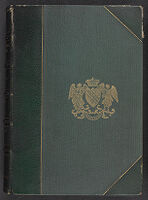
Binding: British Museum in-house; gold-tooled green half leather binding with the Harleian arms gold stamped on the outside covers; marbled endleaves; rebound 1880.
- Custodial History:
-
Origin:
England.
Provenance:
John Dee (b. 1527, d. 1609), mathematician, astrologer and antiquary: the text 'Joannis Dee Testamentum, ad Jo.Gwynn transmissum, anno 1568' on f. 69r is inscribed in his hand.
John Gwynn, vicar of Llanidloes, 1568 (f. 69r).
Elias Ashmole (b. 1617, d. 1692), astrologer and antiquary, owned the manuscript between 1652 and 1667: copied texts and images from Harley MS 2407 into his alchemical miscellany, Theatrum chemicum britannicum (1652). Ashmole includes the text and drawings of ff. 75r-89v (pp. 213-226), and copies the illustration from f. 16v (p. 350); his added table of contents, dated 'Jan 12 67' (ff. 1r, 1v); inscribed in the same hand on f. 75v: 'Mr. Ashmole 212', which corresponds with Ashmole's Theatrum chemicum britannicum, p. 212 (not in Wright, Fontes Harleiani (1972)).
John Batteley (b. c.1646, d. 1708), Church of England clergyman and antiquary; bought in 1723 through his nephew, John Batteley, by Edward Harley, along with other manuscripts (see Diary, ed. by Wright and Wright (1966), II, p. 263 n. 1; Wright, Fontes Harleiani (1972), p. 67).
The Harley Collection, formed by Robert Harley (b. 1661, d. 1724), 1st earl of Oxford and Mortimer, politician, and Edward Harley (b. 1689, d. 1741), 2nd earl of Oxford and Mortimer, book collector and patron of the arts, inscribed as usual by their librarian, Humfrey Wanley ‘5 die Novembris, A.D. 1723’ (f. 1r).
Edward Harley bequeathed the library to his widow, Henrietta Cavendish, née Holles (b. 1694, d. 1755) during her lifetime and thereafter to their daughter, Margaret Cavendish Bentinck (b. 1715, d. 1785), duchess of Portland; the manuscripts were sold by the Countess and the Duchess in 1753 to the nation for £10,000 (a fraction of their contemporary value) under the Act of Parliament that also established the British Museum; the Harley manuscripts form one of the foundation collections of the British Library.
- Information About Copies:
-
Full digital coverage available for this manuscript: see Digitised Manuscripts, https://bl.uk/manuscripts/.
Select digital coverage available for this manuscript: see the Catalogue of Illuminated Manuscripts, https://bl.uk/catalogues/illuminatedmanuscripts/.
- Publications:
-
Elias Ashmole, Theatrum Chemicum Britannicum (London: Grimond, 1652), pp. 211 [On the order of God’s universe as a justification for the Philosopher’s Stone], 272 [On the Virtue of the Planets and of the Philosopher’s Stone], 344-347 [Alchemical poem by Arnaldus de Villa nova], 350-351 [On the Three Kings of Cullen], 434 [On Mercury].
Robert Hood Bowers, 'Lydgate’s ‘The Churl and the Bird’ MS Harley 2407 and Elias Ashmole', Modern Language Notes, 49 (1934), 90-94 (pp. 91-93) [On Lydgate's The Churl and the Bird].
Dorothea Waley Singer, Annie Anderson, and Robina Addis, Catalogue of Latin and Vernacular Alchemical Manuscripts in Great Britain and Ireland Dating from before the XVI Century, 3 vols (Brussels: Lamertin, 1928-1931), III (1931), 1040-41.
The Diary of Humfrey Wanley 1715-1726, ed. by C. E. Wright and Ruth C. Wright, 2 vols (London: The Bibliographical Society, 1966), II, 1722-1726, p. 263 n. 1.
Dorothea Waley Singer, 'An Unusual Plan of the Universe', Studies and essays in the history of science and learning offered in homage to George Sarton on the occasion of his sixtieth birthday, 31 August 1944, ed. by Ashley Montagu and George Sarton (New York: Schuman, 1969), pp. 415-19.
M.K. Corbett, 'Ashmole and the Pursuit of Alchemy: The Illustrations to the Theatrum Chemicum Britannicum, 1652', The Antiquaries Journal, 63 (1983), 326-36.
Douglas Gray, The Oxford Book of Late Medieval Verse and Prose (Oxford: Clarendon, 1985), p. 141 [On the Three Kings of Cullen].
Angus McIntosh, M. L. Samuels, and Michael Benskin, A Linguistic Atlas of Late Mediaeval English, 4 vols (Aberdeen: Aberdeen University Press, 1986), LP 5210; Grid 366 140 (Somerset).
John Dee's Library Catalogue, ed. by Julian Roberts and Andrew G. Watson, (London: Bibliographical Society, 1990), pp. 167–68.
Kathleen L. Scott, Later Gothic Manuscripts 1390-1490, A Survey of Manuscripts Illuminated in the British Isles, 6, 2 vols (London: Harvey Miller, 1996), I, pp. 43, 71 n. 5, 72, n. 8, 73 n. 32, 75 n. 59.
George R. Keiser, 'The Conclusion of the Canon's Yeoman's Tale: Readings and (Mis)readings', Chaucer Review, 35 (2000), 1-21 (p. 17 n. 4, 18).
Julia Boffey and A. S. G. Edwards, A New Index of Middle English Verse (London: The British Library, 2005), nos 1203, 1205, 1364, 1438, 1558, 2330, 2656, 2784, 3253, 3528.
George R. Keiser, 'Preserving the Heritage: Middle English Verse Treatises in Early Modern Manuscripts', Mystical Metal of Gold: Essays on Alchemy and Renaissance Culture, ed. by Stanton J. Linden, AMS Studies in the Renaissance, 42 (New York: AMS Press, 2007), 180-205 (pp. 195, 200, 202).
Anke Timmermann, Verse and Transmutation: A Corpus of Middle English Alchemical Poetry (Leiden: Brill, 2013), pp. 65–66, 176n.
Daniel Huws, A Repertory of Welsh Manuscripts and Sources c.800-c.1800, 3 vols (Aberystwyth: The National Library of Wales and University of Wales Centre for Advanced Welsh and Celtic Studies, 2022), I, p. 682.
‘London, British Library Harley 2407', The Digital Index of Middle English Verse [=DIMEV] [accessed 8 June 2022] nos 1980-2, 1985-1, 2277-1, 2418-1, 2615-1, 3759-1, 4210-23, 4420-8, 5102-3, 5567-3, 5567-4.
- Material Type:
- Archives and Manuscripts
- Legal Status:
- Not Public Record(s)