Hard-coded id of currently selected item: . JSON version of its record is available from Blacklight on e.g. ??
Metadata associated with selected item should appear here...
Harley MS 2430
- Record Id:
- 040-002048261
- Hierarchy Root Ancestor Record Id:
- 040-002048261
- MDARK:
- ark:/81055/vdc_100000000709.0x0003aa
- LARK:
- ark:/81055/vdc_100165166575.0x000001
- SLARK:
- Format:
- ISAD(G)
- Reference (shelfmark):
- Harley MS 2430
- Title:
-
German prayer-book
- Scope & Content:
-
This prayer-book presents a carefully designed programme of devotional exercises and prayers contemplating Christ’s suffering for a female reader who is identified as a servant in a household. The prayer-book’s compiler seeks to engage its female reader with the contents by using a range of imaginative narrative strategies. The manuscript’s first part (ff. 2r-19r) contains a regime of devotional exercises that is presented from the viewpoint of a female servant who explains to a hermit – who has learned that the housewife pleases God more than he does and has come to enquire about this – her daily regime of exercises that enables her to dedicate each moment and activity to Christ’s suffering. The manuscript’s second part contains prayers that address and are specifically designed for a female servant: these include prayers on Christ’s suffering, on behalf of her master and his family members, but also for the biblical Martha−a model for the vita activa−with whom the female servant is to identify (ff. 19r-48v). This part, moreover, includes a script for a conversation between the female servant and Christ that she is to perform, whenever her master sends her outside the house, in a church before a crucifix. In the conversation, she is to imagine that Christ reveals to her that he endured 5,465 wounds in the Passion. This account resembles similar revelations that were associated with St Bridget of Sweden and St Mechtild of Hackeborn. The prayer-book provides a remarkable example of the strategic use of religious narrative for promoting devotional exercises and prayers, but it also a rare insight into the devotional and mystical writings to which laywomen from the lower classes of society had access in the Late Middle Ages.
f. 1r: Title page, ‘Geistliche betrachtüng einer haüszfrawen oder magt, wie sie sich den gantzen tag, in das leiden Christi richten’.
ff. 2r-3v: An exemplum about a hermit and a female servant, beginning ‘Es war eins mal ein Einsedeler in einem waldt vierzich Jhar, der gedacht bey im selber, ob aüch ein Mensch lebet, der bey Gott in solchem verdienst were, wie er Da kam ein Engel Gottes zü ime in einer gestalt eines Menschen [etc.]’.
ff. 3v-19r : Devotional exercises, as explained by the female servant, followed by the hermit’s response: ‘Wann man am Morgens fro die Tagklocken leütet da wir Dienstbodden erstlich gemeinlich müssen aüfstehen da gedenck ic an den Schall der Posaünen des Engels, der vor dem Iüngsten Tag würt sagen: Stehet aüf ir Todten, und kommet züm Gericht [etc.]’.
ff. 19r-23r: A sequence of prayers to Christ to be recited by a female servant, ‘Nü sprech dis nachfolgende Gebett vor deine herschafft denen dü mit dienst verbünden bist, und Dienstmagt bist, da mit dü als ein Fromme, Ehrliche, und Threwe Dienstmagt und Dienstbottin allezeit magst erfünden werden; so wirt es dis dir auch Gott zü seiner zeit vergelten [etc.]’.
ff. 23v-24r: Prayers to God, ‘Gott sei lob, Ehr und preis, ietzt und in Ewigkeit Amen [etc.]’.
ff. 24r-25r: Prayers to Christ, ‘Sprech nu weiter wie folgt: O herr Jesu Christe dein heiliger Nam, sey mein letzstes wort [etc.]’.
ff. 25v-26v: A prayer to Christ for protection against sins, ‘Sprech weiters vor deine herschafft, das sie Gott woll behüten für Sünden und Schanden : Herr Gott Iesü Christe dürch deinen unschüldigen bitteren Tod, helff denen, deren Dienstbott ich bin, und Brott esse ausz aller ihrer Noth [etc.]’.
ff. 26v-28r: A prayer to God for the housewife’s ruler, beginning ‘So villeicht es sich zütragen würde, das dein herschafft Man oder weib, in widerwerdigkeit begriffen, kanst du im gleichen nachfolgende Gebett, mit aller andacht für sie sprehcen: Dan wie der Heilig Apostel Paulus sagt, seit frolich mit den frolichen, und weinet mit den betrübten, wie vill zü mehr, sein folchs ffrommen und Ehrliche Dienstbotten schüldig zü thün : Gebett : Himmelischer Vatter, Barmhertzige Gott, Ich bitt dich demütigklich für mein herschafft [etc.]’.
ff. 28r-29v: A prayer to Martha, ‘Gebett zü der Heiligen Iüngfrawen Sanct Martha, welches alle Wittfrawen und verheirate Weiber, sampt fromme und Getrewe Dienstbotten offt sollen sprechen, umb güte haüszregierüng zü lehren und halten: O dü heilige Iüngfraw und Wirtinne Christi Sanct Martha [etc.]’.
ff. 29v-32r: A prayer on Christ’s suffering for the morning and evening, ‘Es mogen aüch selbige weibs personen, so nit Geistlich, und doch hauszreigerüng haben, nachfolgende Gebett, alle Morgens und Abens sprechen, damit dieselbige eins mals im tag sich des leidens Christi erinneren: O herr Jesü Christe ich arme Sünderin bitten dich In das gezall deiner Aüsserwelten setz mich: Deine Gottlichen willen lerne mich [etc.]’.
ff. 32r-32v: A prayer to be used after completing a domestic task, ‘Nach einem jegklichen gethanen vollendten werck: Gebenedeiet sey die heilige dreifaltigkeit [etc.]’.
ff. 33r-33v: A poem against worldliness, ‘O Mensch Christi Todt und leiden: Der welt betrüg zü allen seiten . Himmelische frewd, und hellische Peyn; Lasz allezeit dein gedancken sein [etc]’.
ff. 33v-36v: Teachings from Fulgentius of Ruspe, De Fide ad Petrum (Chapters 37, 38, 39), ‘Schaw an das end: Demnach aüch vill daran gelegen ja heil und Seele Seligkeit, das fromme Dienstbodden sich selbsten, Gottesforchtige Eltern jre kinder in irer jügent, nit allein bey fromme Ehrliche leüth thün und vermeden sich ihnen zü dienen, sonder aüch bey solche, sonder aüch bey solche, so dürchausz unser Catholischer, Romischer und allein Seligmachender Religion sein [etc.]’.
ff. 36v-37v: Teaching for the household, citing 1 Timothy 5, beginning ‘j. Timoth. 5 Wer nit uber die seine und in sonderheit ub seine haüsgenossen sorget der hatt den Glaüben verleügnet [etc.]’.
ff. 37r-40r: A prayer for a good death, to be recited for oneself and one’s master, begins ‘Ein Gebett zu Christo umb ein selige Sterbstund, welches alle fromme und Getrewe Dienstbodden für ir Herschafft und sichselbsten offt sollen sprechen : O Iesü Christ bis du mein süver licht. So mich elenden der grimig Todt anficht [etc.]’.
ff. 40r-41v: A prayer for the housewife’s parents and those of her rulers, ‘[rubric] Die kinder für ihre liebe Elter umb walfart allre narüng, und ewige seligkeit zü erhalten: Disz nachfolgende Gebett mogen alle Dienstbodden aüch sprechen fur die jenigen denen sie mit dienst verbünden und verplicht sein [prayer] : O dü mein herr und Gott der du ernstlich befohlen hast das man Vattter und Mutter nach dir ehren [etc.]’.
ff. 42r-45r: An imaginary conversation between the housewife and Christ, to be performed in the Way of the Cross at the station of the Crucifixion, ‘[rubric:] Wenn dü villeicht von deinem herschafft Man oder weib hinaüsz gesandt wirst in iren Namen etwas züverrichten, Und in eine kirch oder uber feldt in einem Creützweg kompst, und findest das Creütz Christi abgemacht, so sprech: und frag [text:] Wer bistü, der da hangt an dem holtz des heiligen Creützes [etc.]’.
ff. 45r-46v: Two teachings against worldliness, ‘Der heilige St. Gregorius vermant einen jedern Menschen und spricht, O mensch, Wach und bett, und wart mit forcht des herren [etc.]’.
ff. 46v-48r : A prayer to Christ, ‘O mein Gott und Schopffer, solche frewd hast dü, noch dein allerliebste werdigste Mütter Maria, noch alle deine liebe heilige, nitt vil aüff Erdtreich gehabt [etc.]’.
ff. 48r-48v: A prayer to Christ, ‘O lieber herr, wilt du das ich umb meiner Sunden willen, soll flehen von dir zu Andern, so gib mir dich fur den andern [etc.]’.
Decoration:
Large initials in green or yellow, green and yellow, and green and red, sometimes featuring foliate decoration, a few with cadels (e.g., ff. 9r, 10r, 14r, 18r) Drawings of acorns, trefoils, and cherries in yellow, green and red are used as line fillers throughout the manuscript. One manicule in colour (f. 46r).
- Collection Area:
- Western Manuscripts
- Project / Collection:
- Harley Collection
Medieval and Renaissance Women - Hierarchy Tree:
- [{ "id" : "040-002048261", "parent" : "#", "text" : "Harley MS 2430: German prayer-book" , "li_attr" : {"class": "orderable"} }]
- Hierarchy Record Ids:
- 032-002045828
040-002048261 - Is part of:
- Harley MS 1-7661 : Harley Manuscripts
Harley MS 2430 : German prayer-book - Hierarchy:
- 032-002045828[2431]/040-002048261
- Container:
- View / search within Archive / Collection: Harley MS 1-7661
- Record Type (Level):
- File
- Extent:
- 1 volume
- Digitised Content:
- https://iiif.bl.uk/uv/#?manifest=https://bl.digirati.io/iiif/ark:/81055/vdc_100165166575.0x000001 (opens in a new tab)
- Thumbnail:
-
- Languages:
- German, Middle High
- Scripts:
- Latin
- Start Date:
- 1500
- End Date:
- 1599
- Date Range:
- 16th century
- Era:
- CE
- Access:
-
Please request the physical items you need using the online collection item request form.
Digitised items can be viewed online by clicking the thumbnail image or digitised content link.
Readers who have registered or renewed their pass since 21 March 2024 can request physical items prior to visiting the Library by completing
this request form.
Please enter the Reference (shelfmark) above on the request form.If your Reader Pass was issued before this date, you will need to visit the Library in London or Yorkshire to renew it before you can request items online. All manuscripts and archives must be consulted at the Library in London.
This catalogue record may describe a collection of items which cannot all be requested together. Please use the hierarchy viewer to navigate to individual items. Some items may be in use or restricted for other reasons. If you would like to check the availability, contact our Reference Services team, quoting the Reference (shelfmark) above.
- Physical Characteristics:
-
Materials: Paper.
Dimensions: 155 x 110 mm (text space: 120 x 75 mm).
Script: Gothic.
Foliation: ff. 48 (+ 2 unfoliated paper leaves at the begining + 2 at the end); the manuscript only has original (16th-century) foliation; f. 1v contains a paper strip for repairing a tear in the page.
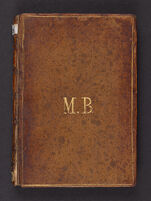
Binding: Post-1600. 17th-century brown mottled calf-skin with golden fillets, inscribed in gold at the British Musuem: ‘LIBER PRECUM LING. GERM.’.
- Custodial History:
-
Origin:
Germany.
Provenance:
Unknown 16th-century owner: the manuscript’s prayers have been grammatically phrased for a woman and are explicitly written for a female servant.
Unknown 16th- or 17th-century German owner: German notes (illegible) on f. 1v and f. 44v.
The Harley Collection, formed by Robert Harley (b. 1661, d. 1724), 1st earl of Oxford and Mortimer, politician, and Edward Harley (b. 1689, d. 1741), 2nd earl of Oxford and Mortimer, book collector and patron of the arts. Edward Harley bequeathed the library to his widow, Henrietta Cavendish, née Holles (b. 1694, d. 1755) during her lifetime and thereafter to their daughter, Margaret Cavendish Bentinck (b. 1715, d. 1785), duchess of Portland; the manuscripts were sold by the Countess and the Duchess in 1753 to the nation for £10,000 (a fraction of their contemporary value) under the Act of Parliament that also established the British Museum; the Harley manuscripts form one of the foundation collections of the British Library.
- Information About Copies:
-
Select digital coverage available for this manuscript; see the Catalogue of Illuminated Manuscripts, https://bl.uk/catalogues/illuminatedmanuscripts/.
- Publications:
-
A Catalogue of the Harleian Manuscripts in the British Museum, 4 vols (London: Eyre and Strahan, 1808-12), II (1808), p. 691.
Robert Priebsch, Deutsche Handschriften in England, 2 vols (Erlangen: Junge, 1896–1901), II, p. 8 (no. 12).
- Material Type:
- Archives and Manuscripts
- Legal Status:
- Not Public Record(s)