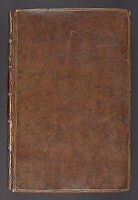
Catalogue of Additions to the Manuscripts in the British Museum in the Years 1916-1920 (London: Trustees of the British Museum, 1933), pp. 110-11:
'PARHAM MS. LXIV. LIVES of, and narratives concerning, Charlemagne, with William of Malmesbury's De Gestis Regum Anglorum, William of Jumièges, Gesta Normannorum, excerpts from Suger, Gesta Ludovici, etc. : a collection of historical material probably to be associated with the work of an anonymous St. Denis historian of the late 12th cent. The MS. appears to be identical in contents with Bibl. Nat. fonds lat. 17656 (Notre Dame 133), described by H. Omont in Stubbs's edition of the Gesta Regum, Rolls Ser., 1887, i, p. ciii (cf. also G. Rauschen, Die Legende Karls des Grossen, 1890, p. 6). The collection in these two MSS. appears to be a product of the historical school of St. Denis, for it contains fragments of the life of Louis le Gros by Suger, Abbot of St. Denis, and is intimately
related to Bibl. Nat. fonds lat. 12710, which has been shown by J. Lair, Bibl. de l'École des Chartes, xxxv, 1874, p. 543, to be the note-book of a St. Denis historian writing after 1180, containing a draft scheme of a history afterwards realized in the Nova Gesta Francorum (Brussels MS. 9178, Berne MS. 90, Bibl. Nat. fonds lat. 11793), itself a source for the Chroniques de St. Denis.
1. " Noua uita Karoli magni imperatoris iussu Frederici Augusti conscripta " : Life of Charles the Great, composed probably by a monk of Aix-la-Chapelle circ. 1166, at the command of the Emperor Frederick I (Barbarossa), in justification of the canonization of Charlemagne (1165). Printed by G. Rauschen, Die Legende Karls des Grossen, Publ. den Ges. für Rheinische Geschichte, vii, Leipzig, 1890, pp. 17-93, Mainly from the Paris MSS. Bibl. Nat. fonds lat. 17656; nouv acq. lat. 264; Bibl. Ste. Geneviève 1991, which form a group by themselves. Bibl. Nat. fonds lat. 6187, Phillipps MS. 11604, and the present MS. appear to be transcripts of 17656. The life is based in part on the ordinary historical materials, Eginhard, the Annals of Lorsch, etc.. (cf. Rauschen, p. 4). Book ii is a form of the text, Descriptio qualiter Karolus Magnus clauum et coronam domini a Constantinopoli Aquisgrani detulerit qualiterque Karolus Caluus hec ad sanctum Dionysium retulerit (printed from Bibl. Nat. fonds lat. 12710 and Vienna 3398 by Rauschen, op. cit., p. 103, and from Montpellier MS. H. 280 by F. Castets, Revue des Langues romaines, Ser. iv, vol. vi, 1892, p. 439, cf. also J. Bédier, Les Légendes Épiques, 2e éd., iv, p. 122), an original prologue being prefixed. The heading of the text here (f. 11 b) is " De peregrinatione beati Karoli magni in laudem dei facta, et qualiter a Constantinopoli apud Aquile Capellam clauum et coronam domini attulerit." Book iii opens with a prologue and the first seven chapters of the Pseudo- Turpin (see art. 2 below), which in this MS. are omitted from the Nova Vita, no separation between Bks. ii and iii being indicated, and transferred to the text of the Pseudo-Turpin. Prol. beg. " [Et]si passim et uarie odoris pigmentarii." Followed by table of chapter-headings, including those of Bk. iii, capp. 1-7. Text beg. " [Sanctus] igitur Arnulphus." The chapters are numbered throughout, Bk. iii beginning with cap. 8. f. 1.
2. Historia Karoli Magni et Rotholandi, attributed to Tylpin or Turpin, Archbishop of Rheims. Preceded, as in the Paris MS. 17656, by the prologue of Bk. iii of the Nova Vita (headed. " Prefatio in epistola Tulpini archiepiscopi," beg. " Prepositi nostri negotii "). The epistle is headed (obviously in connexion with the Nova Vita) " Epistola Tulpini Remensis archiepiscopi Leobrando Aquisgranensi decano transmissa sanctitatis beati Karoli magni assertiva," and
beg. " [T]ulpinus dei gratia Remensis archiepiscopus." Text beg. Gloriosus itaque apostolus Christi." The text agrees with Paris MS. 17656 and its copy 6187 in the features described by G. Paris, De Pseudo-Turpino, 1865, p. 26. It has the chapter on Roland's miracle at the end (f. 44) with the couplet " Qui legis hoc carmen," etc., the supplementary chapters on the finding of Turpin's body, Altumajor's invasion of Galicia and the origin of the Navarrese, and also the story of Charlemagne and St. Amalberga peculiar to this recension. According to G. Baist, Zeitschrift für Rom. Phil., v, p. 423, the MSS. of this form present " die jungste und zufälligste Redaction (Compilation) trotz ihres verhältnissmässig hohen Alters." The most recent edition of the Pseudo-Turpin (from Montpellier MSS. of a different type) is that of F. Castets, Turpini Historia, Soc. pour l'étude des langues romanes, publ. spéc., vii, 1880. The problems connected with the Historia are studied by J. Bédier Les Légendes Épiques, 2e éd., iii, pp. 42-114. For other Museum MSS. see H. L. D. Ward, Cat. of Romances, i, p. 546. f. 28.
3. " Uita Karoli magni imperatoris ab Einardo abbate capellano suo descripta " (title after prologue) : Eginhard's life of Charlemagne, with prologue (beg. " Vitam et conuersationem "). Text beg. " [G]ens morahingorum (sic)." Ends with cap. 31, "anno indictionis viio vo Kal. Februarii." The text agrees with that of the Paris MSS. 17656, 6187 (described by Pertz in Mon. Germ. Hist., Scriptores, ii, p. 434), reading, e.g. " Hunoldus for " Hruodlandus" in cap. 9. f. 46.
4. " De magistro Alchuino, qui et Albinus," beg. "Fuit quidam magnus doctor nomine Alcuinus " : a corrupt version of William of Malmesbury, Gesta Regum, §§ 66, 90-93, which occur in a more correct form in art. 6. These excerpts are clearly reproduced as a " documentum ingens magnanimitatis et fortitudinis Karoli," and intended for a pendant to the preceding article. f. 54 b.
5. "De Karolo Martello qui ecclesie decimas militibus dedit," beg, "Karolus princeps Pipini regis pater " : the " visio Eucherii," a vision of the damnation of Charles Martel as seen by St. Eucherius of Orléans. This first occurs in the letter of the Synod of Quierzy to Louis the German, A.D. 858, from which the vision is printed in Bouquet, Recueil, iii, p. 659. That letter was composed by Hincmar, Bishop of Rheims, and P. Roth, Gesch. des Beneficialwesens, 1850, pp. 327-329, 466-470, concludes that the vision was a forgery by that prelate, who refers to it in his life of St. Remigius. It is an interpolation in the life of St. Eucherius (cf. Acta SS., 20 Feb., pp. 216-219, 222 note h).
The excerpt as printed by Bouquet occurs complete in Bibl. Maz. MS. 2013 (543), f. 222 b, a St. Denis MS. written between 1120 and 1129. It is incomplete here, ending " Karolus Caluus confirmauit." The damnation of Charles Martel is mentioned in the Brussels and Berne MSS. of the Nova Gesta Francorum, but is suppressed in the Paris MS. (Bibl. de 1'Éc. des Chartes, xxxv, p. 561). lt is referred to in the William of Malmesbury selections below (f. 84 b, cf. Rolls ed., i, p. 255). f. 55 b.
6. " Libellus de gestis Anglorum" : a series of selections from Bks. i-iii of William of Malmesbury, De gestis Regum Anglorum (ed. Stubbs, Rolls Ser., 1887-9). Stubbs gives (i, p. cv) a concordance of the selections with the paragraphs of his edition. They were printed by Jerome Commelin, Rerum Britannicarum Scriptores, Heidelberg, 1587, as the work of an anonymous continuator of Bede, from a Belgian MS. supplied by Paul Knibbe, this forming the editio princeps of any part of William of Malmesbury. They deal largely with French and Norman history, those from Bk. iii, which are particularly copious and continuous, giving an account of the Norman conquest of England. In the rest there is an obvious tendency to select tales of strange and miraculous events or ecclesiastical and literary matter of general interest. The form of the Gesta Regum used was apparently the first recension as characterized by Stubbs, Rolls ed., i, p. xlv. f. 56. After the main body of extracts from the Gesta Regum follow certain additional sections, which appear in whole or in part in other MSS. containing this text (Stubbs, i, p. cvii). They are here : (a) " In Fuldensi cenobio-monstrauit," i.e. § 293 of the Gesta Regum. f. 106 b ;-
-(b) "De latrone qui suspensus est cum domino," beg. " Latro qui a dextris domini suspensus " : an unusual version of the legend of the penitent thief, here the son of a procurator of Herod sent to prevent the flight of the Holy Family into Egypt, who permitted them to pass because of the beauty of the Child. The nearest analogue to this is the story in Aelred of Rievaulx, De Vita Eremitica, xlviii (Migne, Patr. Lat., xxxii. 1466). ib.;-
-(c) " De puteo ex quo beata Maria hausisse fertur," beg. " Est in Bethleem puteus magnus " : story of star seen in Mary's well. From Gregory of Tours, Lib. Mirac., Migne, Patr. Lat., lxxi. 707. f. 107 b ;-
-(d) "De diuersis generibus hominum," beg. " Frequenter cogitans de factis hominum " : an " état du monde " in rhythmical verse, concluding with a reference to the recent spread of the Cistercian order. Printed by Commelin, op. cit., p. 344, and after him by Stubbs, p. cviii. Also printed from the Paris MS. 17656 by E. du Méril, Poésies pop. lat., 1847, p. 128. A longer and earlier version
from Douai MS. 702 (written A.D. 1173) is printed by du Méril, Poésies inédites, 1854, p. 313. ib. ;-
-(e) "De quodam presbitero," beg. " Nuper in Flandrensi prouintia " : tale of a sinful priest from whom the Host vanishes three times at the celebration; he repents and consults the Bishop of Thérouanne; he is impelled to celebrate against the Bishop's orders and the three Hosts return. A closely similar tale is told by Petrus Venerabilis, De Miraculis, i, chap. 2 (located "in Teutonicis partibus"), Migne, Patr. Lat., clxxxix.
853. f. 109 ;-
-(f) " De confessione in ultimis positorum," beg. (with excerpt from " Celestinus papa ") " Vera ad deum confessio " : sentences from various authors on confession. f. 110;-
-(g) " Sanctus Beda dixit quod tres dies sunt in mense Februarii, id est idus Februarii, vio kal. Martii, pridie kal. Martii, in quibus si quis masculus natus fuerit caro eius incorrupta permanet usque in diem iudicii " : tract on the Egyptian days attributed to Bede. See R. Steele, Dies Aegyptiaci (reprinted from the Proc. of the R. Soc. of Medicine, 1919, xii, pp. 108-121), pp. 13, 14, where somewhat similar passages from works attributed to Bede are cited, but without the passage quoted above, which, however, occurs in a different form in Cotton MS. Titus D. xxvi, f. 4 (printed by W. de G. Birch, Roy. Soc. Lit. Trans., 2nd ser., xi, 1878, pp. 472-474). f. 110 b;-
-(h) Three excerpts from the life of Louis VI by Suger, Abbot of St. Denis (d. 1151), edited by A. Molinier, 1887, with collation of the Paris copy of these sections. They are: "Post mortem Willelmi regis-materiam " (ed. pp. 6, l. 1-8, l. 24) " Contigit autem - ultione " (pp. 45, l. 17-52, l. 14) ; " Per idem tempus - amisit " (pp. 21, l.15-24, l.3). Molinier states (p. ix) that the text of these excerpts closely resembles that of Bibl. Nat. MS. lat. 12710, both deriving from a common source. f. 110 b. A number of MSS. of the 12th and 13th centt. from North France and Flanders contain this recension of the Gesta Regum associated with the Nova Vita and Eginhard. They are: Bibl. Nat. MS. lat. 17656 (late 12th cent., apparently identical in contents with the present MS.) ; Bibl. Nat. MS. lat. 6187 (13th cent. Nova Vita, Pseudo- Turpin, Eginhard, Gesta Regum, apparently a transcript of the preceding MS., cf. Rauschen, op. cit., p. 8); Phillipps MS. 11604 (13th cent., from St. Martin's, Tournay, has Nova Vita, Eginhard, the sections on Alcuin and Gesta Regum with supplements a-g and the first two excerpts from Suger, the second in shorter form, cf. Stubbs, op. cit. i, p. cvii) ; Bibl. Nat. nouv. acq. lat. 264 (12th-13th cent., written at Hautmont, dioc. of Cambray, has Gesta Regum, Nova Vita, Eginhard) ; Phillipps MS. 4621 (12th or 13th cent., from the Cistercian house of Alne, dioc. of Liége, has the Gesta Regum selections. It was sold at Sotheby's, Phillipps sale-cat., 19 Dec. 1919, lot 705); Phillipps MS. 237 (of the same date, is closely
connected with the Alne MS., cf. Stubbs, op. cit., i., pp. cii, ciii). It is probable that all these MSS. written or preserved in North France and Flanders, derive from a common source containing the Gesta Regum selections in association with Charlemagne texts, and this source was most probably the collection represented by the Paris MS. 17656 and the present MS.
7. " Incipit prologus in gestis Norinannorum": the Gesta Normannorum of William of Jumièges as interpolated by Ordericus Vitalis. The autograph MS. of Ordericus Vitalis (Rouen 1174) has been reproduced in facsimile in Matériaux pour l' édition de Guillaume de Jumièges préparée par Jules Lair, 1910, with an introduction by L. Delisle. In the edition of William of Jumièges by Jean Marx, Soc. de I'Hist. de Normandie, 1914, the interpolations of Ordericus Vitalis are printed separately, pp. 151-198. This version of William of Jumièges is found in the Bibl. Nat. MSS. lat. 17656 and 12710 and in Bibl. Mazarine MS. 2013. For other MSS. see Marx, op. cit., p. xxxv. The epistle is omitted, book i, chap. 1 is treated as a prologue (beg. " [E]x quo Francorum gens "), and chap. 2 is headed " Item alius " [sc. prologus]. Ends " et gloria prosperis potitur " (ed. p. 142). After this is added " Hec de Guillelmo Anglorum atque Normannore (sic) rege dicta sufficiant." There is no epilogue. f. 114.
8. Excerpt from Suger, Gesta Ludovici, beg.: " Anno dominice incarnationis MoCoVo ", corresponding to Molinier's edition, pp. 24, l. 4 - 32, l. 17. f. 150 b.
9. List (by provinces) of the archbishops and bishops who attended the Lateran Council of 1179. Printed from this MS. ( "Ex Cod. MS. Monasterii S. Mariae de Bran. Ord. Praemonst.") in D'Achery, Spicilegium, 2nd ed., 1723, i, p. 636, and reprinted in Mansi, Concilia, xxiii, p. 214. The copy in the Paris MS. 17656 has the heading " De nostri temporis concilio a papa Alexandro celebrato," lacking here (Rauschen, op. cit., p. 7). Beg. " Anno ab incarnatione domini MoLXXoIXo (sic)." f. 152 b. Vellum ; ff. v + 155. 12 5/8 in. x 8 1/4 in. XII cent. (after 1179). Gatherings of 8 leaves (last3), signed at end. Sec. fol. "i. Epistola tulpini." Initials in red, blue and green, flourished with penwork, spaces for the larger initials in several cases being left blank. Perhaps written in the Premonstratensian house of St. Yved of Braine, near Soissons. It was at any rate preserved there from an early date, and is said to have had the inscription on f. 155 " Liber sanec Mariæ sanctique Evodii de Brana, si quis eum abstulerit, anathema sit hie et in æternum." It was seen there by Martène and Durand in 1718 (cf. their Voyage Littéraire, ii (1724), p. 25); and it was there when D'Achery was collecting materials for his Spicilegium (1st ed. 1655-1677), see art. 9 above. In 1728 it was described by La Curne de Sainte Palaye in a memoir printed in the Histoire de 1'Académie des Inscriptions, vii (Paris, 1733), p. 280. He saw it at Braine and records that it had the inscription given above from his copy and that the script resembled that of other MSS. in the same library, in one of which, a collection of saints' lives, occurred the inscription " Johannes de Liviaco me scripsit." A description of the MS. by Claude Robert Jardel (a well-known antiquary of Braine, 1722-1788, cf. S. Prioux, C. R. Jardel, 1859) is written on inserted leaves of vellum (ff. iii, iv), stating that he bought it " vili pretio " and had it bound. A note at the side is dated 1737. The paper flyleaves used in the binding have a watermark with date 1742. On f. 155 a square of vellum has been cut away at the bottom right-hand corner and later vellum (of similar character to that used by Jardel for his description) has been inserted. On this is the inscription in imitative Gothic script : " MCCX. LAUS DEO," clearly a substitute for the inscription of Braine ownership recorded by La Curne. lt is to be noted that Jardel also had in his collection two MSS. written by " Jean de Livac," one of them a collection of saints' lives, cf. Prioux, op. cit., p. 32. On f. ii b is the inscription " R. Curzon. Parham. Jan. 9, 1860." French 18th cent. binding of mottled calf, gilt-tooled on back (1742 ?). Not in Curzon Cat.
Bindings FRENCH: Mottled calf, gold-tooled: 18th cent.[? 1742].
Scribes: Johannes de Liviaco: 12th cent.
Johannes, de Liviaco: Wrote (?): 12th cent.
includes:
- ff. 1-54 b Charlemagne; Emperor of Germany: Lives of, and narratives concerning: 12th cent.: Lat.
- ff. 28-46 Turpin, Archbishop of Reims: Historia Karoli Magni et Rotholandi, attrib. to: 12th cent.
- f. 46 Eginhard: Life of Charlemagne by: 12th cent.: Lat.
- f. 54 b Alcuin: Extract from William of Malmesbury's Gesta Regum conc.: 12th cent.
- f. 55 b Saint Eucherius,; Bishop of Orléans: Vision of the damnation of Charles Martel seen by: 12th cent.: Lat.
- f. 55 b Charles Martel of France: Vision of the damnation of: 12th cent.: Lat.
- f.56 William, of Malmesbury: Selections from his Gesta Regum, Bks. I-III: 12th cent.
- f. 106 b Apocrypha: Legend of the Good Thief: 12th cent.: Lat.
- f. 107 b Poetry LATIN: Rhythmical verses "de diuersis generibus hominum": 12th cent.
- f. 107 b Bethlehem: Story of star seen in St. Mary's well at: 12th cent.
- f. 107 b Saint Gregory, of Tours: Excerpt from his Libri Miraculorum: 12th cent.
- f. 109 Tales: Tale conc. a priest of Flanders and the vanishing Host: 12th cent.: Lat.
- f. 110b Chronology: Tract on Egyptian Days attrib. to Bede: 12th cent.: Lat.
- f. 110b Beda: Tract on Egyptian Days attrib. to: 12th cent.: Lat.
- f.110 Confession: Excerpts "de confessione in ultimis positorum": 12th cent.
- ff. 110 b, 150 b Suger, Abbot of St. Denis: Extracts from his Gesta Ludovici: 12th cent.: Lat.
- f. 114 Ordericas Vitalis: William of Jumièges, Gesta Normannorum, interpolated by: 12th cent.
- f. 114 William, of Jumièges: Gesta Normannorum, interpolated by Ordericus: 12th cent.
- f. 152 b Alexander III; Pope: List of archbishops and bishops at the Lateran Council of 1179;: 12th cent.'