Hard-coded id of currently selected item: . JSON version of its record is available from Blacklight on e.g. ??
Metadata associated with selected item should appear here...
Lansdowne MS 204
- Record Id:
- 040-002073484
- Hierarchy Root Ancestor Record Id:
- 040-002073484
- MDARK:
- ark:/81055/vdc_100000001257.0x0000fc
- LARK:
- ark:/81055/vdc_100140586197.0x000001
- SLARK:
- Format:
- ISAD(G)
- Reference (shelfmark):
- Lansdowne MS 204
- Title:
- John Hardyng, Chronicle (first version)
- Scope & Content:
-
This manuscript contains the only surviving copy of the first version of the Chronicle of John Hardyng (b. 1378, d. 1465), a former soldier and spy for King Henry V (r. 1413-1422). It was produced in Lincolnshire or the East Midlands in the middle of the 15th century and was probably commissioned by Hardyng as a presentation copy of the text for King Henry VI (r. 1422-1461, 1470-1471). A second, later version of the Chronicle survives in at least 16 copies.
The Chronicle is one of only a very small number of texts written towards the end of the king's reign and at the height of the Wars of the Roses (1455-1487). It covers the history of Britain and England, beginning with its mythical foundation by the Greek princess Albina and her 29 sisters, and ending with the final years of Henry VI's minority. This copy of the text also includes a unique coloured map of Scotland, the earliest independent cartographic representation of the realm.
For a further discussion of the manuscript and an edition of the text, see James Simpson and Sarah Peverley, eds., John Hardyng, Chronicle: Edited from British Library MS Lansdowne 204 (Kalamazoo: Medieval Institute Publications, 2015).
Contents:
f. 1r: Blank.
f. 2r: Notes by Sir Robert Cotton (b. 1570/1, d. 1631) and a summary list of contents in Latin, written by Cotton's librarian Richard James (b. 1592, d. 1638), added in the 17th century.
f. 2v: John Hardyng's dedication of the work to Henry VI, beginning, 'O soverayne lord, be it youre plesance', and ending, 'To byde forever undir hirs hool proteccioun'.
ff. 3r-4r: A prologue in Middle English, addressing Hardyng's grievance and the king's sovereignty over Scotland, beginning 'Who hath an hurte and wille it nough diskure', and ending, 'Me to rewarde as pleseth youre excellence'.
f. 4v: An incomplete table of contents, beginning, 'Of the sustirs of Grece how thai came to his londle and called it Albion' and ending, 'Of Seynt Edward Confessor and Harolde, son of Godwyn',
ff. 5r-230v: The Chronicle of John Hardyng, Books 1-7, written in Middle English, beginning, 'The while that Troy was regnyng in his myghte', and ending, 'Ne chaungen hew for thayre inequyté'.
ff. 227v-230r: A Latin prose letter sent from Edward I (r. 1272-1307) to Pope Boniface VIII (r. 1294-1303), detailing his right to the sovereignty of Scotland, beginning, 'Sanctissimo in Christo Patri domino Bonifacio', and ending, 'datur apud Westminster septimo die Maii anno domini M CCCI et regni nostril vicesimo nono'.
f. 230r-v: A Latin prose letter from the lords and barons to Pope Boniface VIII regarding English sovereignty over Scotland, beginning, 'Sanctissimo in Christo Patri, domino Bonifacio', and ending, 'inquietudine pacifice possidere ac illibata percipere benignius permittatis'.
Decoration:
The illumination of the manuscript has been linked stylistically to a group of 15th-century manuscripts originating from eastern England, most likely Lincolnshire or East Anglia. These include: New York Library, MS Spencer 19; British Library, Egerton MS 615; London, Wellcome Medical Library, MS 8004; Oxford, Bodleian Library, MS Laud Misc. 740; and British Library, Harley MS 2885 (see Scott, Later Gothic Manuscripts (1996), II, pp. 217-19). The illuminated pedigree of the claim of Edward III (r. 1327-1377) to the throne of France (f. 196r) is attributed to an artist known as the 'Egerton Master'.
1 illuminated map of Scotland in colours and gold, depicting the main fortifications and towns with an array of castles, walled towns, gatehouses, churches and bridges (ff. 226v-227r).
1 full-page illuminated pedigree of the claim of Edward III to the throne of France, with portraits of royal figures in colours and gold (f. 196r).
The added coat of arms of Gerard Charles (b. c. 1618, d. 1694), 1st Earl of Macclesfield, and Gerard Charles (b. c. 1659, d. 1701), 2nd Earl of Macclesfield, in colours and gold (f. 1v).
Small coats of arms in colours and gold, painted in the margins beside the main text. They are as follows: the arms of Constantine (f. 46v); the arms of King Arthur (f. 67v); the arms of Edward the Confessor (f. 129v); and the arms of Sir Robert Umfraville (f. 220r). The arms of Margaret of Anjou, entitled 'The Quene', have been erased, but the outline can still be seen (f. 217v). A second coat of arms, possibly belonging to Henry VI, may also have existed on the same page, in the small section cut away from the margin.
1 large initial in gold with blue and red leaf forms extending to form a 2-sided border with gold balls and green leaves (f. 5r).
Large initials in gold on blue and red grounds with foliate sprays with gold balls. Large and small initials in red.
Elaborate cadels in brown and sometimes red ink in the first lines of text and descenders in the last.
Catchwords decorated in brown or red ink.
- Collection Area:
- Western Manuscripts
- Project / Collection:
- Lansdowne Collection
- Hierarchy Tree:
- [{ "id" : "040-002073484", "parent" : "#", "text" : "Lansdowne MS 204: John Hardyng, Chronicle (first version)" , "li_attr" : {"class": "orderable"} }]
- Hierarchy Record Ids:
- 032-002060013
040-002073484 - Is part of:
- Lansdowne MS 1-1245 : Lansdowne Manuscripts
Lansdowne MS 204 : John Hardyng, Chronicle (first version) - Hierarchy:
- 032-002060013[0151]/040-002073484
- Container:
- View / search within Archive / Collection: Lansdowne MS 1-1245
- Record Type (Level):
- File
- Extent:
-
1 volume
- Digitised Content:
- https://iiif.bl.uk/uv/#?manifest=https://bl.digirati.io/iiif/ark:/81055/vdc_100140586197.0x000001
- Thumbnail:
-
- Languages:
- English, Middle
Latin - Scripts:
- Latin
- Start Date:
- 1440
- End Date:
- 1450
- Date Range:
- 1440-1450
- Era:
- CE
- Access:
-
Please request the physical items you need using the online collection item request form.
Digitised items can be viewed online by clicking the thumbnail image or digitised content link.
Readers who have registered or renewed their pass since 21 March 2024 can request physical items prior to visiting the Library by completing
this request form.
Please enter the Reference (shelfmark) above on the request form.If your Reader Pass was issued before this date, you will need to visit the Library in London or Yorkshire to renew it before you can request items online. All manuscripts and archives must be consulted at the Library in London.
This catalogue record may describe a collection of items which cannot all be requested together. Please use the hierarchy viewer to navigate to individual items. Some items may be in use or restricted for other reasons. If you would like to check the availability, contact our Reference Services team, quoting the Reference (shelfmark) above.
- User Conditions:
- Letter of introduction required to view this manuscript
- Physical Characteristics:
-
Material: Parchment.
Dimensions: 440 x 300 mm (text space: 320 x 140 mm).
Foliation: ff. 230 (+ 2 unfoliated paper flyleaves at the beginning and at the end).
Script: Gothic cursive, written by at least two distinct hands. Hand One (comprising ff. 5r-225v and many of the marginalia throughout) and Hand Two (comprising ff. 2v, 3r-4r, 4v, 226r-230v; the book and chapter divisions, the running heads at the top of each folio, and a considerable number of the marginalia).
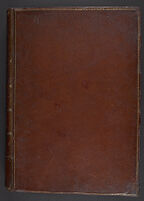
Binding: Post-1600. 18th-century restored brown calf-skin, with a frame of thin gilt-roll; marbled endpapers.
- Custodial History:
-
Origin:
Eastern England (Lincolnshire or East Anglia).
Provenance:
The manuscript probably commissioned by Hardyng as a presentation copy of the text for King Henry VI and features Hardyng's dedication to the King (f. 2v; see Edwards, 'The Manuscripts and Texts of the Second Version of John Hardyng's Chronicle', 1987; Kingsford, 'The first version of Hardyng's Chronicle' (1912), pp. 465-69; Meale, 'Patrons, buyers and owners: book production and social status' (1989), p. 223 n. 14)
Edward Colwell: his name inscribed (f. 166v).
John Clapsshan, 1555: inscribed, 'John Clapsshan born the fourth day of [Januarie?] 1555' and 'London' (f. 2r).
William Bowyer (d. 1569/70), Keeper of the Records in the Tower; owned by him in 1566: his name inscribed, 'Sum Guiliel Bowyer 1566' (ff. 3r, 5r).
John Stow (b. c. 1525, d. 1605), scholar and antiquarian: his annotations on the sources of Hardyng's early historical, religious artefacts, places, miracles and events affecting the succession of the crown, added throughout the manuscript (on the identification of Stow's hand, see Tite, ''Lost or Stolen or Strayed', p. 303 n. 127).
Sir Robert Bruce Cotton, (b. 1571, d. 1631), 1st Baronet, antiquary and politician: his inscription, 'A Chronicel of Britane gathered out of divers auters the auter unknown', along with a summary of the contents in Latin, naming Hardyng as the author of the text, written by his librarian Richard James (b. 1592, 1638) (f. 2r) (see Tite, ''Lost or Stolen or Strayed': A Survey of Manuscripts formerly in the Cotton Library (1997), p. 281; Kingsford, 'The first version of Hardyng's Chronicle' (1912), p. 482).
Gerard Charles (b. c. 1618, d. 1694), 1st Earl of Macclesfield and royalist army officer and Gerard Charles (b. c. 1659, d. 1701), 2nd Earl of Macclesfield, army officer, and diplomat: their arms on an additional parchment flyleaf inserted in the 17th century (f. 1v).
William Petty (formerly Fitzmaurice) (b. 1737, d. 1805), 2nd Earl of Shelburne and 1st Marquess of Lansdowne, Prime Minister; purchased by the British Museum together with 1244 other Lansdowne manuscripts in 1807.
- Information About Copies:
-
Select digital coverage available for this manuscript: see Catalogue of Illuminated Manuscripts at http://www.bl.uk/catalogues/illuminatedmanuscripts/welcome.htm.
- Publications:
-
[Henry Ellis and Francis Douce], A Catalogue of the Lansdowne Manuscripts in the British Museum (London, 1819), no. 204.
Catalogue of the Manuscript Maps, Charts, and Plans, and of the Topographical Drawings in the British Museum, 3 vols (London: British Museum, 1844-61, repr. Brussels: Gregg Associates, 1962), II (1844), p. 331.
Charles L. Kingsford, 'The first version of Hardyng's Chronicle', English Historical Review, 27 (1912), 462-82; 740-53.
Donald G. Moir, The Early Maps of Scotland to 1850 (Edinburgh: Royal Geographic Society, 1973), facing p. 5.
Antonia Gransden, Historical Writing in England, 2 vols (London: Routledge & Kegan, 1974; Ithaca: Cornell University Press, 1982), II, c. 1307 to the Early Sixteenth Century, pp. 274 n. 174, 278 n. 213, 286 n. 278.
A. S. G. Edwards, 'The Manuscripts and Texts of the Second Version of John Hardyng's Chronicle', in England in the Fifteenth Century: Proceedings of the 1986 Harlaxton Symposium, ed. by David Williams (Woodbridge: Boydell Press, 1987), pp. 75-84 (pp. 75, 83).
Carol Meale, 'Patrons, buyers and owners: book production and social status', in Book Production and Publishing in Britain 1375-1475, ed by Jeremy Griffiths and Derek Pearsall (Cambridge: Cambridge University Press, 1989), pp. 201-38 (p. 223 n. 14).
Kathleen L. Scott, Later Gothic Manuscripts 1390-1490, A Survey of Manuscripts Illuminated in the British Isles, 6, 2 vols (London: Harvey Miller, 1996), II, 206, 218-19, fig. 1.
Colin G. C. Tite, ''Lost or Stolen or Strayed': A Survey of Manuscripts formerly in the Cotton Library', in Sir Robert Cotton As Collector, ed. by C. J. Wright (London: British Library, 1997), pp. 262-306 (p. 281).
Andrew Prescott, Michelle Brown and Richard Masters, 'The Survey of Illuminated Manuscripts', in Towards the Digital Library: The Initiatives for Access Programme, ed. by Leona Carpenter, Simon Shaw and Andrew Prescott (London: British Library, 1998), pp. 130-147 (p. 133).
Lister M. Matheson, The Prose Brut: The Development of a Middle English Chronicle, Medieval and Renaissance Texts and Studies, 180 (Tempe, Arizona: Medieval & Renaissance Texts & Studies, 1998), p. 21.
Alfred Hiatt, The Making of Medieval Forgeries: False Documents in Fifteenth-Century England (London: British Library, 2004), pp. 104, 113, 116, 119, pls. 4 and 5.
James Simpson and Sarah Peverley, John Hardyng Chronicle. Edited from British Library Lansdowne 204, vol. 1 (Kalamazoo: Medieval Institute Publications, 2015), Volume II forthcoming [edition].
- Material Type:
- Archives and Manuscripts
- Legal Status:
- Not Public Record(s)