Hard-coded id of currently selected item: . JSON version of its record is available from Blacklight on e.g. ??
Metadata associated with selected item should appear here...
Royal MS 15 C VII
- Record Id:
- 040-002107071
- Hierarchy Root Ancestor Record Id:
- 032-002105724
- MDARK:
- ark:/81055/vdc_100000000338.0x0000dc
- LARK:
- ark:/81055/vdc_100058101243.0x000001
- SLARK:
- Format:
- ISAD(G)
- Reference (shelfmark):
- Royal MS 15 C VII
- Title:
- Dossier of Texts Pertaining to the Cult of St Swithun, including Lantfred's Translatio et Miraculi Sancti Swithuni and Wulfstan Cantor's Narratio Metrica de Sancto Swithuno
- Scope & Content:
-
This manuscript contains a dossier of liturgical material pertaining to St Swithun, with Latin and Old English glosses. This includes the earliest copies of Lantfred of Fleury's Translatio et Miraculi Sancti Swithuni, an acrostic hymn in honour of St Swithun, Wulfstan Cantor's letters to Bishop Ælfheah of Winchester and the brothers of the Old Minster, and Wulfstan Cantor's Narratio Metrica de Sancto Swithuno. The majority of the manuscript was probably written at the Old Minster, Winchester, in the 990s or the first years of the eleventh century, very soon after the composition of the texts written by Wulfstan Cantor, who was the precentor at the Old Minster. Marks made in the margin shortly after the manuscript's creation seem to indicate readings for services around the feast of St Swithun, and may indicate how this manuscript was used (see, for example, the Roman numerals in the margin of f. 4r; see also Lapidge, Cult (2003), pp. 104-05). In the late eleventh century, three more short texts about St Swithun and his miracles were added to the last three folios.
The manuscript includes:
ff. 2r-3r: Lantfred's letter to the monks of the Old Minster, Winchester;
ff. 3r-49v: Lantfred's Translatio et Miraculi Sancti Swithuni;
ff. 49v-50v: acrostic hymn in honour of St Swithun;
ff. 51r-57v: Wulfstan Cantor's letter to Bishop Ælfheah of Winchester;
ff. 58r-59r: Wulfstan Cantor's letter to the brothers of the Old Minster, Winchester;
ff. 59v-124v: Wulfstan Cantor's Narratio Metrica de Sancto Swithuno;
ff. 124v: late 11th-century verses on Swithun's construction of a bridge, beginning 'Hanc portam presens...';
ff. 125r-v: late 11th or early 12th century verses on the miracle of Swithun and the broken eggs, entitled 'Unum beati Swithuni miraculum';
ff. 125v-126v: late 11th or early 12th century prose text on Swithun's miracles, beginning 'Anno igitur centesimo decimo...'.
Decoration: green, grey (possibly oxidized red), and red rubrics and initials of varying sizes throughout, with pencil decoration inside some of the larger initials; manicula (ff. 7v, 18v, 20v, 25v, 26v, 30v); marginal sketches (ff. 19v, 21r, 26r, 30v). There are some red lines on f. 127v.
- Collection Area:
- Western Manuscripts
- Project / Collection:
- Royal Collection
- Hierarchy Record Ids:
- 032-002105724
040-002107071 - Is part of:
- Royal MS 1 A I-20 E X : Royal Manuscripts
Royal MS 15 C VII : Dossier of Texts Pertaining to the Cult of St Swithun, including Lantfred's Translatio et Miraculi Sancti Swithuni and… - Hierarchy:
- 032-002105724[1268]/040-002107071
- Container:
- View / search within Archive / Collection: Royal MS 1 A I-20 E X
- Record Type (Level):
- File
- Extent:
- 1 parchment codex
- Digitised Content:
- https://iiif.bl.uk/uv/#?manifest=https://bl.digirati.io/iiif/ark:/81055/vdc_100058101243.0x000001
- Thumbnail:
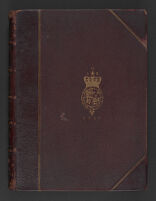
-
- Languages:
- English, Old
Latin - Scripts:
- Latin
- Start Date:
- 0990
- End Date:
- 1200
- Date Range:
- 990-1200
- Era:
- CE
- Access:
-
Please request the physical items you need using the online collection item request form.
Digitised items can be viewed online by clicking the thumbnail image or digitised content link.
Readers who have registered or renewed their pass since 21 March 2024 can request physical items prior to visiting the Library by completing
this request form.
Please enter the Reference (shelfmark) above on the request form.If your Reader Pass was issued before this date, you will need to visit the Library in London or Yorkshire to renew it before you can request items online. All manuscripts and archives must be consulted at the Library in London.
This catalogue record may describe a collection of items which cannot all be requested together. Please use the hierarchy viewer to navigate to individual items. Some items may be in use or restricted for other reasons. If you would like to check the availability, contact our Reference Services team, quoting the Reference (shelfmark) above.
- User Conditions:
- Letter of introduction required to view this manuscript
- Physical Characteristics:
-
Materials: Parchment and ink.
Dimensions: 300 x 235 mm (folio size: 290 x 210; written area: 215 x 145 mm).
Foliation: ff. 1*, 2* + 127 (where 1* and 2 * are parchment flyleaves + 2 unfoliated modern paper flyleaves at the begining and 2 unfoliated parchment flyleaves and 2 unfoliated modern paper flyleaves at the end; f. 1 is a medieval flyleaf: nail holes from the medieval binding can be seen on it).
Script: Anglo-Caroline minuscule, Protogothic.
Binding: Post-1600.
- Custodial History:
-
Origin: The Old Minster, Winchester, in the late 990s or first years of the eleventh century (see Lapidge, Cult (2003), p. 240): written by a single scribe, with further verses and prose about miracles of St Swithun added at the end of the 11th century or the early 12th century (ff. 124v-126v).
Provenance:
The Old Minster, Winchester: marks in the margin made shortly after the manuscript was written indicate seem to indicate passages to be used in the liturgy (see, for example, f. 4r; see also Lapidge, Cult (2003), p. 104); remained at Winchester until at least the 16th century (see medieval inscriptions on f. 127v; see also Lapidge, Cult (2003) pp. 70, 175).
Thomas Dackombe (d. c. 1572), rector of St Mary Colebrook and minor canon of Winchester Cathedral, in 1566: inscribed 'Libru[m] d[omi]n[i] Thomas dackombis 1566', (f. 2r); inscribed 'Dakomb' (f. 1*r, 95r); inscribed list of names ending 'Dackomb' (f. 1v).
Humphrey Llwyd (b. 1527, d. 1568), physician, map maker, and member of Parliament: inscribed 'Humfredus Lloyd' (f. 2*v).
John Lumley, 1st baron Lumley (b. c. 1533, d. 1609), collector and conspirator, Lloyd's brother-in-law: inscribed with his name (f. 2r); listed in the 1609 catalogue of his collection, no. 601 (see The Lumley Library (1956), p. 91); passed to Henry, prince of Wales.
Henry Frederick, prince of Wales (b. 1594, d. 1612), eldest child of James I: his collection became part of the Royal Library; in the 1698 catalogue of the library of St James's Palace (see Bernard, Catalogi librorum ('1697'), no 8121).
Presented to the British Museum by George II in 1757 as part of the Old Royal Library.
- Information About Copies:
-
Full digital coverage available for this manuscript: see Digitised Manuscripts at http://www.bl.uk.manuscripts.
- Publications:
-
E. Bernard, Catalogi librorum manuscriptorum Angliae et Hiberniae (Oxford, '1697'), no. 8121.
George F. Warner and Julius P. Gilson, Catalogue of Western Manuscripts in the Old Royal and King’s Collections, 4 vols (London: British Museum, 1921), II, pp. 166-67.
Herbert Dean Meritt, Old English Glosses: A Collection (New York: Modern Language Association of America, 1945), no. 32.
The Lumley Library: The Catalogue of 1609, ed. by Sears Jayne and Francis R. Johnson (London: British Museum, 1956), p. 91.
N. R. Ker, Catalogue of Manuscripts Containing Anglo-Saxon (Oxford: Clarendon Press, 1957), no. 270.
Andrew G. Watson, ‘A sixteenth-century collector: Thomas Dackomb, 1496-c. 1572’, The Library (1963), 204-17 (p. 214, no. 12).
Medieval Libraries of Great Britain: A List of Surviving Books, ed. by N. R. Ker, 2nd edn, Royal Historical Society Guides and Handbooks, 3 (London: Royal Historical Society, 1964), p. 200.
Elzbieta Temple, Anglo-Saxon Manuscripts 900-1066, Survey of Manuscripts Illuminated in the British Isles, 2 (London: Harvey Miller, 1976), p. 94.
David N. Dumville, English Caroline Script and Monastic History, Studies in Benedictinism, A.D. 950-1030, Studies in Anglo-Saxon History, 6 (Suffolk: Boydell, 1993), p. 145.
Michael Lapidge, Anglo-Latin Literature 600-899 (London: Hambledon Press, 1996), pp. 28-30, 82, 433.
Alan Coates, English Medieval Books: The Reading Abbey Collections from Foundation to Dispersal (Oxford: Clarendon Press, 1999), p. 126.
Mechthild Gretsch, The Intellectual Foundations of the English Benedictine Reform (Cambridge: Cambridge University Press, 1999), pp. 379-80.
Michael Lapidge, The Cult of St Swithun, Winchester Studies Series, 4.2 (Oxford: Clarendon Press, 2003) pp. 23, 70, 104-5, 135, 164, 175, 188, 235, 239-40, 252-333, 335, 336, 366, 372-551, 614, 624, 699-700, 781, 783-86, 793, 805 [includes edition].
Michael Lapidge, 'Wulfstanus Wintoniensis Mon.', in La trasmissione dei testi latini del Medioevo, ed. by Paolo Chiesa and Lucia Castaldi (Florence: SISMEL, 2004), 439-47 (pp. 440-42, 445).
David Howlett, Insular Inscriptions (Chippenham: Antony Rowe, 2005), pp. 94-98.
Aaron Kleist, Striving with Grace: Views of Free Will in Anglo-Saxon England (Toronto: University of Toronto Press, 2008), p. 123.
Richard W. Pfaff, The Liturgy in Medieval England: A History (Cambridge: University Press, 2009), p. 84.
Richard Gameson, 'The material fabric of early British books', in The Cambridge History of the Book in Britain, 6 vols (Cambridge: Cambridge University Press, 1999-2012), I: 400-1100 (2012), ed. by Richard Gameson, pp. 13-93 (p. 49).
Helmut Gneuss and Michael Lapidge, Anglo-Saxon Manuscripts: A Bibliographical Handlist of Manuscripts and Manuscript Fragments Written or Owned in England up to 1100 (Toronto: University of Toronto Press, 2014), no. 496.
- Material Type:
- Archives and Manuscripts
- Legal Status:
- Not Public Record(s)