Hard-coded id of currently selected item: . JSON version of its record is available from Blacklight on e.g. ??
Metadata associated with selected item should appear here...
IOL Tib J 337
- Record Id:
- 040-003652695
- Hierarchy Root Ancestor Record Id:
- 032-003652467
- MDARK:
- ark:/81055/vdc_100102477687.0x00001b
- LARK:
- SLARK:
- Format:
- TEI
- Reference (shelfmark):
- IOL Tib J 337
- Title:
- 'phags pa can dan gyi sku'i yan lag and 4 more items
- Collection Area:
- Oriental Manuscripts
- Project / Collection:
- International Dunhuang Project
Stein Collection - Hierarchy Record Ids:
- 032-003652467
040-003652695 - Is part of:
- IOL Tib J : Tibetan manuscripts from the Stein Collection.
IOL Tib J 337 : 'phags pa can dan gyi sku'i yan lag and 4 more items - Hierarchy:
- 032-003652467[0071]/040-003652695
- Container:
- View / search within Archive / Collection: IOL Tib J
- Record Type (Level):
- File
- Extent:
- 11 folios/panels
- Digitised Content:
- https://idp.bl.uk/collection/A391B27F432B4DC58C292CF85E9B5B32
- Thumbnail:
-
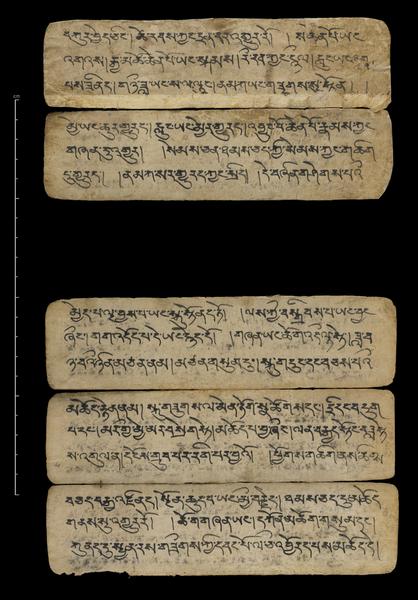
- Languages:
- Tibetan
- Scripts:
- Tibetan
- Start Date:
- 0750
- End Date:
- 1000
- Date Range:
- 0750-1000
- Era:
- CE
- Access:
- Restrictions to access apply please consult British Library staff
Please request the physical items you need using the online collection item request form.
Digitised items can be viewed online by clicking the thumbnail image or digitised content link.
Readers who have registered or renewed their pass since 21 March 2024 can request physical items prior to visiting the Library by completing
this request form.
Please enter the Reference (shelfmark) above on the request form.If your Reader Pass was issued before this date, you will need to visit the Library in London or Yorkshire to renew it before you can request items online. All manuscripts and archives must be consulted at the Library in London.
This catalogue record may describe a collection of items which cannot all be requested together. Please use the hierarchy viewer to navigate to individual items. Some items may be in use or restricted for other reasons. If you would like to check the availability, contact our Reference Services team, quoting the Reference (shelfmark) above.
- User Conditions:
- Material Type:
- Archives and Manuscripts
- Legal Status:
- Not Public Record(s)
- TEI:
-
Stein Collection
International Dunhuang Project
IOL Tib J 337
'phags pa can dan gyi sku'i yan lag and 4 more items
Contents
Language(s): Tibetan
1.Title: 'phags pa can dan gyi sku'i yan lagTitle: ['phags pa tsan dan gyi yan lag ces bya ba'i gzungs]Title: [Ārya-candanāṅga-nāma-dhāraṇī]Incipit: Rf.1r.1bkur byed cing/dharani
This concertina, which contains several short texts, is incomplete at the beginning and end, and has a lacuna betweenRf.1vandRf.2r.
This text corresponds in part with a canonicaldhāraṇītext (293) dedicated to the deityTsan dan gyi yan lag(Skt.*Candanāṇga). The name of the deity as given in the explicit differs slightly:Can dan gyi sku'i yan lag. This implies a connection with the many accounts of a sandlewood image ofŚākyamūni, known in Tibetan sources as theTsan dan sku mchog. This image is sometimes identified with the one brought to Tibet from China by the Chinese wife ofSrong btsan sgam po(see503-7). Other accounts relate that the image passed through Kucha and the land of the Tanguts before being taken to China, where it remained (see5090, which is a translation of the Chinese canonical text2036).
The first part of the text in the present manuscript can be identified in the canonical version (293: 59a.4). Here the text asserts that even in the case of a total apocalypse, the blessings arising from thisdhāraṇīwill not be lost. The second part of the text, coming after the lacuna, does not exactly match the canonical version, although like the canonical version it concerns the ritual practice (cho ga) for this deity. In both cases the ritual concerns amaṇḍalawhich surrounds either astūpacontaining relics or a buddha image. The present manuscript goes into more detail and includes a ritual for healing the sick, using a mixture of cow's urine and clay (Rf.3r.2-).
Explicit: Rf.4r.1'phags pa can dan gyi sku'I yan lag rdzogs s+ho/_/References
[Q] 293[Lalou_1939] 57/22.Title: nam ka'i snying po'i snyIng poIncipit: Rf.4r.2@/_/nam ka'I snying po'I snying po'o/Vajrayāna treatise
This short text begins with themantraofNam mkha'i snying po(Skt.Akāśagarbha):Om swa stI ka ma la k+SHI/ bi pu la sam bha ba/ dhar maH dha tu go tsa ra swA hA/. The text then lists the benefits arising from recitation of themantra. Themantrais the same as the one found in the canonical text322.
Explicit: Rf.5r.3/de las stsogs pa yon tan grangs myed pa dang ldan barRf5v'ong ngo//3.Incipit: Rf.5v.2@//Om shud dho/notes
These brief notes consist of four mantras, each followed by a statement of their effect. The first purifies thedharmatā, the second purifies mind, the third purifies body and the fourth purifies speech.
Explicit: Rf.6r.3ngag yong su dag pa//4.Title: 'phags pa bdud rtsI 'khyIld pa'I cho gaIncipit: Vf.1r.1...pa'i cho ga nI 'di lta ste/ritual manual
Due to the incompleteness of the manuscript, we only have the last eight lines of this ritual text on the deityBdud rtsi 'khyil pa(Skt.Amṛtakuṇḍalī). This last part of the text concerns the benefit of the practice, specifically an extended lifespan.
Explicit: Vf.2r.2@//'phags pa bdud rtsI 'khyIld pa'I cho ga nI 'di ste rdzogs so/_/5.Incipit: Vf.2r.3@//sangs rgyas thams cad dang/ drang srong gI skye bu chen po la phyag 'tshal loritual manual
The text opens with homage to the major bodhisattvas. It then states that after reciting this homage one should recite the heartmantra(snying po) ofAvalokiteśvara. Themantrais then provided, but is not the same as that which appears in the'phags pa spyan ras gzigs kyi snying poin thebka' 'gyur(372) or theAvalokiteśvaraspell given in75.
After a lacuna, the manuscript continues in the middle of anothermantra, which is described as the wrathful and terrifying heartmantraof theBhagavān. The practioner is instructed to construct amaṇḍalain the presence of theBhagavān(as in Item 1, there is no description of the nature of themaṇḍala) and recite the heartmantrathirteen times to pacify demons, or for six days to achieve all wishes.
The six lines that follow after another lacuna, may or may not be part of the same text. They consist only of homages to buddhas and bodhisattvas.
Explicit: Vf.6r.3/byang chub sems dpa' semsPhysical Description
nam ka; gchig; lastsogs, las stsogs; probably the whole MS. is written with the same handForm: concertinaMaterial: paperSupport: manuscript, ink on paperPaper Layers: 2
Materials: manuscript, ink on paper
Extent: 11 folios/panelsDimensions (leaf): 4.7 × 17.8 cm.Foliation:Layout
Columns:1
String holes: tiny holes at the bottom & top
Columns per panel/lines per page: 3
Hand(s)
History
Origin: 0750-1000DHMG.(Dunhuang Mogao) DHMG.17.
Provenance and Acquisition
Stein 1906-8
All data except for msContents were drawn from the legacy IDP 4D database
Record created byUlrich Pagel 01/01/97
Modified bySam van Schaik 01/03/16
Availability
WARNING: Under current circumstances, not all items are available for consultation and orders can only be placed within Reading Rooms. Please contact Reading Room staff at the British Library for information on availability and for help with placing orders.
Bibliography
[Lalou_1939] Lalou, Marcelle. 'Inventaire Des Manuscrits Tibétains de Touen-Houang Conservés à La Bibliothèque Nationale (Fonds Pelliot Tibétain) [3 Vols].' Paris: Bibliothèque Nationale, 1939