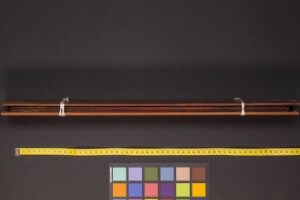
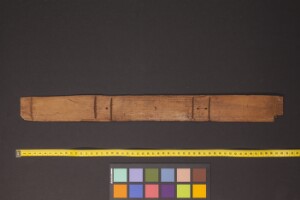
This manuscript contains a Pali text that is used for chanting to bring a good luck and fortune to one's life. Date of original material: 20th century. 10 folios
This text is about an important routine of the Buddha during his lifetime when he was going out every morning go to beg alms, in the afternoon chanting to instruct his fellow human being, in the evening chanting to teach monks and in the midnight becoming engaged over several issues with the The...
Only two leporello-style mulberry paper (chia sa) manuscripts have been found in Pha Khamchan's kuti. The first one (sutta) contains a canonical text, the second one is a multiple-text manuscript containing various magical and ritual texts written in a variety of scripts (and in Lao/Tai-Pali lang...
Maha Munla Niphan Sut (ມະຫາມູນລະນິພານນະສູດ) (2006)
Scope & Content:
The leporello manuscript is made of white-greyish khòi paper in the Tham-Lao script. The format resembles that of a long palm-leaf manuscript. This text is about the Buddha's routine before attaining nirvana, the merit gained through his sacrifices, and the way he inspired others to be morally go...
The leporello multiple-text manuscript is made of white-greyish khòi paper with black ink in various scipts, namely Thai, Khòm, Tham-Lao, and Old Lao scripts. This multiple-text manuscript is about many topics such as story of the magic formula, how to remove one's bad luck through the performanc...
The collection of palm-leaf and leporello manuscripts deposited at the Ññoṅʻ kuiʺ paṅʻ kyoṅʻʺ monastery (pronounced Nyaung-ko-bin-kyaung) in Halin village includes a sizeable corpus of Pāli and bilingual (Pāli and Burmese) Buddhist texts copied in the eighteenth and early nineteenth centuries to...
Single-text manuscript containing a work on meditation. Extent and format of original material: 2 files. Physical characteristics: Palm leaf. Gilded folios with red pigment band in the middle. Incomplete. Uninscribed folios serve as covers.
A bilingual translation of a canonical Buddhist sutta that forms a part of the Dīgha-nikāya collection. This discourse discusses meditation technics and was frequently transmitted both in Pāli and in bilingual translations as a separate text/manuscript. The liturgical and curricular uses of Mahā...